The Singapore kitchen floor gets treated very roughly. Daily cooking, frequent mopping, oil and grease splatter, water from the sink and the occasional dropped pot — and in a typical HDB kitchen, all of this happens in a space of perhaps 7 to 10 square metres that is regularly cleaned with commercial floor cleaners.
Getting the kitchen floor wrong is one of the more frustrating renovation mistakes because it becomes immediately obvious and is disruptive to fix once the kitchen is in use.
Here is a straightforward view of the options.
What a Singapore Kitchen Floor Needs to Handle
Before choosing materials, it helps to be specific about the stresses involved. Singapore kitchens face:
Cooking oil and grease: The most damaging surface contaminant for many flooring types. Oil that is not cleaned immediately penetrates porous materials and degrades adhesive bonds over time.
Standing water: Near the sink, around the floor drain and from the wet cleaning routine that most Singapore households use daily.
High humidity: Even with air-conditioning elsewhere in the flat, Singapore kitchens near the service yard experience higher humidity and temperature than other rooms.
Heavy impact: Dropped pots, utensils and glass create point impacts. Some flooring materials chip or crack under these loads.
Chemical cleaning agents: Many Singapore household cleaners are alkaline or contain bleach — both of which degrade some flooring materials over repeated contact.
Slip risk: A kitchen floor that becomes slippery when wet is a genuine safety hazard, particularly for elderly household members.
The Best Kitchen Flooring Options for Singapore Homes
SPC Vinyl — The Most Practical Residential Choice
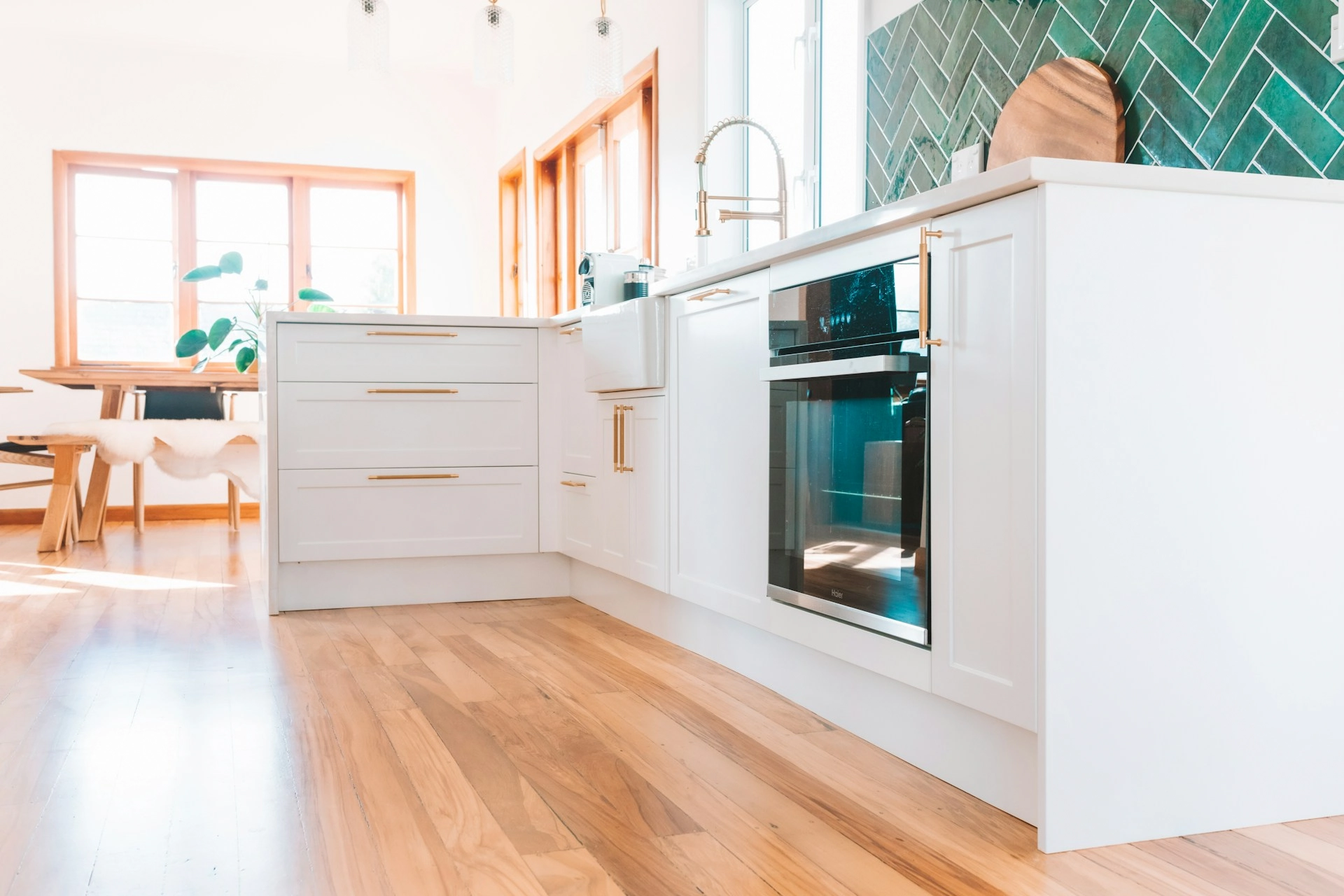
For Singapore HDB and condo kitchens, SPC vinyl flooring ticks more boxes than any other single option. It is completely waterproof throughout — cooking oil, water and cleaning chemicals cannot penetrate the core. Slip-resistant surface textures are available in the SPC range specifically for wet-prone areas. It wipes clean with standard mopping. And it can be overlaid on existing kitchen tiles in resale HDB flats without hacking, subject to the cumulative height limit.
The one practical consideration for HDB kitchens: confirm whether the kitchen floor is within the dry area or wet area designation of your specific flat. HDB’s renovation guidelines restrict the removal of original wet area floor finishes in BTO flats for the first three years after key collection.
For resale HDB kitchens where overlay is viable, our SPC flooring with a textured surface finish is our standard recommendation. Warm, easy to clean and waterproof.
Homogeneous Vinyl Sheet — For Seamless Hygiene
If you want a completely seamless, joint-free kitchen floor with no seams for grease or water to accumulate in, homogeneous vinyl sheet with thermally welded seams is the professional specification. It is the standard choice for Singapore’s commercial kitchens and food preparation facilities for exactly this reason.
For residential kitchens, it is a premium choice — not because the material itself is particularly expensive but because proper installation requires professional skill. The seamless result is genuinely superior from a hygiene standpoint.
Ceramic and Porcelain Tiles — Traditional But Demanding
Most Singapore HDB kitchens were tiled originally, and tiles remain a valid choice for kitchen floors. Porcelain in particular is durable, waterproof and handles heavy impact well.
The maintenance reality is the grout. Kitchen grout absorbs oil and grease, discolours rapidly and is difficult to clean thoroughly. Without consistent sealing and targeted grout cleaning, kitchen tile grout becomes a maintenance burden that worsens over time. This is the main reason many Singapore homeowners choose to overlay kitchen tiles with SPC during renovation rather than regrout.
Epoxy — For Commercial and Industrial Kitchens
Commercial kitchens in Singapore restaurants, hotels and institutional facilities often specify epoxy for the same reasons: seamless, chemical-resistant and easy to hose down. For residential Singapore kitchens, the moisture migration risk from Singapore’s subfloors makes epoxy a less reliable choice. Our epoxy flooring guide covers this in more detail.
What Does Not Work in Singapore Kitchens
Laminate flooring. The wood-fibre HDF core absorbs moisture from cooking steam, water near the sink and cleaning. Swelling and seam failure are predictable in Singapore kitchen conditions. Never use laminate in a kitchen.
Standard LVT without texture. Smooth-surface LVT becomes genuinely slippery when wet with cooking oil. If you are using LVT in a kitchen, confirm it has a slip-resistant surface texture appropriate for wet areas.
Engineered wood. Beautiful in living rooms and bedrooms but completely inappropriate for kitchens. Moisture exposure is too consistent and significant.
Natural stone without sealing. Marble and natural stone are porous. Unsealed in a kitchen environment, they stain from oil, wine and acidic cooking liquids rapidly and permanently.
For Commercial Kitchens in Singapore
Commercial kitchens face significantly higher stress than residential ones. Our restaurant flooring guide covers the specific requirements for Singapore’s F&B sector — including NEA hygiene compliance, thermal welding requirements and slip resistance standards for kitchen staff.
Singapore’s NEA food hygiene standards specify requirements for licensed food establishment surfaces that go beyond standard residential specifications.
Get the Right Kitchen Floor
Contact our team for a free site assessment of your kitchen. We will look at the existing floor, measure heights and recommend the right specification for your specific situation.
Call +65 8299 7185. WCEGA Tower, 21 Bukit Batok Crescent #12-78, Singapore. Open 7 days.