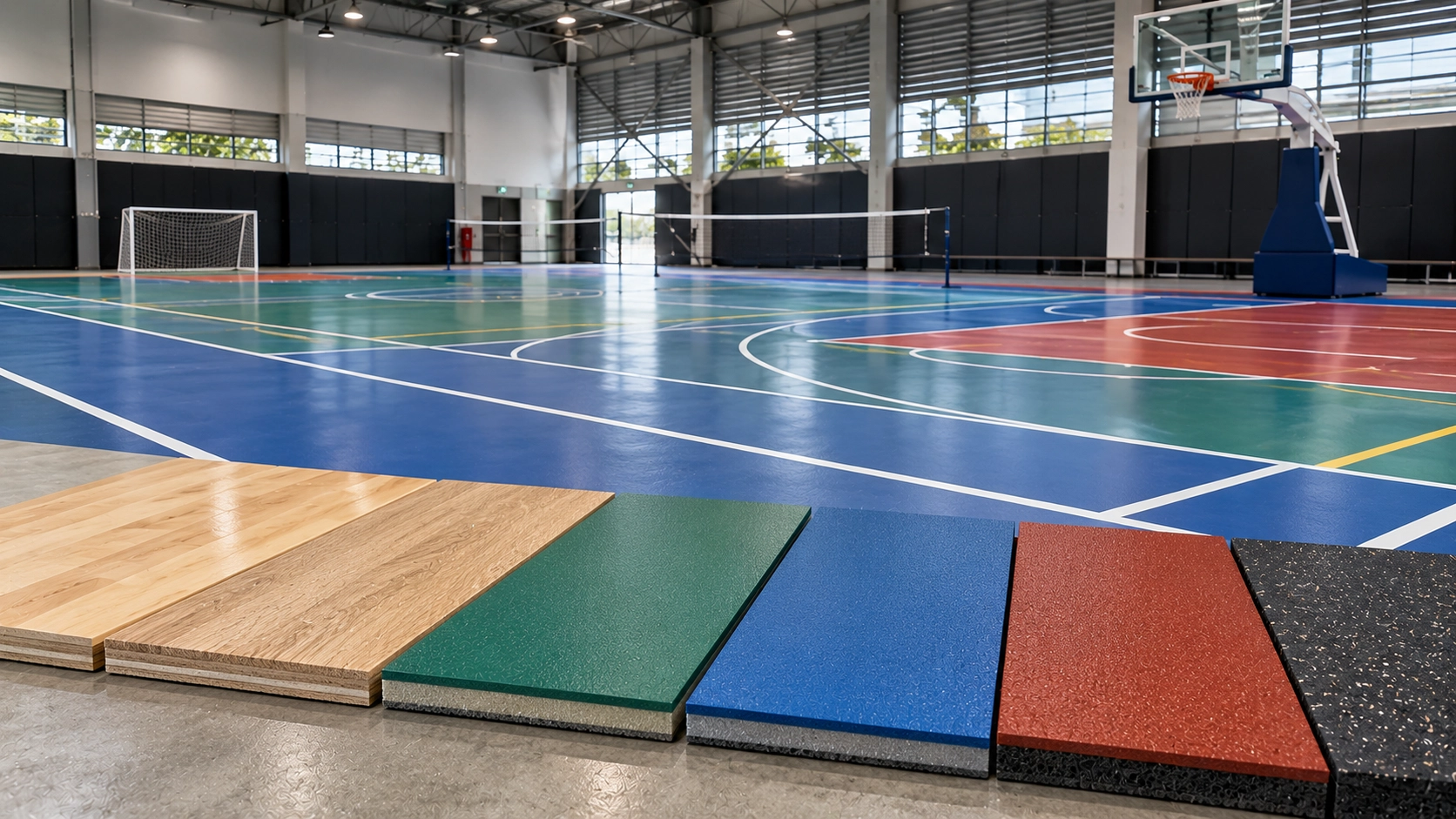
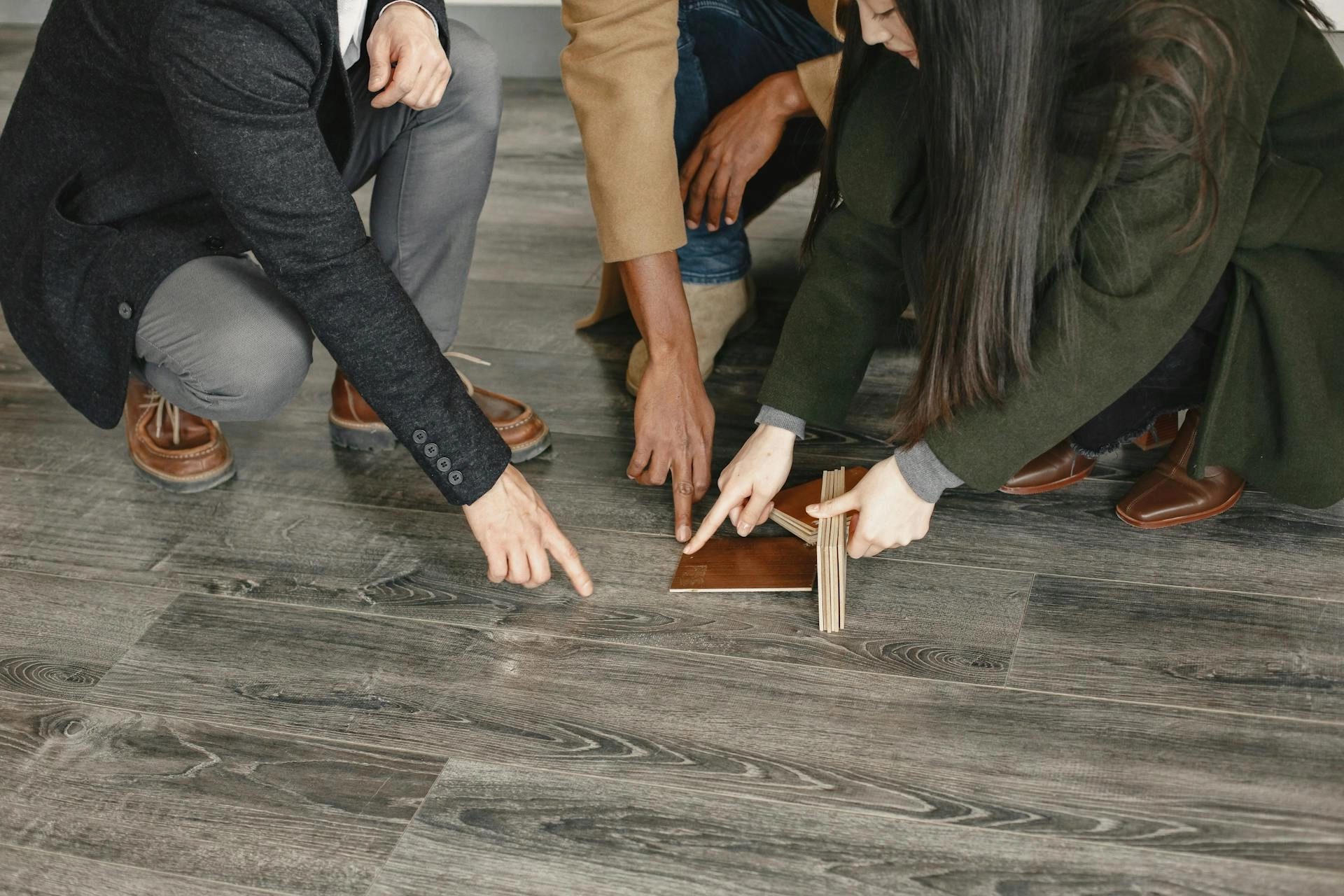
Before starting any flooring renovation in Singapore, it is always worth reviewing HDB’s renovation guidelines to understand height limits and permit requirements. Vinyl flooring vs engineered wood is one of the most common comparisons that Singapore homeowners face when renovating. Both products occupy similar market positions — both are more affordable than solid timber, both offer realistic wood aesthetics, and both are more moisture-resistant than solid hardwood.
But beyond those surface similarities, vinyl and engineered wood are fundamentally different products with different performance profiles, different maintenance demands, and different suitability for Singapore’s specific climate conditions.
What They Are Made Of
Vinyl flooring (SPC and LVT) has a core made from synthetic materials — limestone powder and PVC for SPC; flexible PVC for standard LVT. The entire product is inorganic. It cannot absorb moisture in any form.
Engineered wood has a real timber veneer — typically 2–4mm thick — bonded to a core of cross-bonded plywood or HDF. The surface is real wood. The core is wood-based. Both components can, to varying degrees, absorb and release moisture in response to changes in ambient humidity.
This fundamental material difference drives almost every practical difference between the two products in Singapore conditions.
Head-to-Head Comparison
Moisture and Humidity Resistance
Vinyl: Completely waterproof throughout. The SPC core does not absorb moisture regardless of ambient humidity, spill exposure, or subfloor moisture migration. In Singapore’s climate above 80% humidity, this is the single most important performance advantage.
Engineered wood: Significantly more moisture-resistant than solid timber, but not waterproof. In Singapore’s persistent humidity, engineered wood that is not consistently climate-controlled can develop minor cupping, surface checking, and joint movement over time. In resale HDB flats with subfloor moisture migration, engineered wood carries genuine risk.
Verdict: Vinyl wins clearly for Singapore’s climate.
Aesthetics: The Look and Feel of Real Wood
Vinyl: Premium SPC and LVT achieve very convincing wood-look results with high-definition print layers, embossed textures, and realistic colour variation. At floor level in normal lighting, quality vinyl is difficult to distinguish from real timber. However, it is not real wood — no natural character marks, no ability to be sanded and refinished.
Engineered wood: The real timber veneer delivers genuine wood aesthetics — natural grain variation, authentic knots, and the tactile warmth of real wood underfoot. For homeowners who want a genuinely natural material, engineered wood delivers something vinyl cannot fully replicate.
Verdict: Engineered wood wins on authentic natural aesthetics.
Maintenance
Vinyl: Sweep, damp mop, done. No waxing, no oiling, no refinishing. Our vinyl floor cleaning guide covers the full routine.
Engineered wood: Requires periodic waxing or oiling, careful moisture management, immediate spill cleanup, and professional polishing when the surface becomes scratched. Professional wooden floor polishing is typically needed every 12–18 months in Singapore homes.
Verdict: Vinyl wins on maintenance simplicity.
Underfoot Feel and Acoustics
Vinyl: SPC is firm and rigid underfoot. With an acoustic backing layer, it provides good impact noise reduction — important for HDB and condo living.
Engineered wood: The natural warmth of real timber over a foam underlay feels warmer and more cushioned than most vinyl alternatives. In a bedroom or living room where barefoot comfort is valued, engineered wood has a real advantage.
Verdict: Engineered wood edges ahead on underfoot warmth and feel.
Installation Over Existing Tiles
Vinyl: SPC click-lock installs directly over flat existing tiles — no hacking, no levelling compound in most cases. Our HDB flooring guide covers overlay installation in detail.
Engineered wood: Can be installed as a floating floor over existing tiles but is more sensitive to subfloor unevenness and moisture migration from below — a genuine risk with older tile subfloors in Singapore.
Verdict: Vinyl is more reliable for resale HDB overlay applications.
Cost and Value
Engineered wood typically carries a higher purchase and installation cost than comparable-quality SPC vinyl. The maintenance costs over a 10-year period add further to the total cost of ownership. For most Singapore residential applications, vinyl delivers better value per dollar long-term.
Verdict: Vinyl is more cost-effective over a 10-year horizon in Singapore conditions.
Our Recommendation
For the vast majority of Singapore homeowners, SPC vinyl flooring is the better choice — it is waterproof, low-maintenance, practical for HDB overlay applications, and delivers a wood aesthetic most people find convincing in daily living.
Engineered wood makes sense when: you are in a consistently climate-controlled Singapore condo, you genuinely value the aesthetics and tactile experience of real wood above all else, and you are prepared for the higher maintenance commitment.
Browse Lexsure’s LVT and SPC range or contact us for a free consultation.
Visit us at 25 Bukit Batok Crescent #01-04, Singapore, call +65 8299 7185, or email [email protected]. Open 7 days a week.