Wet areas take more punishment than any other zone in a Singapore property. Kitchens, bathrooms, service yards, pool surrounds, outdoor terraces — these spaces deal with constant moisture, cleaning chemicals, slip risk, and in commercial settings, continuous daily use.
The flooring in these areas needs more specific maintenance attention than a living room floor. And the mistakes people make in wet area floor care often create problems that are expensive and disruptive to fix.
Here is how to maintain wet area flooring properly in Singapore’s specific conditions.
Why Singapore Makes Wet Area Maintenance More Important
In a temperate climate, a bathroom floor dries out relatively quickly after use. In Singapore, it often does not — not completely. The combination of high ambient humidity, poor ventilation in some bathrooms and service yards, and frequent monsoon rain means that moisture is a near-permanent presence in wet zone flooring.
This creates specific risks: mould and mildew growth in grout lines and seams, slip hazard development as surface texture fills with soap residue and mineral deposits, and gradual adhesive bond degradation in older glue-down installations.
Regular and correct maintenance prevents all of these.
Vinyl and SPC in Wet Areas
SPC and LVT are inherently waterproof, which is why they are increasingly specified in Singapore kitchen and bathroom floors. But waterproof does not mean maintenance-free.
Daily and Weekly Care
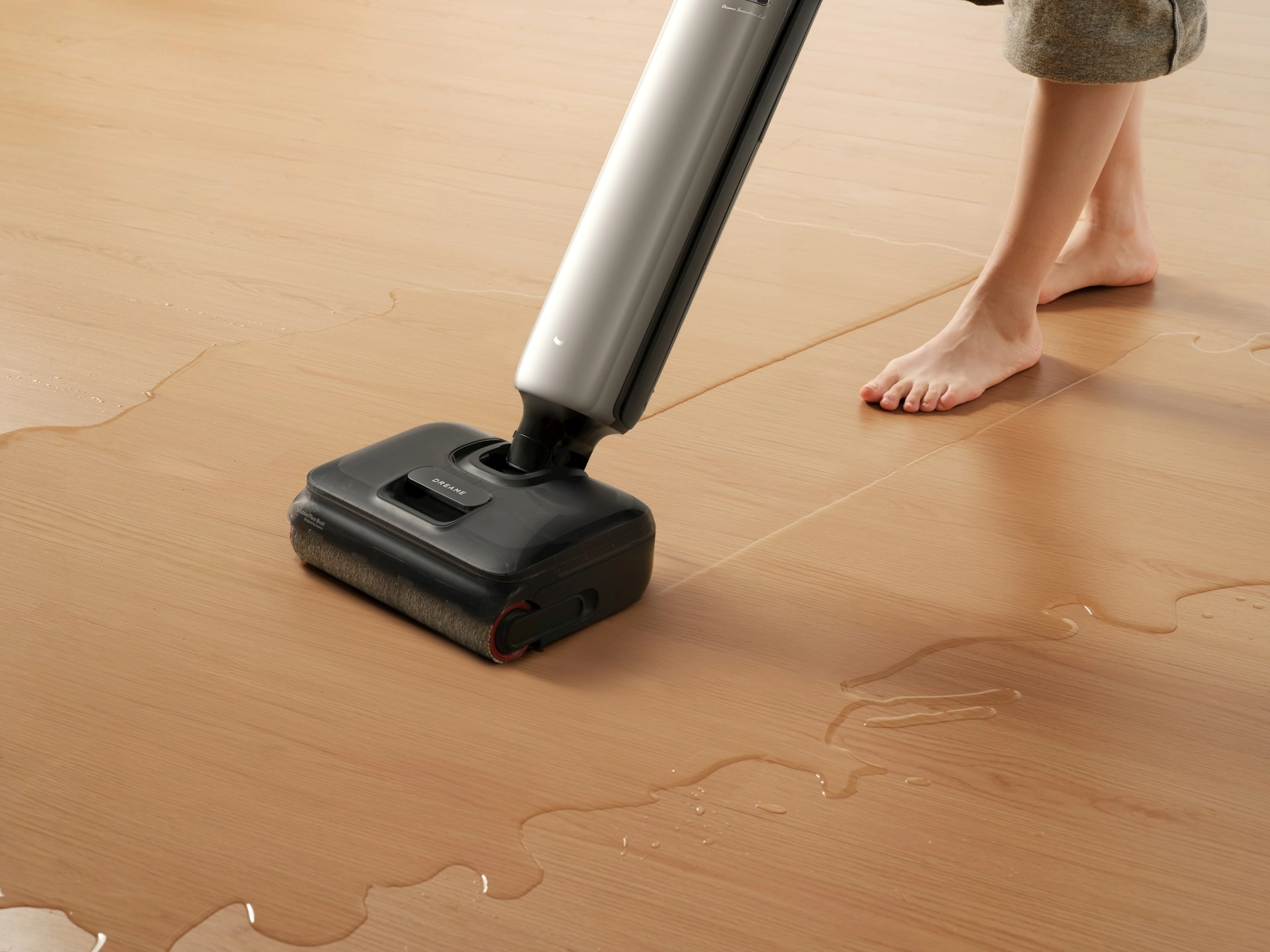
Sweep or wipe surfaces daily to remove grit and soap residue — both abrade the wear layer over time. Damp mop weekly with a pH-neutral cleaner formulated for vinyl. In kitchens, wipe up cooking oil spills immediately — they leave residue that becomes sticky and then attracts grime if left.
In bathrooms, a weekly wipe-down after cleaning prevents soap scum and shampoo residue from building up on the surface texture. These residues do not damage the vinyl, but they gradually fill surface texture grooves and reduce the slip resistance the texture was designed to provide.
What to Avoid
Bleach as a regular cleaner. Bleach is effective at killing mould and bacteria, but used regularly on vinyl, it degrades the wear layer over time. Use it selectively for disinfection, not as your weekly floor cleaner.
Abrasive scrubbing pads. Tempting to use in kitchens and bathrooms where grime builds up, but abrasive pads scratch the wear layer permanently. Use soft bristle brushes or microfibre cloths.
Leaving standing water at seams and edges. The vinyl itself is waterproof, but prolonged standing water at expansion gaps and wall edges can promote mould growth in enclosed spaces and affect adhesive bond in glue-down installations over time.
For comprehensive vinyl care guidance, see our vinyl flooring maintenance guide.
Tile and Grout in Wet Areas
Many Singapore bathrooms still have ceramic or porcelain tile floors — and the grout is always the maintenance challenge.
Grout is porous. In Singapore’s humid conditions, it absorbs moisture, soap residue, and airborne particles — discolouring, harbouring mould, and becoming increasingly difficult to clean as it ages. There is no complete solution for old grout, but these practices help significantly:
Seal the grout. If your bathroom tiles have never had the grout sealed, do it now. A penetrating grout sealer significantly reduces porosity and stain absorption. Reapply every 1–2 years.
Clean grout with a targeted cleaner. Standard floor mops pass over grout lines without cleaning them. Use a grout brush and a targeted alkaline grout cleaner — not bleach, which lightens grout but does not clean it — for weekly targeted cleaning.
Address mould immediately. Black mould in bathroom grout does not stay manageable if left. Treat it with a specialist mould remover as soon as it appears. If it is deep-set and returning repeatedly, the only proper solution is professional regrouting.
Composite Decking in Wet Outdoor Areas
Singapore pool surrounds, balconies, and outdoor terraces present the most challenging maintenance environment — constant UV, rain, organic debris, and in pool areas, chemical splash.
Our composite decking handles all of these well by design. But it still needs regular attention:
Sweep and blow debris regularly. Organic matter — leaves, pollen, plant debris — left in composite deck grooves decomposes and can encourage algae and mould growth, particularly in shaded areas.
Wash 2–3 times per year. Scrub along the groove direction with a stiff brush and mild soapy water. Rinse thoroughly. For mould or algae, a diluted sodium hypochlorite solution (check the composite manufacturer’s guidance for dilution ratios) is effective.
Check and clear drainage channels. Debris blocking drainage beneath the deck allows water to pool, which creates conditions for surface mould and can cause the joist system to deteriorate faster.
Do not pressure wash at close range. High-pressure water directed close to the board surface forces water into the board ends and can damage the surface texture.
If your poolside or balcony decking has developed persistent mould or algae despite regular cleaning, professional composite deck cleaning removes the build-up that DIY methods cannot fully address. Contact our maintenance team for an assessment.
Commercial Wet Areas: When to Call Professionals
Commercial kitchens, hospital wet rooms, and high-use bathroom facilities in hotels and serviced apartments need professional maintenance interventions on a schedule — not just when problems become visible.
Periodic professional vinyl strip-and-polish restores the floor’s appearance and slip resistance. For seamless vinyl installations with thermally welded seams, our team can inspect seam integrity and re-weld any sections that show signs of lifting before they become a water ingress problem.
Our floor polishing and maintenance service covers wet-area professional maintenance for commercial facilities across Singapore. Singapore’s NEA food hygiene guidelines are relevant for licensed F&B operators maintaining commercial kitchen floors.
Questions About Your Wet Area Floors?
Get in touch with our team — we are happy to advise on the right maintenance approach for your specific wet area surfaces.
At 25 Bukit Batok Crescent #01-04, Singapore. +65 8299 7185 or [email protected]. Seven days a week.