If you live in an HDB flat or condominium in Singapore, you know that the floor above you is just as present in your life as your own. Footsteps, furniture dragging, children jumping, dropped objects — in Singapore’s high-density residential environment, impact noise is one of the most common sources of neighbour friction and one of the most difficult problems to solve once flooring is already installed.
The right flooring choice at renovation time can significantly reduce the impact noise your neighbours below experience. Soundproof flooring is not a special product category so much as a set of principles that, when applied correctly, make a measurable acoustic difference.
This article explains how impact noise works, what the standards require, and which flooring options provide the best acoustic performance in Singapore’s residential buildings.
Understanding Impact Noise in Singapore Residential Buildings
Impact noise travels through the building structure itself when something physically contacts a floor surface. When someone walks across the floor, the impact energy enters the concrete slab and radiates as sound into the unit below.
In Singapore’s HDB flats and condominiums, the primary source of impact noise complaints is footstep noise from upper-floor units. This is why many condominium MCSTs specify a minimum Impact Insulation Class (IIC) rating for flooring installed in upper-floor units.
IIC Ratings Explained
- IIC 45–49 — the minimum standard required by many Singapore MCST rules. Moderate impact noise reduction.
- IIC 50–54 — good impact noise reduction, appropriate for most Singapore residential applications.
- IIC 55+ — excellent acoustic performance, recommended for upper-floor units with strict MCST requirements.
Before choosing flooring for your condo, confirm your MCST’s specific acoustic requirements. For HDB flats, while there is no formal IIC requirement under HDB’s renovation guidelines, minimising noise complaints is a practical reason to prioritise acoustic performance.
Which Flooring Types Provide the Best Acoustic Performance?
SPC with Pre-Attached Acoustic Underlayment
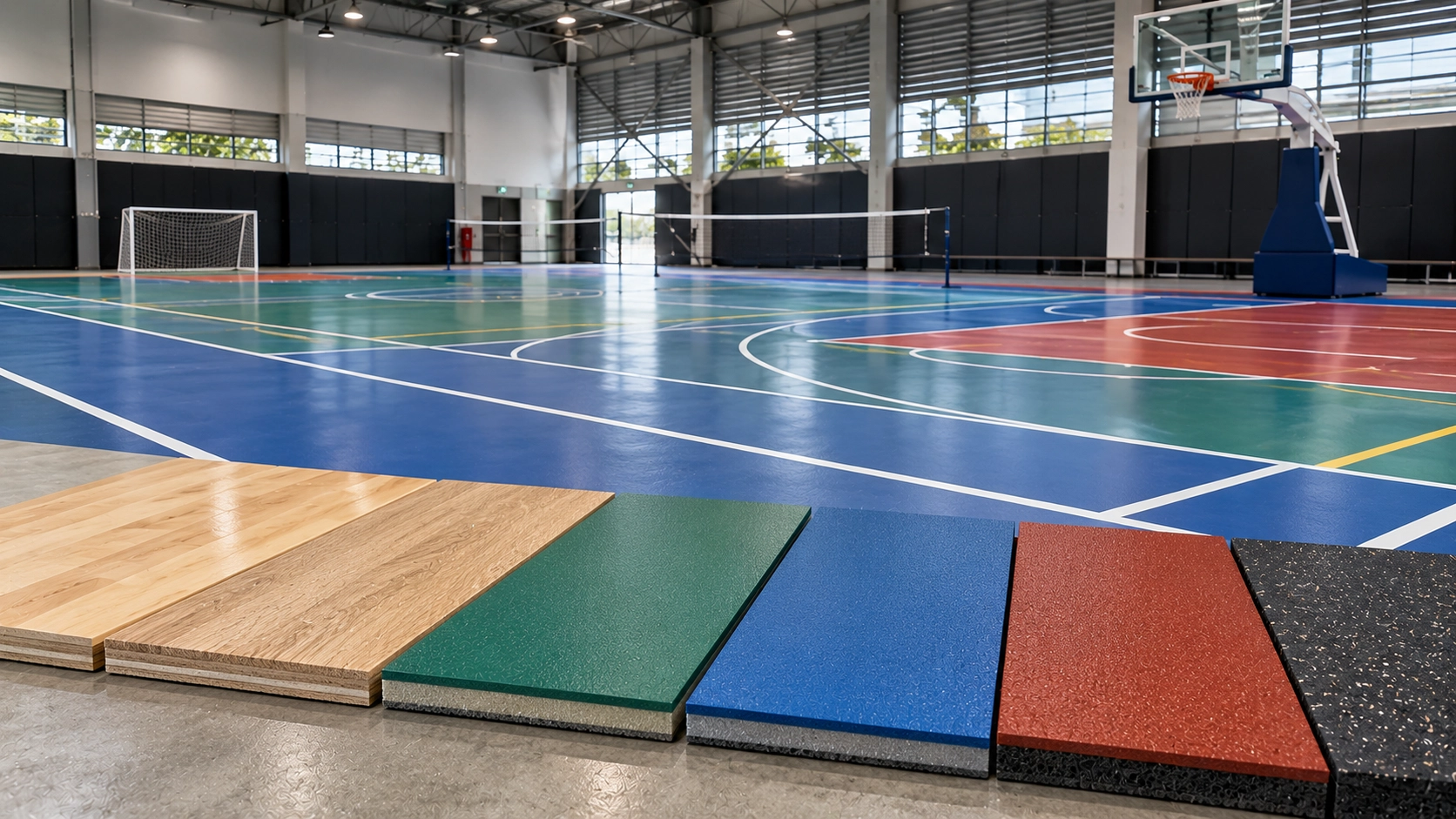
Modern SPC vinyl flooring with a pre-attached IXPE underlayment provides meaningful impact sound reduction without requiring a separate underlay. The rigid SPC core distributes impact energy laterally while the foam backing absorbs impact energy before it enters the concrete — delivering IIC ratings of approximately 50–55 in standard residential assemblies.
This makes pre-attached underlayment SPC the most practical acoustic flooring choice for Singapore HDB and condo renovations — installs in a single operation, no additional materials, and stays comfortably within HDB’s 50mm height limit. Read our full SPC flooring guide for product selection detail.
LVT with Acoustic Underlay
LVT over a quality acoustic underlay can achieve similar or better acoustic performance than SPC. Dedicated acoustic underlays — typically cork, rubber, or high-density foam — add 3–6mm to the overall floor height and must be accounted for within HDB’s 50mm limit.
What Does Not Help Acoustic Performance
Tiles — ceramic or porcelain — are among the worst flooring options for acoustic performance. Installed directly on concrete, hard dense materials are efficient sound conductors. Tiles add no meaningful acoustic damping to the floor assembly.
Practical Steps to Improve Acoustic Performance
- Specify products with pre-attached acoustic backing — confirm that the SPC or LVT product includes an IXPE or EVA foam backing, and ask for the IIC test report.
- Do not skip the acoustic underlay for LVT — click-lock LVT without an underlay can amplify some impact frequencies. A quality acoustic underlay is essential.
- Seal perimeter expansion gaps — the expansion gap around a floating floor installation is a potential sound leakage path. Seal correctly with acoustic sealant under skirting.
- Use rugs strategically — area rugs with thick, dense backings in high-traffic zones add meaningful acoustic damping above the floor surface.
Lexsure’s Acoustic Flooring Solutions
Lexsure’s SPC and LVT range includes products with pre-attached acoustic underlayment suited to Singapore’s residential acoustic requirements. Our installation team can advise on the appropriate product for your MCST’s specific IIC requirements and confirm the selected assembly meets the target rating.
Read our soundproof vinyl flooring guide for more technical detail, and our condo flooring guide for MCST requirements across Singapore developments.
Get Acoustic Flooring Advice for Your Home
Contact Lexsure Flooring for a free consultation on soundproof flooring for your Singapore home. We will assess your MCST requirements, recommend the right product assembly, and provide IIC documentation if required.
Visit us at 25 Bukit Batok Crescent #01-04, Singapore, call +65 8299 7185, or email [email protected]. Open 7 days a week.