Renovating a landed property in Singapore is a different experience from renovating an HDB or condo. The constraints are different. The scale is different. And the flooring decisions are different too.
Without HDB’s 50mm floor height limit, without MCST acoustic requirements, and with multiple storeys to think about, landed homeowners have more freedom — and more decisions to make.
Here is how we think through flooring for landed homes across Singapore’s terrace houses, semi-Ds, and bungalows.
No HDB Restrictions — But That Does Not Mean No Constraints
One of the immediate differences for landed homeowners is the absence of HDB’s renovation rules. You are not working within a 50mm cumulative height limit. You do not need to worry about removing wet area tiles before year three.
What you do have is a structural floor that varies considerably by property age. Older Singapore terrace houses and semi-Ds — particularly those from the 1970s to 1990s — may have subfloors that are not as flat or structurally uniform as a modern BTO screed. Some have existing stone or terrazzo that is in beautiful condition and worth keeping. Others have multiple layers of failed renovation attempts underneath the surface tiles.
The starting point for any landed home flooring project is a proper subfloor assessment — not just an aesthetic conversation.
Ground Floor: Where You Have the Most Options
SPC Vinyl — Practical and Very Versatile
SPC is our most commonly installed flooring in Singapore landed homes for the same reasons it is popular in HDBs: waterproof, humidity-stable, fast to install, and available in a huge range of finishes. Without the HDB height restriction to worry about, you also have more flexibility on underlayment options — which means better acoustic performance if that is a priority.
Engineered Wood — Where Landed Homes Have an Advantage
One area where landed homeowners genuinely have an edge over HDB residents is engineered wood suitability. If the property is consistently air-conditioned across the ground floor — which many Singapore landed homes are — the humidity conditions that make engineered wood risky in HDB flats become less of a concern.
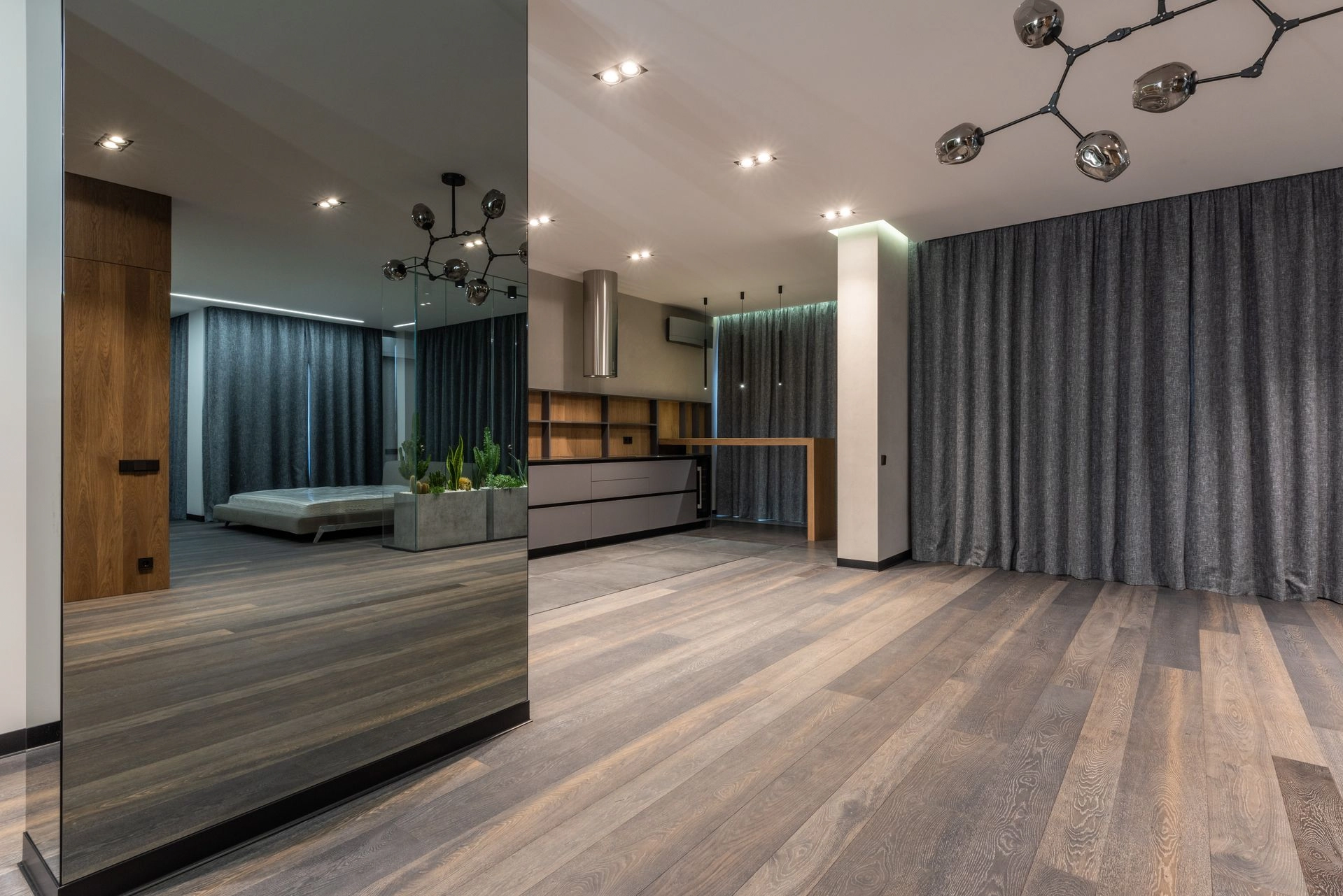
Engineered wood looks and feels genuinely different from vinyl. For a premium landed home renovation where the client wants natural timber aesthetics and is committed to the maintenance, it is a viable choice on the ground floor.
Natural Stone Tiles — Worth Keeping If They Are Good
Older Singapore landed homes sometimes have original marble, granite, or terrazzo floors that are structurally sound and aesthetically beautiful. Before any renovation decision, have these assessed properly. Restoring an original terrazzo or marble floor through professional polishing often delivers better results — and better value — than replacing it with a new material.
Our marble polishing service and cement floor restoration service cover both scenarios.
Upper Floors: Acoustic Performance Becomes More Important
In a multi-storey landed home, the acoustic performance of upper floor flooring matters for a different reason than in HDB living — it is not about neighbours, it is about the experience within the house itself.
Impact noise from the first floor to the ground floor — children running, furniture movement, heavy footstep — is a real quality-of-life issue in landed homes where family members are active on multiple levels.
SPC with a quality acoustic backing or LVT over a foam underlay is the appropriate choice for upper floors in most Singapore landed homes. Engineered wood over a foam underlay also performs well acoustically and adds warmth to bedroom zones.
Our soundproof flooring guide covers acoustic ratings and how to specify correctly for this.
Outdoor Zones: Balconies, Decks, and Garden Areas
Singapore landed homes typically have genuine outdoor space — front yards, back gardens, rear terraces, and often a balcony or roof terrace. These zones need outdoor-rated flooring.
Composite decking is our standard recommendation for Singapore outdoor residential areas. UV-stable, moisture-resistant, splinter-free, and low-maintenance — it outperforms solid timber in Singapore’s tropical outdoor conditions without the annual maintenance burden.
Composite decking also pairs well with fluted wall panels on outdoor wall features and boundary walls — a combination we have done for several Singapore landed home projects.
Working With Existing Timber Floors
Many older Singapore landed homes have original solid timber or parquet floors that are worth saving. Before deciding to cover or replace them, get a professional assessment.
If the timber is structurally sound but the surface finish has degraded, professional sanding and re-lacquering can restore the floor completely. Our wooden floor polishing and restoration service covers full resanding through to lacquer refinishing for all timber species common in Singapore landed homes: teak, merbau, pine, and oak.
Thinking Through Your Landed Home Renovation
For compliance questions on outdoor structures and balcony works in Singapore, the HDB renovation guidelines and your MCST rules are the definitive references. Landed home renovations in Singapore are significant projects. The flooring decisions affect how the house feels, sounds, and looks for the next 10–20 years. Getting a proper site assessment before committing to any material is worth the time.
Contact us to arrange a free site visit. We will come to your property, look at the existing floors, understand what you are trying to achieve, and give you an honest material recommendation.
Call +65 8299 7185 or email [email protected]. At 25 Bukit Batok Crescent #01-04, Singapore. Seven days a week.