Most people book a carpet cleaning service in Singapore for one of two reasons. The carpet has developed a smell they cannot trace. Or there is a stain they cannot shift no matter what they try.
Both are fair triggers. But the smarter approach is to clean before either problem appears rather than waiting until they force your hand. In Singapore’s climate, a carpet that looks clean on the surface is often harbouring more than you would expect underneath.
Here is what professional carpet cleaning in Singapore actually involves and how to tell the difference between a service that genuinely cleans and one that just makes the surface look better temporarily.
Why Singapore’s Climate Makes Carpet Cleaning More Critical Than Most Places
Carpets trap dust, skin cells, food particles and airborne pollutants in their fibres. This happens everywhere. What makes Singapore different is what happens to that accumulated material in a warm, humid environment.
Dust mites thrive between 25 and 30 degrees Celsius at relative humidity above 70 per cent. Singapore’s indoor environment is close to ideal for them year-round, even in air-conditioned spaces where the humidity is partially suppressed. A carpet that has not been professionally cleaned for 12 months in Singapore can harbour dust mite populations that trigger allergic rhinitis, eczema and asthma in sensitive household members.
Mould is the second issue. Moisture from humidity, tracked-in rain, condensation and cleaning that does not fully dry all create conditions for mould spores to germinate within the carpet backing. The first sign is usually an earthy or musty odour that returns no matter how much the surface is cleaned.
Routine vacuuming removes surface debris but does not address either of these problems. Hot water extraction, properly done, does.
What Hot Water Extraction Actually Does
Hot water extraction is the method recommended by most carpet manufacturers and the standard approach used by professional carpet cleaners in Singapore. It is sometimes called steam cleaning, though the cleaning agent is hot water rather than steam.
The process injects a solution of hot water and cleaning agent deep into the carpet pile under pressure, then immediately extracts it using powerful suction. The extraction draws out dissolved soiling, suspended dirt particles, allergens, dust mites and the cleaning agent itself from the full depth of the pile.
Done correctly, the carpet is left slightly damp rather than wet. Most residential carpets dry within two to four hours with good ventilation or a ceiling fan running.
Pre-treatment matters. Before the extraction begins, specific stains and heavy soiling areas should be treated with targeted solutions. Food stains, tannin stains from coffee and tea, grease and oil-based marks each respond to different treatments. A service that skips pre-treatment and goes straight to extraction is cutting a corner that affects results.
Our professional carpet deep cleaning service uses hot water extraction with targeted pre-treatment for all major stain types. We cover residential and commercial carpets across Singapore.
How Often Carpets in Singapore Should Be Cleaned Professionally
The honest answer depends on the space and how it is used.
For a residential carpet in an HDB flat or condo with one or two adults, annual professional cleaning is the baseline. If there are children, pets, allergy sufferers or a lot of barefoot traffic, twice a year is more appropriate.
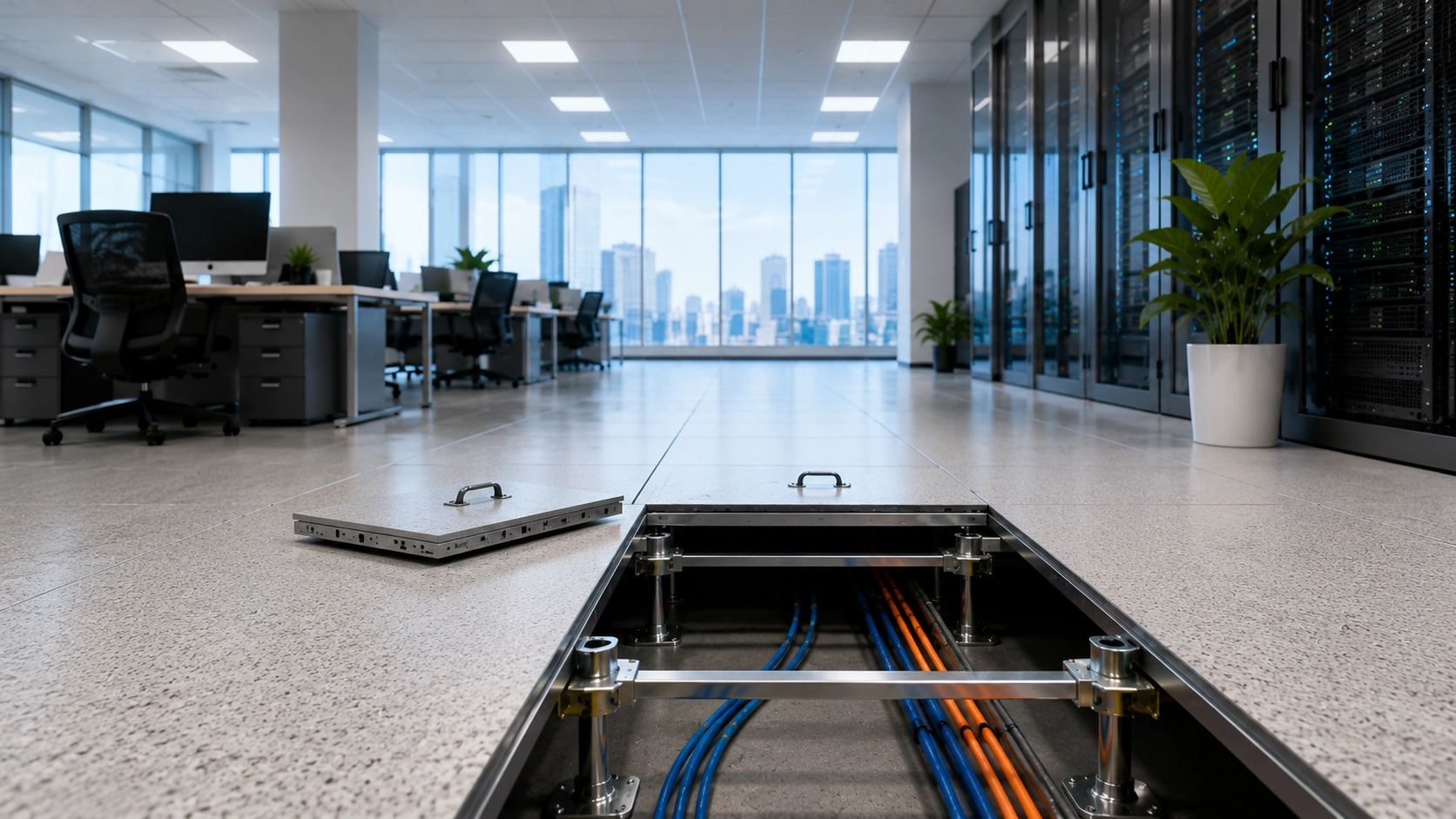
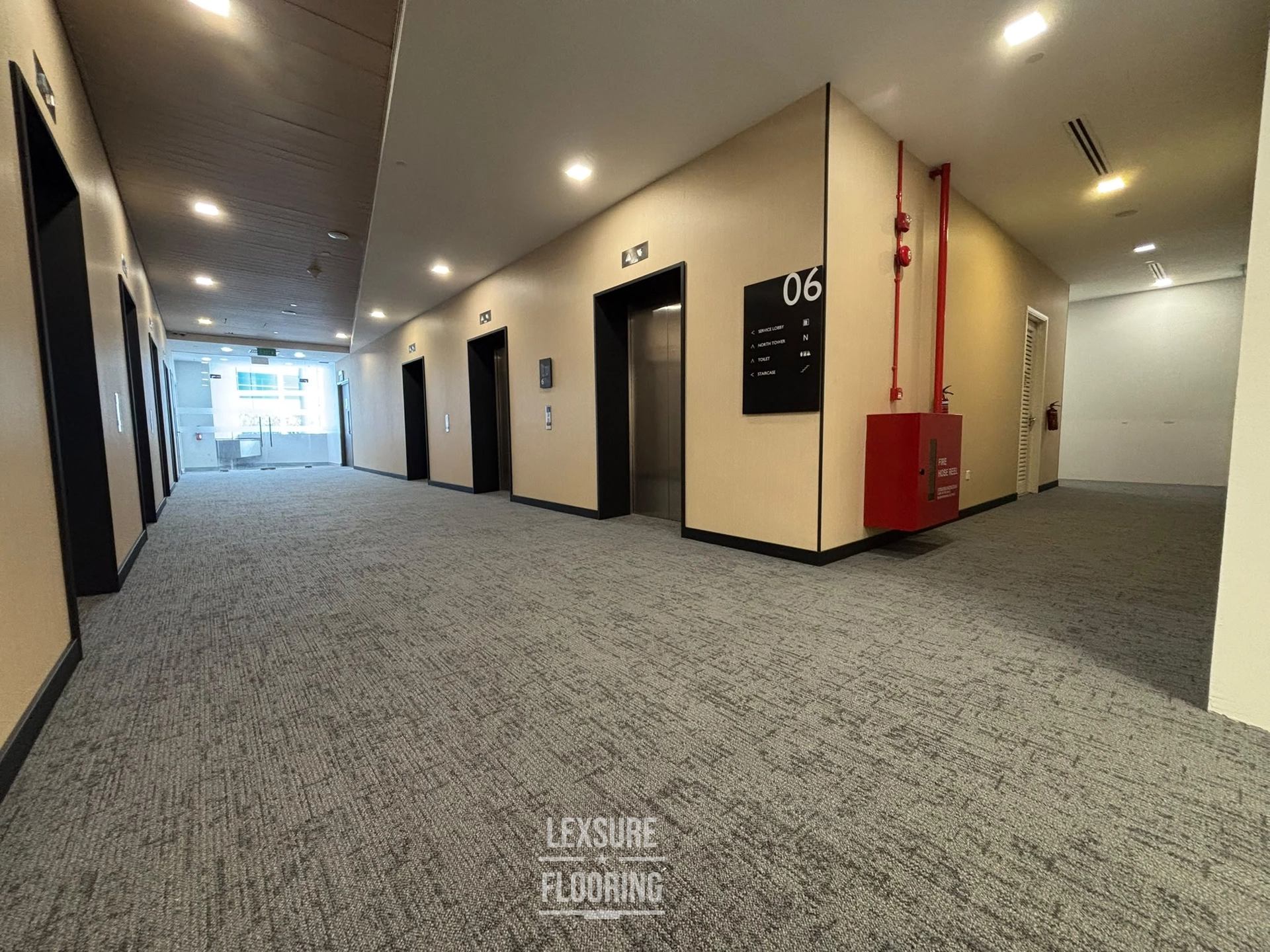
For office carpets in Singapore, the standard is quarterly for main thoroughfares and high-traffic areas and semi-annual for quieter zones like meeting rooms and offices. A carpet in a heavily used co-working space or open-plan office accumulates soiling significantly faster than a home carpet.
Hotel carpets and serviced apartments should be professionally cleaned between tenancies and on a scheduled basis throughout occupation. The same applies to showroom carpets and retail spaces where a clean, fresh appearance directly affects customer perception.
Between professional sessions, vacuuming at least twice a week for residential carpets and daily for commercial ones removes the surface debris that would otherwise get ground deeper into the pile by foot traffic.
Signs Your Carpet Needs Attention Now
A persistent musty or stale odour that does not respond to airing or surface sprays usually means mould or bacteria have established themselves in the backing. This requires professional extraction.
Dark traffic lanes that remain after vacuuming indicate ground-in soiling that surface cleaning cannot reach.
Increased allergy symptoms in household or office occupants that correlate with time spent in a carpeted space are a strong indicator of elevated dust mite or allergen levels in the carpet.
Stains that have been spot-treated multiple times with consumer products and keep reappearing often have residual cleaning agent left in the pile. The dried agent attracts fresh soiling and creates a sticky patch that looks like the original stain returning. Professional extraction removes both the stain and the residual treatment.
Carpet Protector Treatments
After a professional clean, a carpet protector treatment can be applied before the carpet dries. This re-establishes the factory stain-resistance treatment that has worn off through use and previous cleaning cycles.
Protector treatments do not make carpets stain-proof. They make spills bead on the surface long enough for you to blot them away before they penetrate the fibres. The practical result is that the carpet stays cleaner between professional sessions and individual stains are much easier to remove.
In Singapore’s conditions, where food and beverage spills are frequent and humidity keeps carpet fibres slightly more receptive to moisture, a protector treatment after each professional clean is worth the extra step.
Choosing a Carpet Cleaning Service in Singapore
The equipment matters. Hot water extraction machines come in a wide range of capacities. Underpowered equipment leaves carpets wetter than they should be, which extends drying time and creates conditions for mould. Ask whether the operator uses truck-mounted or portable extraction equipment and what their typical dry time is.
Pre-treatment should be standard. If a service offers a flat rate with no mention of spot pre-treatment, ask about it directly. Pre-treatment is what separates professional results from average ones on stained carpets.
Drying time and ventilation advice should be offered without prompting. Good operators tell you how long to keep the space ventilated and whether fans are needed. This is not a minor detail in Singapore’s humidity.
Documentation for commercial clients. For offices, hotels and commercial facilities that need to maintain cleaning records for compliance or facility management purposes, a service that provides dated completion documentation is worth specifying.
Singapore’s NEA food hygiene standards are relevant for any food and beverage premises with carpeted dining areas, where cleaning records and hygiene compliance intersect.
Talk to Us About Your Carpet
Contact Lexsure Flooring to discuss your carpet cleaning requirements. We cover residential and commercial carpets across Singapore, with after-hours and weekend scheduling for commercial clients.
Call +65 8299 7185. WCEGA Tower, 21 Bukit Batok Crescent #12-78, Singapore. Open 7 days.