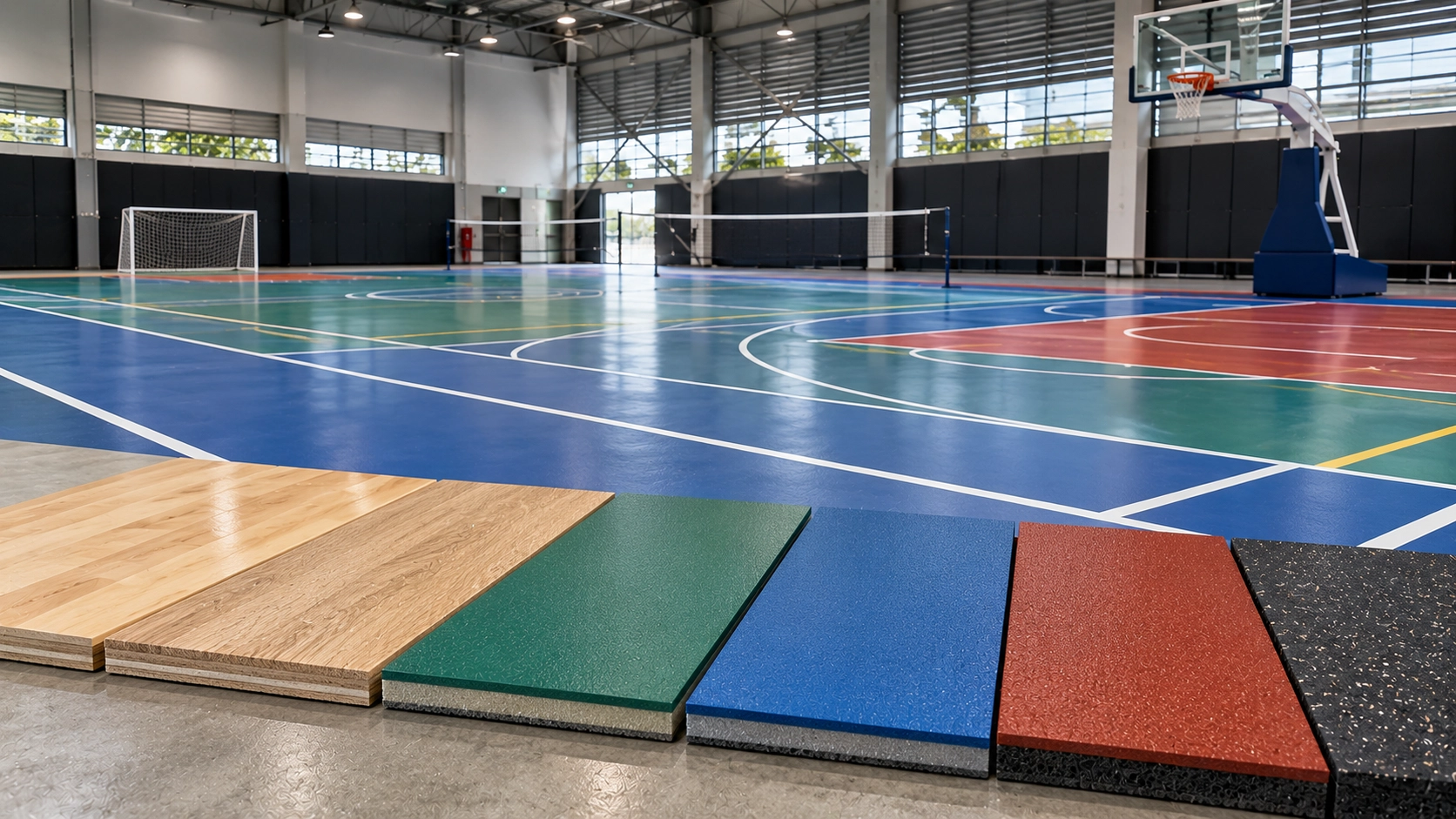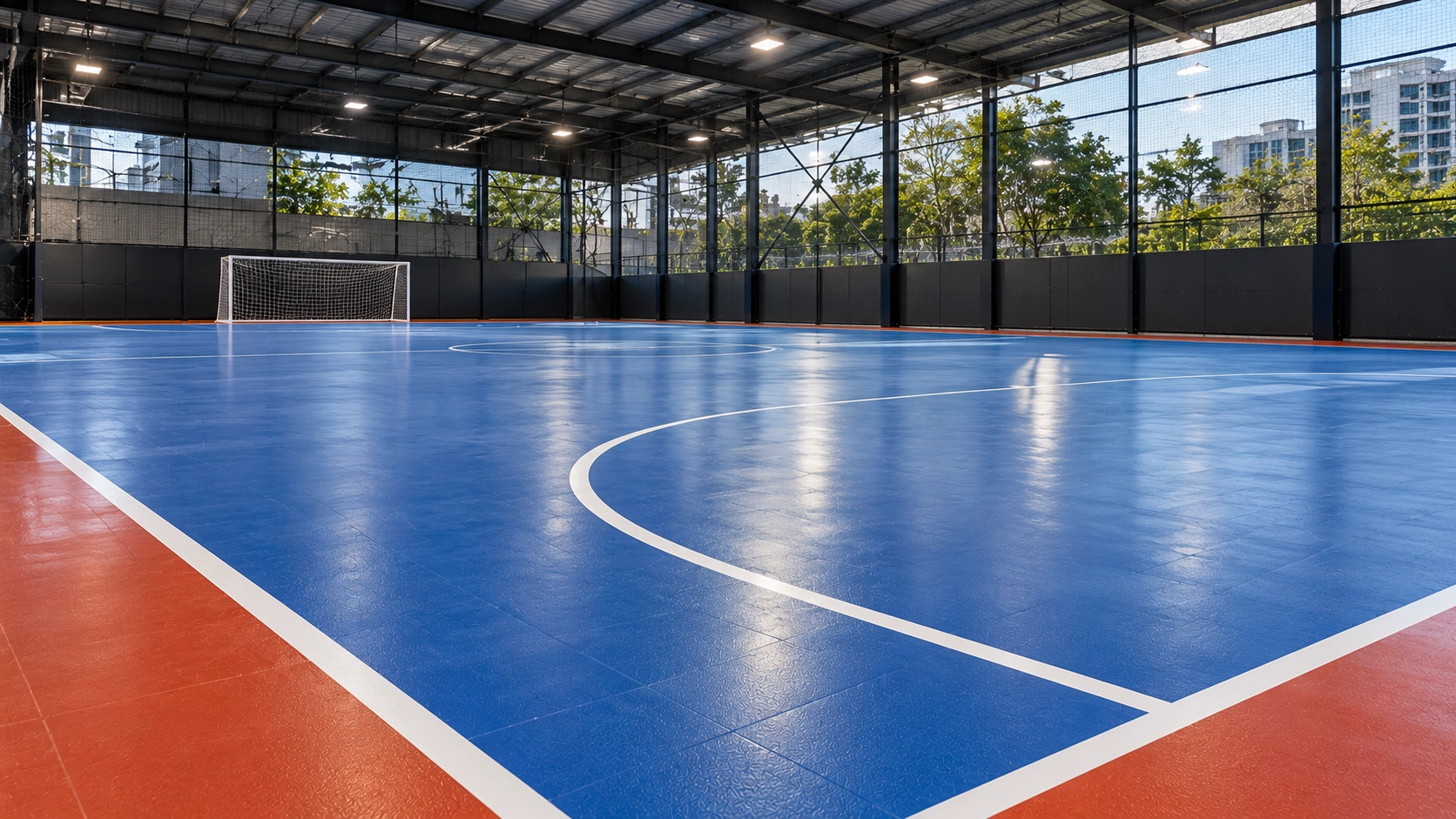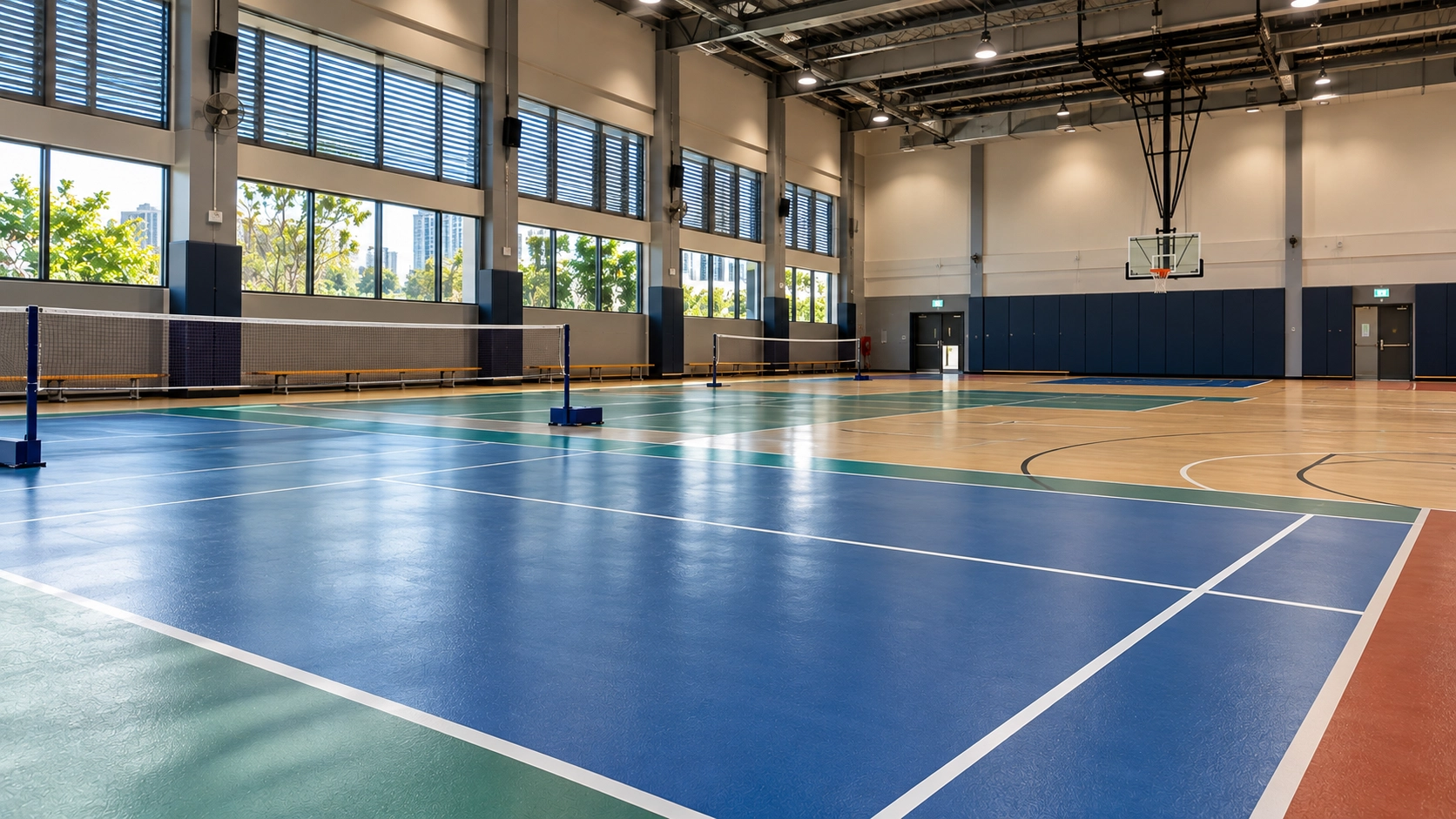
Rubber flooring does not get written about much in Singapore’s renovation media. Most of the content is about vinyl, SPC and timber. But rubber is the appropriate specification in a specific set of environments — and getting it wrong has real consequences for safety and equipment longevity.
If you are fitting out a gym, a children’s play area, an industrial workshop or any space with significant impact and safety requirements, rubber flooring is worth understanding properly.
What Rubber Flooring Is and How It Works
Commercial rubber flooring is made from vulcanised rubber — either natural rubber or synthetic compounds like SBR (Styrene Butadiene Rubber), often incorporating recycled rubber content from sources like car tyres. The vulcanisation process creates a dense, elastic material that recovers its shape after compression.
This elastic recovery is what makes rubber flooring perform differently from any vinyl or rigid product. When a barbell is dropped on rubber flooring, the impact energy is absorbed and then returned as the rubber recovers — rather than transmitting fully to the concrete subfloor. This protects the subfloor, the equipment and the building structure.
It also provides anti-fatigue properties that matter for staff or users who stand for extended periods. Commercial kitchens, factory assembly lines and retail checkouts all benefit from rubber matting for this reason.
Where Rubber Flooring Makes Sense in Singapore
Gym Weight Areas and Olympic Lifting Platforms
This is rubber flooring’s primary application in Singapore. The weight area of any commercial or residential gym — where barbells are loaded and unloaded, where deadlifts and Olympic lifts happen and where dumbbells and kettlebells are set down — needs rubber.
Standard SPC vinyl or LVT will crack under repeated heavy weight drops. Ceramic tiles will shatter. Only rubber absorbs the impact energy of a dropped 150kg barbell without damage to itself or the subfloor.
The thickness specification depends on the loads involved. For general free weight areas with up to 20kg loads, 10mm rubber is adequate. For serious strength training and Olympic lifting, 20mm to 30mm is appropriate. For dedicated Olympic weightlifting platforms, a 30mm rubber base is the standard.
Our sports flooring range includes rubber in the thicknesses required for Singapore gym applications. Our gym flooring guide covers the full zone-by-zone specification in detail.
Children’s Play Areas and Playgrounds
Singapore’s HDB estate playgrounds, preschool and childcare centres and indoor play facilities all specify rubber safety flooring for impact attenuation — reducing injury risk from falls. The safety standard relevant for Singapore playground surfacing is EN 1177, which specifies a Critical Fall Height (CFH) that the surfacing must provide attenuation for.
Thicker rubber provides better fall attenuation. Playground safety surfacing typically requires 40mm to 80mm rubber tiles depending on the height of the equipment above.
Industrial Workspaces and Manufacturing Floors
In Singapore’s industrial and manufacturing sector, rubber flooring is specified for areas where anti-fatigue performance, oil and chemical resistance and anti-slip properties are required simultaneously. Heavy-duty SBR rubber compounded with anti-slip surface texture is appropriate for factory floors, assembly lines and industrial workshops.
Commercial Kitchens and Food Service Areas
Anti-fatigue rubber matting in commercial kitchen areas — not as the primary floor surface but as modular mats over the primary floor — reduces fatigue for kitchen staff who stand for entire service periods. These mats need to be grease-resistant, easy to lift and clean, and anti-slip on both the top surface and the base.
Dance Studios and Fitness Classes
Aerobics, dance and group fitness classes that involve jumping and high-impact movement benefit from rubber flooring or rubber-backed sprung vinyl that provides shock absorption without the excessive compressibility of foam. The surface texture needs to allow pivoting without excessive grip that could cause ankle injuries.
Available Formats
Rolls. 1m to 2m wide rubber rolls allow seamless coverage of large areas with minimal joins. Suitable for heavy-duty industrial applications and large commercial gym floors.
Interlocking tiles. Modular rubber tiles — typically 500mm x 500mm or 1000mm x 1000mm — allow flexible installation and easy replacement of individual tiles. The most practical format for commercial gyms, where a damaged tile in the weight area can be replaced without disrupting the rest of the floor.
Gym mat tiles. Thicker rubber tiles in smaller formats — typically 300mm x 300mm — used for dedicated weight platforms and high-impact zones.
Installation and Maintenance
Rubber flooring can be installed loose-lay, adhered with appropriate rubber adhesive or interlocked. For commercial gym weight areas, loose-lay interlocking tiles are the most common specification — no adhesive required, individual tiles can be replaced and the floor can be reconfigured if the gym layout changes.
Maintenance is straightforward. Sweep regularly to remove debris. Damp mop with a pH-neutral cleaner. Avoid solvent-based cleaners that can break down the rubber compound.
One Singapore-specific note: rubber flooring in non-air-conditioned environments can develop surface heat in direct sun exposure. For outdoor rubber applications — playground surfacing, pool area safety matting — specify products formulated for outdoor UV exposure.
Singapore’s ActiveSG sport centre guidelines provide specification benchmarks for rubber flooring in public sport facilities — useful reference for operators specifying facilities that need to align with national standards.
Questions About Rubber Flooring?
Get in touch to discuss rubber flooring specification for your Singapore project. We supply rubber alongside our full sports and vinyl range.
Call +65 8299 7185. WCEGA Tower, 21 Bukit Batok Crescent #12-78, Singapore. Open 7 days.