Buying a resale HDB flat usually means inheriting floors you did not choose. In some cases, the tiles are fine and you work with them. In others, they are 20 years old, cracked in the corners, an odd shade of beige and the first thing you want to deal with in the renovation.
The flooring decisions you make at this stage affect how the entire flat looks for the next decade and what your renovation budget actually goes on. Getting this right early saves significant money and prevents the kind of regret that comes from committing to a surface before understanding the full picture.
Here is how we approach resale HDB flooring discussions with clients.
The First Thing to Do: Assess What Is Already There
Before deciding anything, you need to understand the existing floor condition. This is not about aesthetics. It is about knowing whether overlay is viable.
Lay your hand flat on the existing tile and press gently in different areas of each room. A hollow sound when you tap with your knuckle means the tile has debonded from the adhesive layer beneath it. Tiles with significant hollow areas are a risk for overlay because they provide an unstable base. SPC or LVT laid over a section of hollow tiles will eventually develop movement or cracking at those points.
Check the height. HDB mandates that the total raised floor height across all cumulative layers must not exceed 50mm from the original screed level. If the existing tiles are already 15mm thick and there is evidence of a previous overlay beneath them, you may have less headroom than you think. Our team measures and assesses this during every site visit.
Look for lippage between tiles. Minor variation is manageable. If adjacent tiles vary by more than 3mm in height, the subfloor needs levelling before any overlay. This is not expensive but it adds a step.
Overlay vs Hacking: The Real Trade-Offs
The overlay case is strong in most resale HDB situations. Skipping hacking saves money, reduces renovation time significantly and avoids the noise and debris that upset neighbours and require permit coordination.
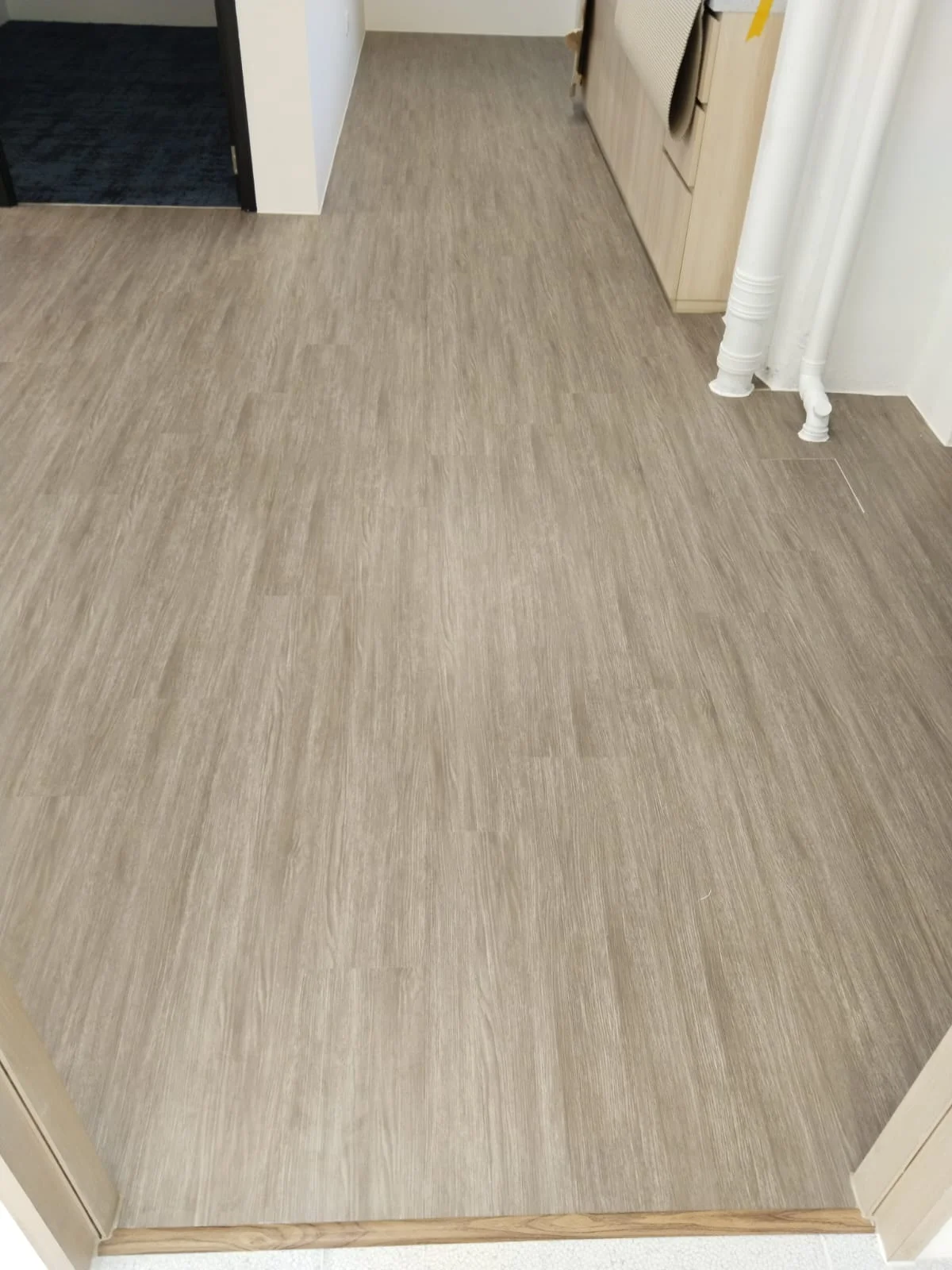
SPC vinyl at 5mm to 6mm total thickness overlays cleanly over most resale HDB tile floors that are in reasonable structural condition. The click-lock system requires no adhesive and the rigid core bridges minor tile imperfections better than flexible LVT. Thousands of Singapore resale flats have been renovated this way and the results are excellent when the existing floor condition is properly assessed first.
Hacking makes sense when the existing floor has extensive hollow sections covering more than 30 per cent of any room, when there is evidence of water damage beneath the existing tiles, when height constraints leave insufficient room for overlay or when you want a floor specification that requires direct subfloor contact such as glue-down commercial LVT or timber.
If hacking is required, engage an HDB-registered renovation contractor. Check the HDB renovation guidelines on permit requirements for floor works before proceeding. Work permits for hacking operations have specific time restrictions on when works can be carried out in HDB flats.
The Right Floor for Each Room in a Resale HDB Flat
Living Room and Dining Area
This is the floor you will live with most consciously. It sets the visual tone for the whole flat and is the first thing guests see.
For resale HDB living rooms, SPC vinyl in wide-plank wood look is currently the dominant choice and for good reason. It overlays clean, handles Singapore’s humidity without issue, is practical for families and delivers the warm, contemporary interior look that most Singapore homeowners want. The acoustic backing reduces footstep noise to the unit below, which matters in upper-floor HDB flats.
Our SPC guide covers the specific specifications to look for, including wear layer thickness and acoustic backing options.
If you want something with more visual distinction, LVT in herringbone format creates a more considered, design-forward living room floor without adding significant cost.
Bedrooms
Bedrooms in resale HDB flats typically have the same tiles as the living room or slightly different older tiles from a previous renovation. The same overlay approach applies.
The main consideration specific to bedrooms is acoustic performance. A bedroom floor that amplifies every midnight footstep is a genuine quality-of-life issue in an HDB upper-floor unit. Specify SPC with a pre-attached IXPE backing rather than the most basic option. The difference in acoustic performance is noticeable and the material cost difference is modest.
Kitchen
Many resale HDB kitchens have older tiles that are functional but visually dated. If the tiles are sound and properly adhered, SPC vinyl overlay is viable and effective. Choose a textured surface finish for the kitchen specifically because a smooth surface becomes slippery when wet with oil or water.
If the kitchen tiles have significant hollow sections or the floor has old repair patches at different heights, hacking and installing a fresh homogeneous vinyl sheet is worth considering. The seamless surface is significantly easier to keep hygienic in a cooking environment.
Service Yard and Utility Areas
These areas typically have original HDB tiles in functional but basic condition. If the tiles are intact, leave them. Service yards and utility areas do not benefit from the same flooring upgrade investment as living spaces and they have heavy moisture exposure from laundry and washing that requires careful material selection.
What Resale HDB Owners Often Get Wrong
Skipping the site assessment. The quality of a floor renovation is almost entirely determined by the quality of subfloor preparation. A beautiful SPC floor installed over unstable hollow tiles will show problems within a year. Before any material decision, assess the existing floor properly.
Choosing the thinnest wear layer to save money. For a resale flat where the floor will likely remain for 10 years or more, specifying the minimum wear layer is a false economy. In a family home with children, pets and daily furniture movement, a 0.3mm wear layer shows visible degradation within five years. A 0.5mm wear layer on the same floor looks significantly better at year seven.
Not accounting for door clearances. Adding flooring height reduces the gap between the bottom of interior doors and the floor. In resale flats where doors have been fitted at a specific height, this matters. Our team checks door clearances during site assessment.
Free Site Assessment for Your Resale Flat
Contact our team to arrange a free site visit to your resale HDB flat. We will assess the existing floor, measure heights, check door clearances and give you an honest recommendation.
Call +65 8299 7185. WCEGA Tower, 21 Bukit Batok Crescent #12-78, Singapore. Seven days a week.