Herringbone flooring has gone from a heritage detail in old Singapore landed homes to one of the most requested looks in current HDB renovation briefs. Walk through any showflat in 2026 and the chances of seeing a herringbone floor in the living room or master bedroom are high.
There are good reasons for the trend. But there are also common mistakes in how it gets executed in Singapore homes. Here is a clear breakdown of what you need to know before committing.
What Herringbone Is and Why It Works Visually
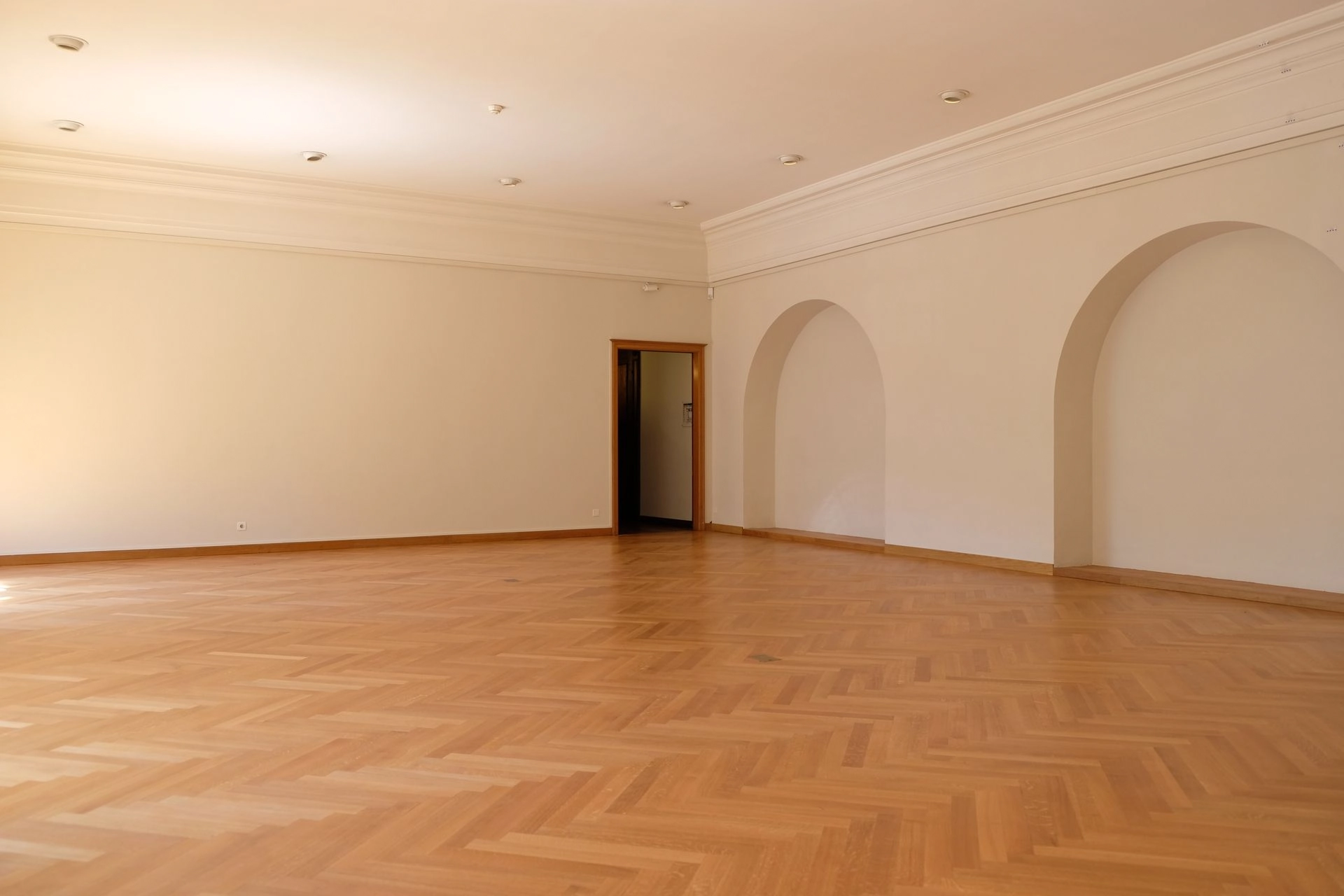
Herringbone is a laying pattern, not a material. Planks are installed at 90-degree angles to each other in a repeating rectangular zigzag — named after the skeleton of a herring fish. The result is a floor that has visual movement and directional energy rather than the static lines of a standard straight-lay installation.
What the pattern does to a room is meaningful. The diagonal lines draw the eye along the length of the space, which makes rooms feel longer and more considered. In Singapore’s typically compact HDB living rooms, this is not a cosmetic trick — it is a genuine spatial tool.
The pattern also signals craftsmanship. It takes more material, more cuts and more care to install herringbone than straight plank. Anyone who walks into a room and sees it done well registers the effort, even if they cannot name why the floor looks more premium.
Herringbone vs Chevron: The Difference
These two patterns are frequently confused. They look similar but they are not the same.
In herringbone, planks are cut square at both ends and meet at a 90-degree angle. The result is a rectangular zigzag where each plank is set perpendicular to the next.
In chevron, planks are cut at a diagonal angle at their ends so the tips meet in a perfect point, creating a continuous arrow pattern across the floor. It is more refined and more difficult to execute well. It also requires planks cut specifically for chevron installation — you cannot lay standard straight-cut planks in a chevron pattern.
For most Singapore HDB and condo applications, herringbone is the right choice. It works with standard planks, the pattern is easier to read in smaller rooms and the material waste is lower. Chevron makes more sense in larger rooms and premium landed home projects where the visual precision of the pointed tip reads correctly at scale.
Which Material for Herringbone in Singapore?
SPC Vinyl — The Most Practical Choice
The majority of herringbone floors installed in Singapore HDB flats today are SPC vinyl. The reason is practical: SPC is waterproof, dimensionally stable in our humidity and easy to install over existing tiles without hacking. Herringbone SPC plank comes in smaller plank formats — typically 120mm by 600mm or similar — that create a properly scaled pattern in Singapore’s room sizes.
Our LVT range includes herringbone-compatible plank formats in a range of warm oak and stone-look finishes. These are click-lock products that go directly over flat existing tiles in resale HDB flats, making the renovation fast and relatively low-cost.
Engineered Wood — For Climate-Controlled Spaces
Engineered wood in herringbone format gives you a genuine timber surface with authentic grain variation and character. In a climate-controlled Singapore condo master bedroom or landed home living room, it is a premium choice that holds up well.
The limitation is the same as for all engineered wood in Singapore: it needs consistent climate control to stay dimensionally stable. For rooms that are not regularly air-conditioned, SPC herringbone vinyl is the more reliable specification.
Ceramic Tiles — For a Traditional Look
Hexagonal and encaustic tiles in herringbone arrangements have their own following in Singapore’s renovation market, particularly for bathrooms and entryways. These are not vinyl products so they sit outside what we supply — but it is worth knowing the option exists for specific applications.
Common Mistakes With Herringbone in Singapore Homes
Wrong Scale for the Room
The most common mistake is using plank sizes that are out of proportion to the room. Large planks — say 200mm by 1000mm — in herringbone in a 4-room HDB bedroom look wrong. The pattern becomes too dominant and the room feels smaller. Stick to smaller plank formats for compact rooms.
Not Starting From the Right Point
Herringbone requires careful layout planning before installation begins. The pattern needs to be centred on the most visible wall or feature in the room — not started from a corner. Poor layout planning produces an awkward partial row at one side of the room that undermines the whole pattern.
Ignoring the Border Question
Herringbone floors traditionally have a straight-lay border around the perimeter of the room to frame the pattern. Without it, the diagonal cuts at the wall meet the skirting at awkward angles and the edge of the floor looks unfinished. In Singapore’s HDB rooms, even a simple single-row border in the same material makes a significant difference to how the finished floor reads.
HDB Height Limit
One practical consideration for resale HDB owners: herringbone SPC vinyl adds 5mm to 6mm to the floor height, the same as any other SPC product. The HDB 50mm cumulative height limit applies. If there are already multiple layers of existing flooring beneath, check the total height before committing.
Our team measures and confirms height during the free site assessment before any works begin.
Ready to Install Herringbone?
Contact our team to discuss herringbone floor options for your Singapore home. We will recommend the right plank format, material and laying direction for your specific room dimensions.
Call +65 8299 7185 or visit us at WCEGA Tower, 21 Bukit Batok Crescent #12-78, Singapore. Open 7 days.