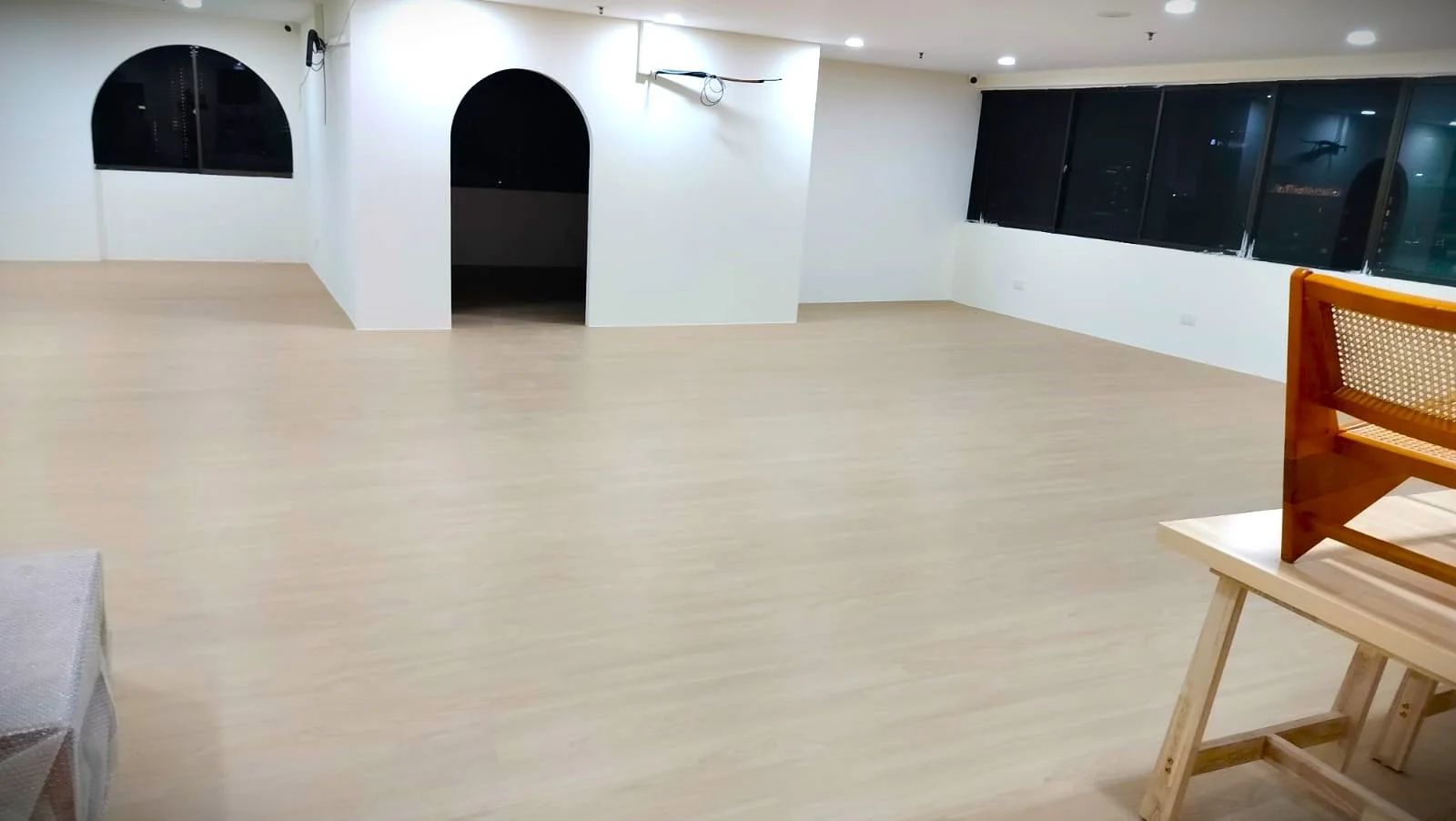
If you ask most Singapore homeowners what vinyl flooring looks like, they picture a click-lock plank with a wood-grain finish. The format has dominated the residential renovation conversation for years and for good reason. But it is not the only form vinyl takes. And for specific applications, it is not the best one.
Vinyl sheet flooring has been largely invisible in Singapore’s consumer renovation conversation despite being the standard specification for the island’s hospitals, schools, government buildings and industrial facilities for decades. The reason it does not come up in HDB renovation discussions is primarily format familiarity. The reason it absolutely should come up for certain residential and commercial applications is that it does something no click-lock floor can: it creates a completely continuous, joint-free surface from wall to wall.
What Vinyl Sheet Flooring Is
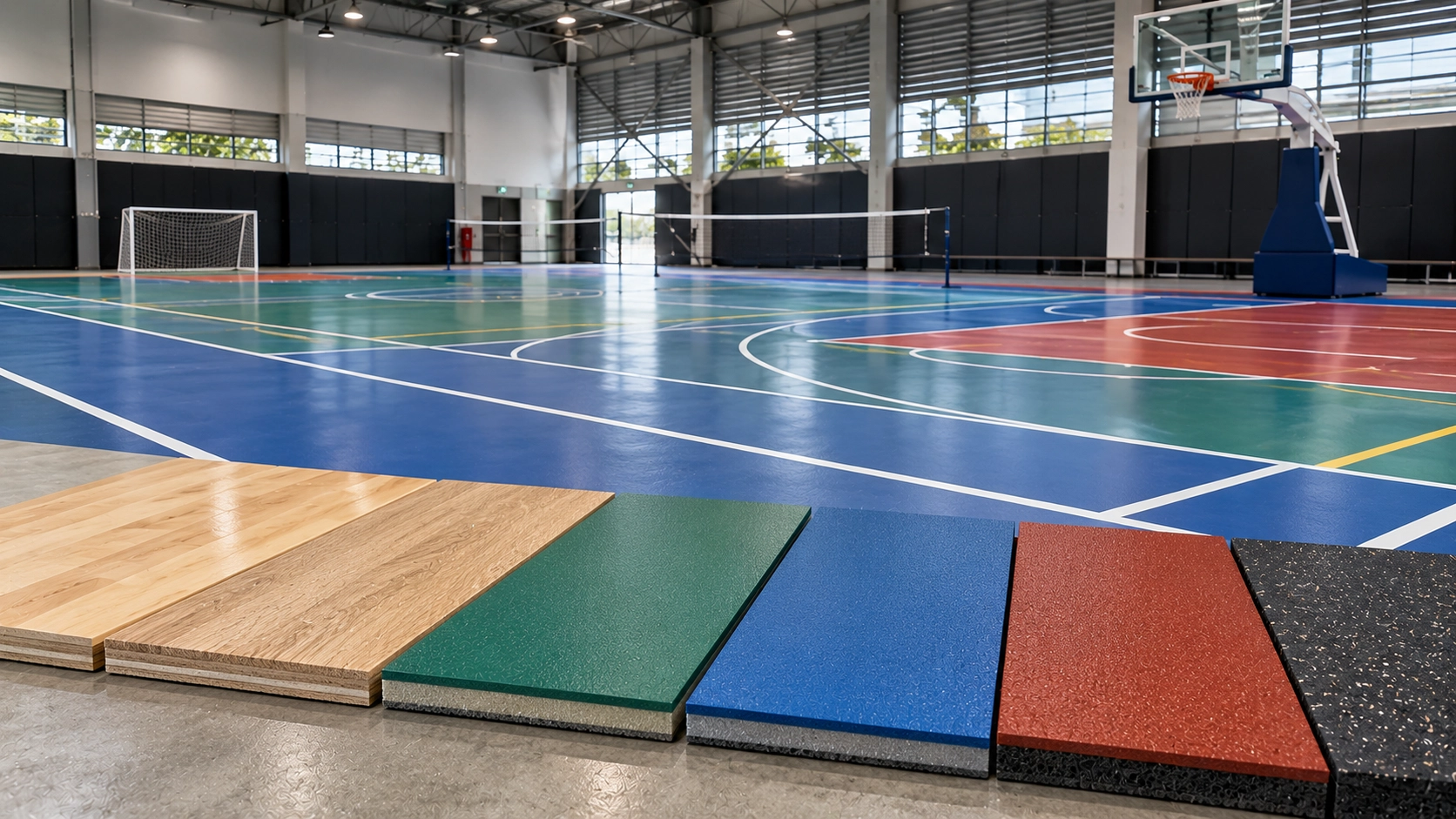
Vinyl sheet flooring is supplied in wide rolls, typically 2 metres wide and installed by adhering it directly to a prepared subfloor and heat-welding the seams between adjacent sheets. The result is a single continuous surface across the entire floor area with no joints, no click-lock gaps and no expansion seams.
The material itself is heterogeneous or homogeneous vinyl in sheet format rather than tile or plank format. Heterogeneous sheet vinyl has a printed design layer, giving it wood-look, stone-look or pattern options. Homogeneous sheet vinyl has colour running through the full thickness, as we covered in our homogeneous vinyl guide.
The seam welding process uses a hot-air welding gun and a vinyl welding rod matched to the sheet material. The rod fuses with both edges of adjacent sheets under heat, creating a bond that is structurally continuous. When trimmed flush with the surface, the seam is effectively invisible and completely watertight.
Where Vinyl Sheet Flooring Makes Sense
Wet Areas in Singapore Homes
The absence of joints is the critical factor. In a bathroom, service yard or kitchen floor that sees regular water contact, click-lock plank joints are a potential moisture ingress point. The click-lock mechanism creates a tight fit that resists surface water under normal conditions but is not watertight under sustained water contact or with water pressure from washing.
A vinyl sheet floor with welded seams has no joints for water to enter through. This makes it genuinely appropriate for Singapore wet areas where moisture exposure is continuous rather than incidental.
For HDB bathrooms and service yards in particular, vinyl sheet over the existing tiles provides a seamless, easy-clean surface that performs better in wet conditions than any click-lock alternative.
Healthcare and Food Preparation Environments
The hygiene advantage of seamless vinyl is most significant in clinical and food preparation environments. Our healthcare flooring guide covers this in detail: joints and grout lines are pathogen-harbouring features that seamless vinyl eliminates entirely.
For Singapore commercial kitchens, the seamless surface can be hosed down completely, has no seams for grease or food residue to accumulate in and withstands the daily application of commercial cleaning chemicals.
Large Open Areas
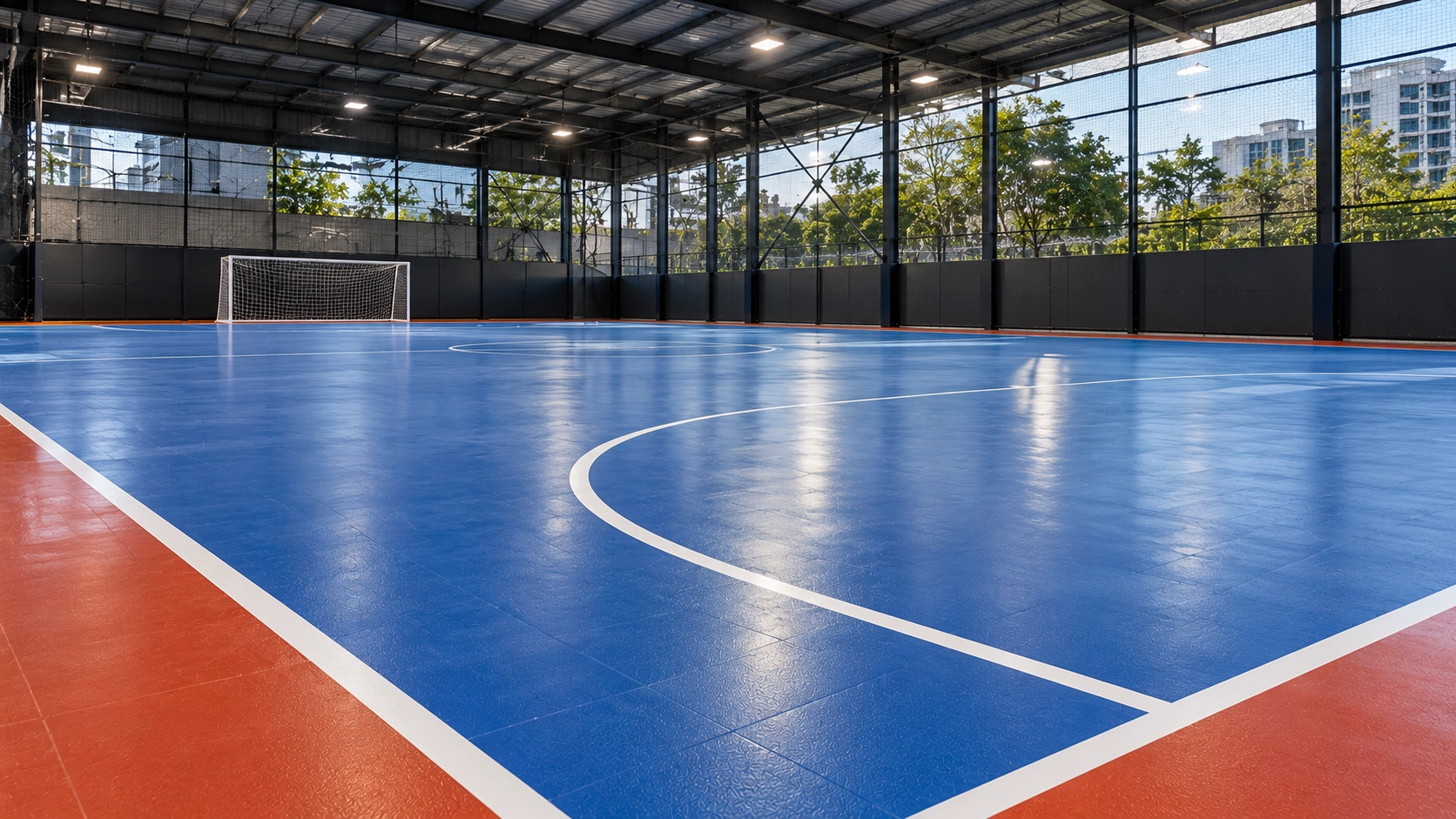
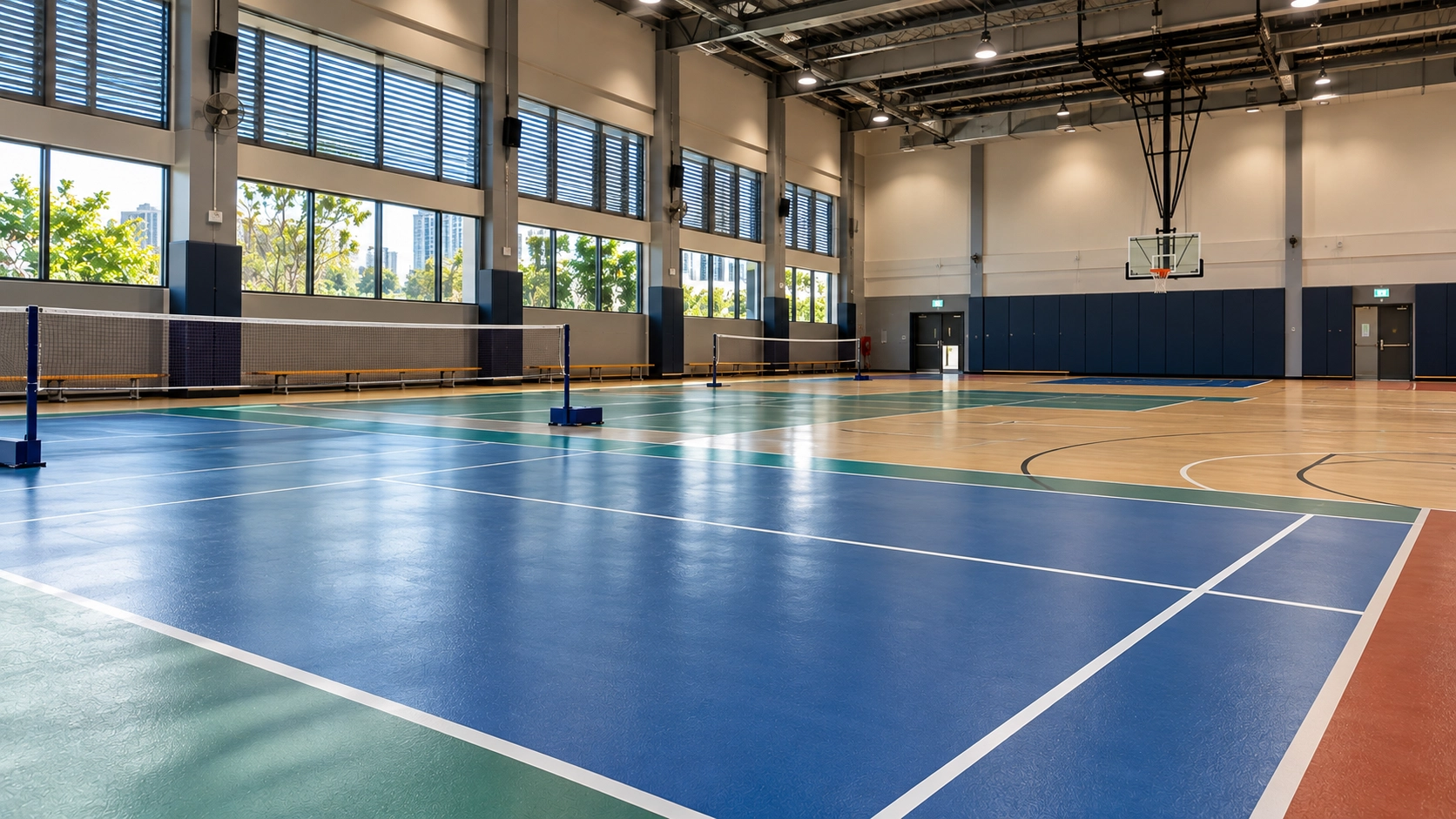
In large open commercial floors where visual simplicity and ease of cleaning are priorities, sheet vinyl creates a cleaner aesthetic than a plank or tile format with multiple grout or click-lock lines across the surface. School halls, healthcare corridors, large retail back-of-house areas and industrial floors all benefit from the visual and practical simplicity of a continuous surface.
Vinyl Sheet vs SPC: Choosing the Right Format
SPC click-lock plank is better for residential dry areas, most offices and retail spaces and any situation where installation ease and flexibility matter. The rigid core provides better subfloor tolerance. The click-lock system allows installation without adhesive and the ability to lift individual planks for replacement.
Vinyl sheet is better for wet areas, hygiene-critical environments, large open commercial floors and anywhere a completely joint-free surface is the priority. Installation requires adhesive and professional seam welding, which means it is a more committed installation than click-lock. Individual sections cannot be easily replaced if damaged.
The practical trade-off is between flexibility and seam elimination. For most Singapore residential renovations, SPC makes more sense. For wet zones, clinical environments and large commercial floors, sheet vinyl is the appropriate specification.
Installation Requirements
Vinyl sheet installation requires a flat, dry and contamination-free subfloor. Any unevenness in the subfloor telegraphs through the sheet material over time. The subfloor is levelled with a self-levelling compound before installation where required.
Once the sheet is adhered, seams are heat-welded and trimmed. The perimeter is coved up the wall to 100mm or more in healthcare and food preparation applications, eliminating the floor-to-wall junction entirely and creating a fully sealed internal envelope.
Our team carries out vinyl sheet installation, including seam welding and perimeter coving, in-house. This is skilled work that affects the performance and appearance of the finished floor. A poorly welded seam fails faster than no seam at all.
Singapore’s MOH licensing requirements for healthcare facilities specify flooring standards that seamless vinyl with coved skirting is specifically designed to meet.
Find Out If Vinyl Sheet Is Right for Your Project
Contact our team to discuss whether vinyl sheet flooring is the right specification for your Singapore project. We supply and install both sheet vinyl and SPC plank.
Call +65 8299 7185. WCEGA Tower, 21 Bukit Batok Crescent #12-78, Singapore. Open 7 days.