People ask us this constantly. “Is LVT the same as SPC?” “Which one should I get for my HDB?” “My contractor said SPC is better but the showroom is pushing LVT — who is right?”
The confusion is understandable. Both products look similar on the surface. Both are sold as waterproof vinyl flooring. The names get used interchangeably in some showrooms. But they are not the same thing — and the difference matters when you are making a decision for your home or commercial space.
Here is a straight answer.
They Are Related, But Not Identical
Think of it this way: SPC is a type of LVT, not a separate product category.
LVT (Luxury Vinyl Tile) is the broader category — it covers any vinyl flooring product that has a printed design layer and a protective wear layer. The distinction between LVT products comes from what is in the core.
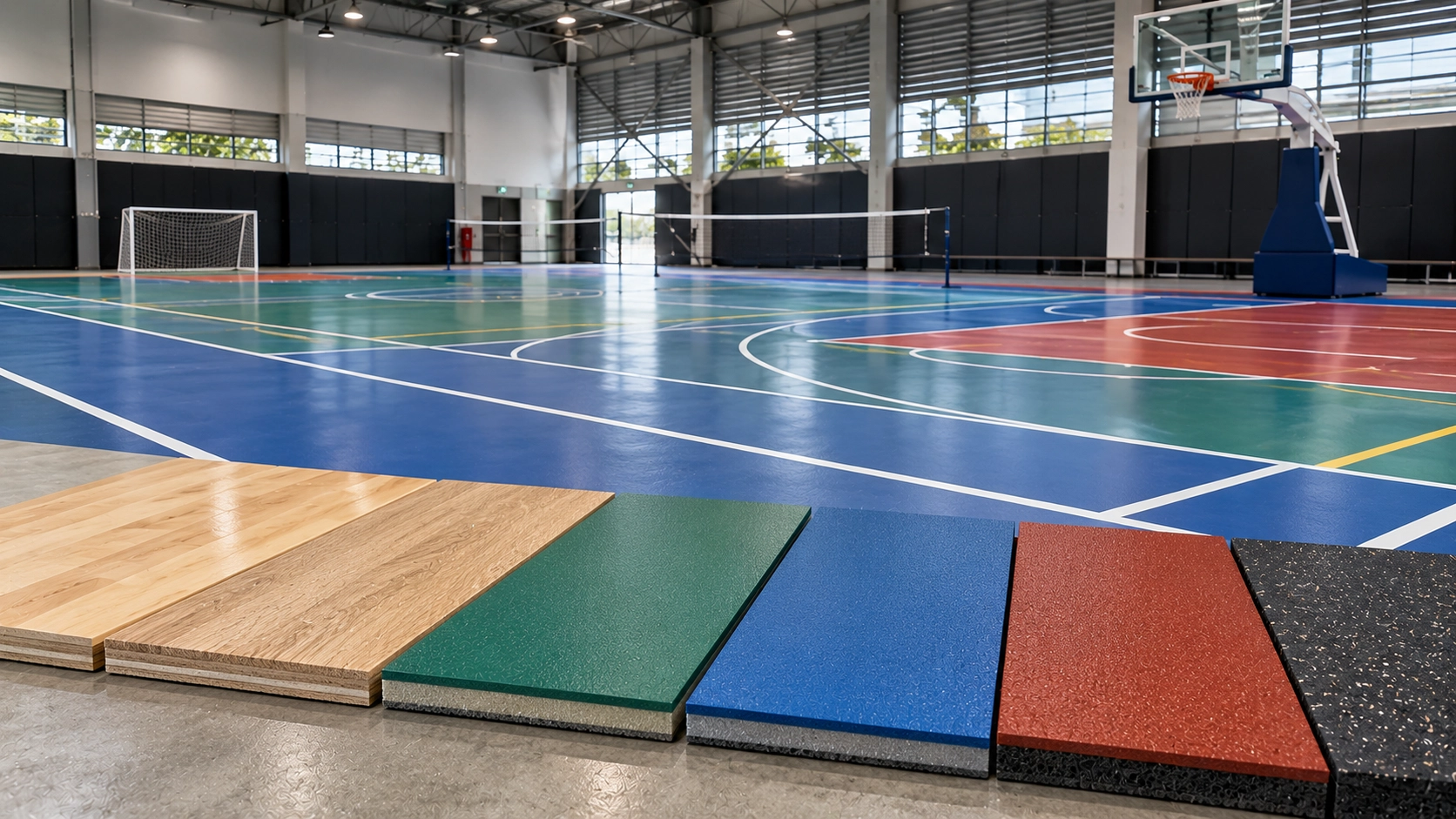
Standard LVT has a flexible PVC core. It is slightly soft and pliable — you can bend a standard LVT plank. SPC (Stone Plastic Composite) has a rigid mineral core made from limestone powder and PVC. You cannot bend it. It is stiff.
So when someone says “I want LVT flooring,” they might mean flexible LVT, rigid SPC-core LVT, or any vinyl product in plank or tile format. When someone says “I want SPC,” they specifically mean the rigid core version.
For this guide, when we compare them, we mean: flexible-core LVT vs rigid-core SPC.
The Core Difference — and Why It Matters in Singapore
This is where the practical difference lives.
A rigid SPC core bridges minor subfloor imperfections better than a flexible LVT core. If your existing tile floor has slight unevenness, SPC handles it more gracefully — you are less likely to see or feel the undulations through the finished floor.
SPC also resists denting under heavy point loads — furniture feet, equipment casters — better than flexible LVT. The mineral core simply does not compress under sustained load the way PVC does.
In Singapore’s humid climate, both products are waterproof. But SPC’s inorganic mineral core is more dimensionally stable across humidity fluctuations than the PVC core of standard LVT. For Singapore conditions specifically, this gives SPC a meaningful edge.
Where Flexible LVT Has the Advantage
Flexible LVT is not the inferior product — it just has different strengths.
Underfoot feel. Flexible LVT is softer and warmer underfoot than rigid SPC. If you are installing in a bedroom or a space where barefoot comfort is the priority, flexible LVT with a foam backing feels noticeably more cushioned than SPC.
Conforming to curves. Flexible LVT can be bent slightly to conform to curved walls or uneven transitions. SPC cannot — it will snap.
Loose-lay format. Some LVT products are available in a heavy, thick loose-lay format that does not use any adhesive or click system. It is held in place by its own weight. Useful for temporary or easily-changed commercial installations. SPC does not work in this format.
Large-format tiles. Larger tile formats — 600mm x 600mm and above — are more commonly available in flexible LVT than in SPC. If you want the look of large stone tiles, you are more likely to find the right product in the LVT range.
Design Options: Is There Really a Difference?
Yes, but it is narrowing. A few years ago, flexible LVT had clearly superior design options — more realistic textures, more tile formats, more premium finishes. Today, the gap has closed considerably. High-quality SPC products now have embossed-in-register textures, wide-plank formats, and realistic colour variation that matches premium flexible LVT.
That said, if you want very large-format stone tiles, herringbone plank layouts in multiple widths, or very specific niche finishes, you will likely find more options in the LVT category.
Our LVT collection covers both formats — click-lock SPC-core planks and tiles, and standard LVT in various configurations. Worth browsing both before deciding.
Installation: Both Are Easy, With One Key Difference
Both SPC and standard LVT click-lock products install in broadly the same way — planks or tiles click together on a flat, clean subfloor. Neither requires adhesive in click-lock format.
The difference is in what happens when there are subfloor imperfections. SPC bridges them. Flexible LVT telegraphs them — you might feel a slight undulation or see a faint ripple in the finished floor over a bump in the tile beneath. For resale HDB overlay installations especially, SPC’s tolerance for imperfect subfloors makes it the easier product to install well.
Our Honest Recommendation
Before committing to either product, it is worth reviewing HDB’s flooring renovation guidelines to understand height limits for your specific flat. For most Singapore HDB and condo residential renovations, SPC is the better practical choice. Better subfloor tolerance, better dent resistance, better dimensional stability in humidity, and comparable design options to flexible LVT in most formats.
For commercial spaces where you specifically need large-format tiles, very soft underfoot feel, or loose-lay installation, flexible LVT may be more appropriate.
Our SPC guide and LVT guide go deeper on each product if you want to get specific on specifications.
Or just call or message us — we will give you a direct answer for your specific space. Open 7 days a week at +65 8299 7185.