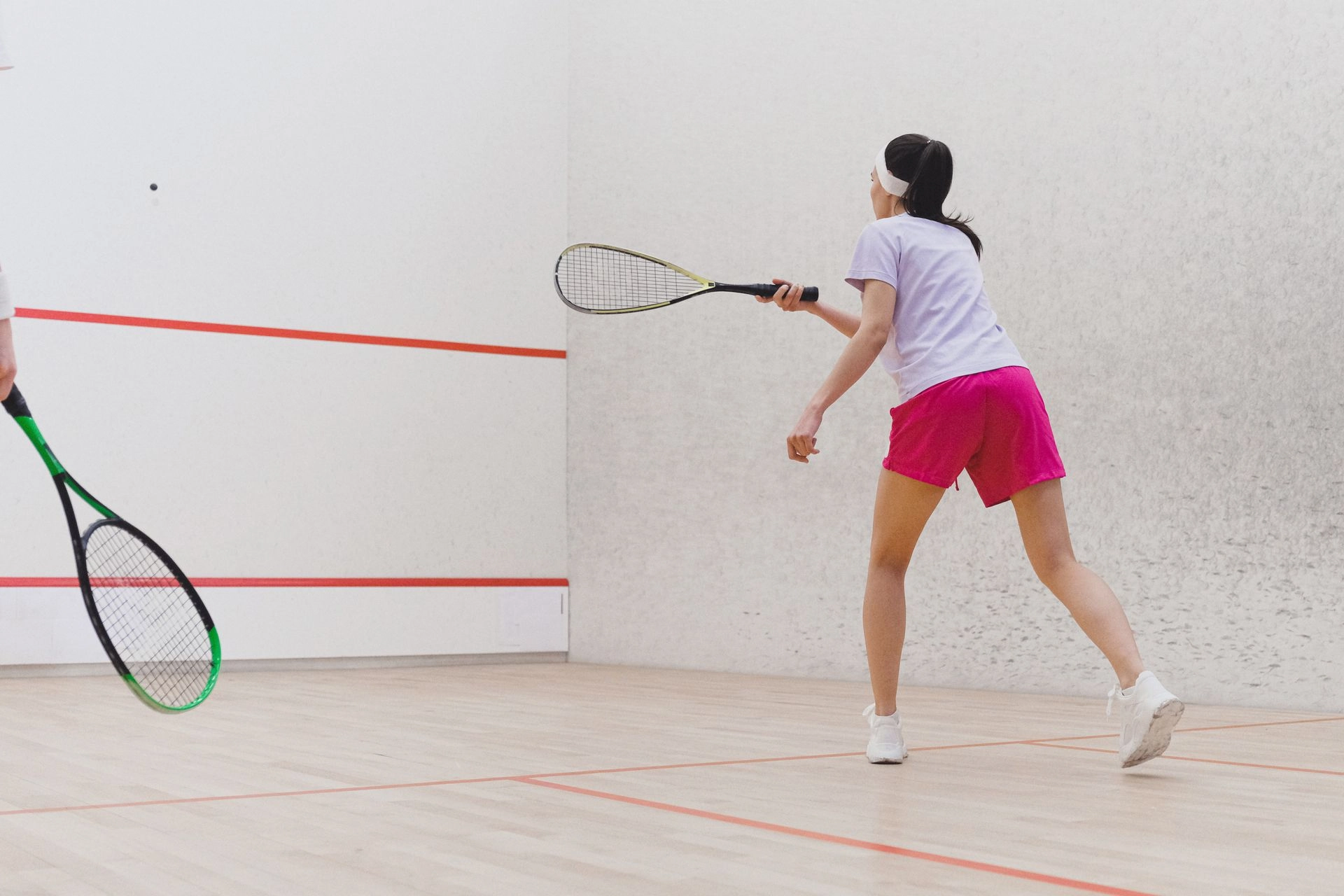
Squash is a sport that most facility managers in Singapore treat as lower priority than badminton, basketball or the increasingly prominent pickleball. That is understandable squash court numbers across Singapore have declined relative to newer sports over the past decade.
But squash is experiencing a quiet revival. Club membership is growing. Private squash courts in condominium developments are being requested by residents. And the sport’s intensity and accessibility to adult players who want a serious workout is attracting a new demographic.
If you are renovating an existing squash court or building a new one in Singapore, the floor specification is unlike any other court sport. Squash has requirements that standard sports vinyl cannot meet.
Why Squash Is Different From Every Other Court Sport
Squash is played in an enclosed box. The ball ricochets off four walls and the floor. Players move in every direction within a very confined space. They lunge, dive and sprint in tight arcs.
The court surface must handle this movement while also allowing the squash ball to bounce correctly off the floor as part of the game. A squash ball bouncing off the court floor behaves differently depending on the surface material, its temperature and the hardness of the court surface.
The World Squash Federation (WSF) mandates hardwood timber as the court surface for competition play. This is not a preference. It is a rule. The bounce characteristics of the squash ball on hardwood are the foundation of how the game works at a technical level. No approved substitute for hardwood exists for WSF-sanctioned competition.
The Timber Specification for Squash Courts
Squash court floors are typically constructed from kiln-dried hardwood strips, usually beech or maple, laid on a resilient subfloor system. The surface is sanded smooth and sealed with a matte or satin lacquer that provides the correct friction level for squash footwear.
The subfloor system is as important as the surface timber. Squash requires some vertical resilience in the floor to absorb player impact without the court feeling like a concrete slab. The traditional approach uses a system of resilient pads or battens beneath the timber to provide controlled deflection.
In Singapore’s climate, timber squash court floors require managed indoor humidity. A squash court that is air-conditioned consistently between 65 and 70 per cent relative humidity maintains dimensional stability. Courts that experience wider humidity swings will show gapping, cupping and surface variation over time.
Managing Singapore’s Humidity for Squash Court Timber
This is the primary challenge of building and maintaining a squash court in Singapore. Our wooden floor polishing and maintenance service covers squash court floor maintenance including periodic sanding, lacquer re-application and moisture management assessment.
The maintenance cycle for a Singapore squash court timber floor is typically:
Annual inspection for surface wear, finish degradation and any signs of moisture-related movement.
Maintenance polishing every 12 to 18 months to restore the surface lacquer and friction characteristics.
Full resanding and refinishing every 7 to 12 years depending on usage intensity and maintenance quality.
Ongoing humidity monitoring using a dehumidification system within the court enclosure to maintain consistent relative humidity regardless of external conditions.
Court Marking for Squash
Squash court lines are painted directly onto the lacquered timber surface using court-marking paint compatible with the timber finish. The lines are red and represent the boundaries within which the ball must contact walls and the floor to remain in play.
Squash court markings are relatively simple compared to multi-sport courts: the out line across the front wall, the service boxes on the floor and the half-court line. The floor marking is minimal, which is one reason squash courts do not typically need multi-sport line planning.
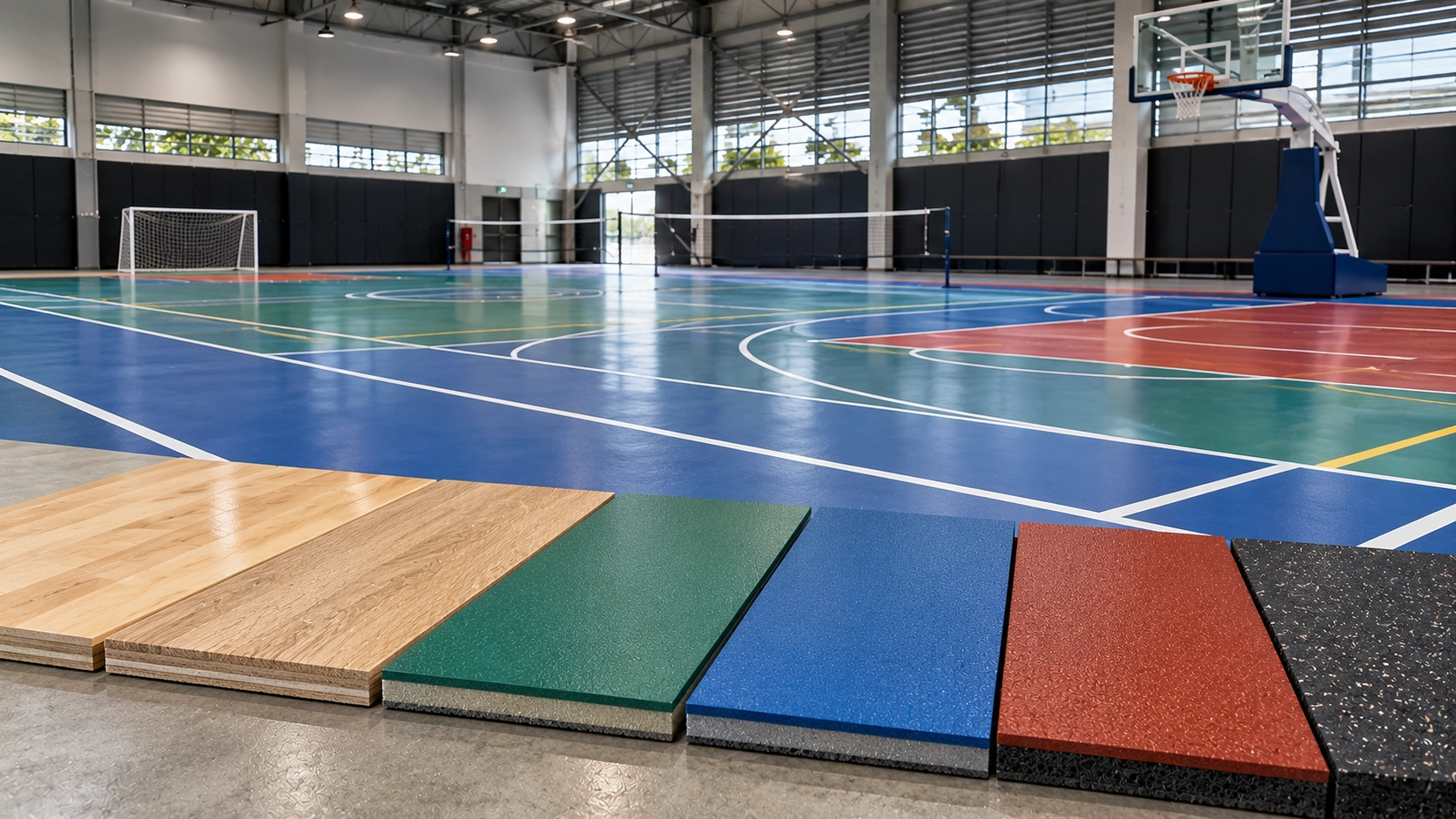
The Alternative: Sports Vinyl for Recreational Squash
For Singapore facilities building courts for recreational play rather than competition, sports vinyl is a viable alternative to timber that avoids the humidity management challenges of hardwood. A sports vinyl surface on a squash court changes the ball response slightly the ball bounces slightly differently on vinyl than on hardwood but for recreational players the difference is acceptable.
For club play, competition preparation or courts that will be used by serious players who have developed their game on timber, hardwood remains the appropriate specification. For condominium facility squash courts used primarily by residents looking for a workout, sports vinyl on a resilient subfloor is a practical and cost-effective option.
Our sports flooring range covers both specifications. Contact us to discuss which is appropriate for your specific facility.
Book a Squash Court Assessment
Contact our team to discuss your squash court flooring project new builds, resurfacing or maintenance for existing courts.
Call +65 8299 7185. WCEGA Tower, 21 Bukit Batok Crescent #12-78, Singapore. Open 7 days.
Singapore’s Sport Singapore works with national sports associations including the Squash Rackets Association of Singapore to develop facility standards for the sport.