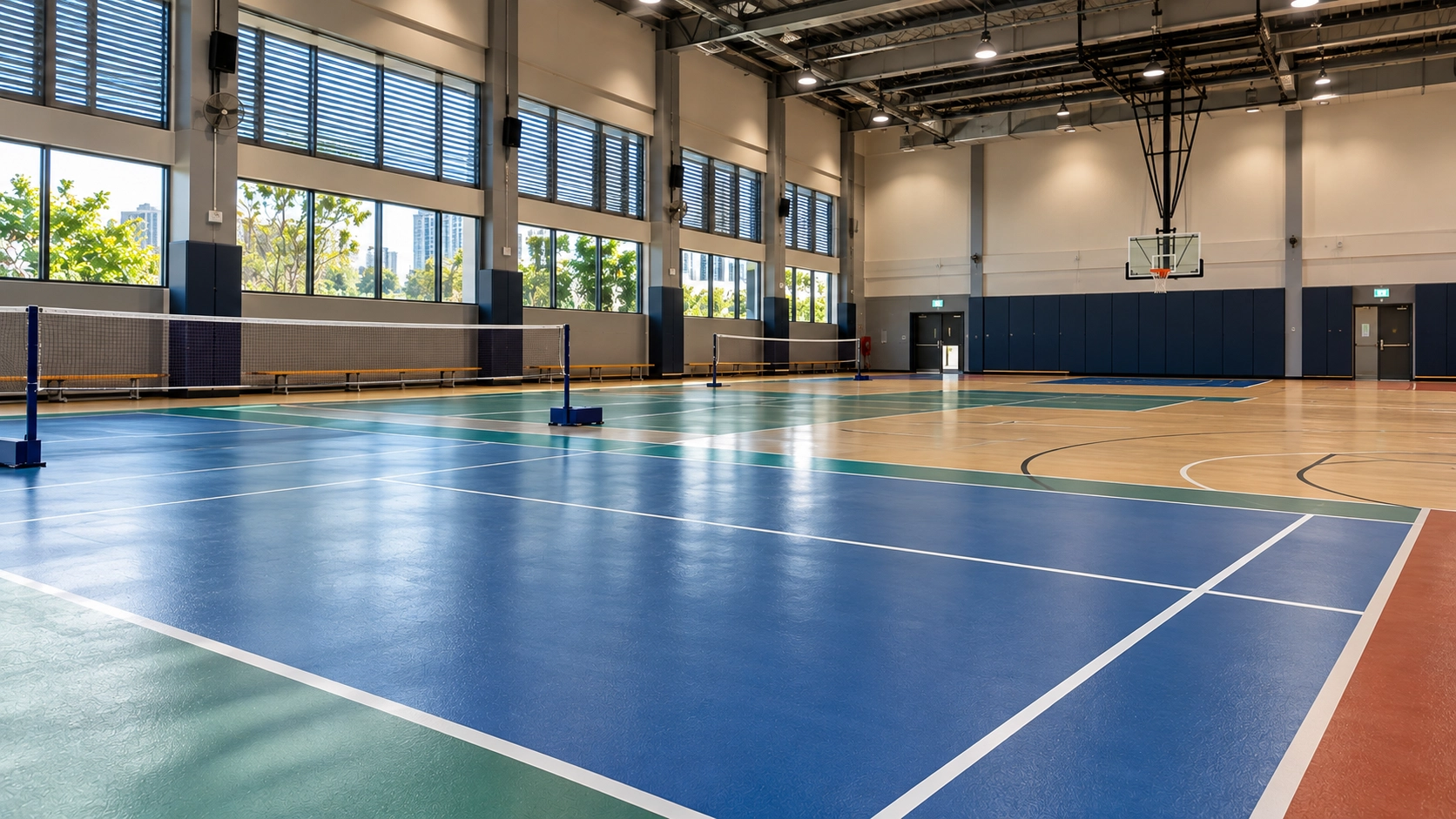
More Singapore operators are building indoor sports courts than at any point in the past decade. Condominium management corporations converting underused multi-purpose rooms. Community clubs adding dedicated pickleball and badminton facilities. Private sports operators opening boutique court facilities. School facility upgrades driven by MOE’s emphasis on active learning environments.
The common thread in every project is the floor specification. Every other decision in the facility design is downstream of the floor. The sport or sports being played determine the surface performance requirements. The surface performance requirements determine the product specification. The product specification determines the installation method and the long-term maintenance schedule.
Getting this sequence right from the start saves significant money and frustration. Getting it wrong produces a court that underperforms, requires early resurfacing or creates safety concerns that affect how the facility can be used.
Start With the Sport, Not the Surface
The biggest mistake facility operators make in sports court specification is choosing the floor before fully defining what sports will be played on it and at what intensity.
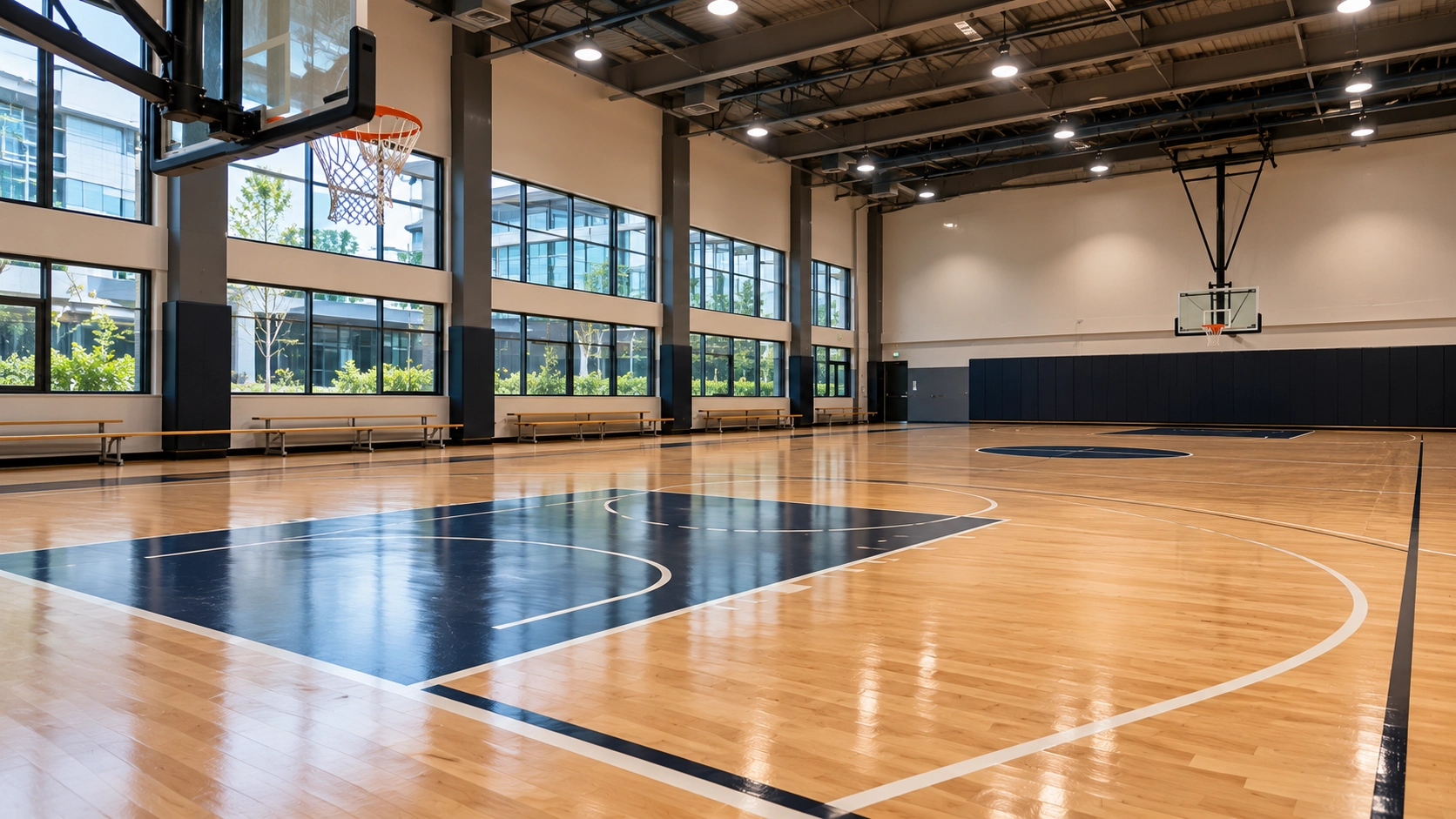
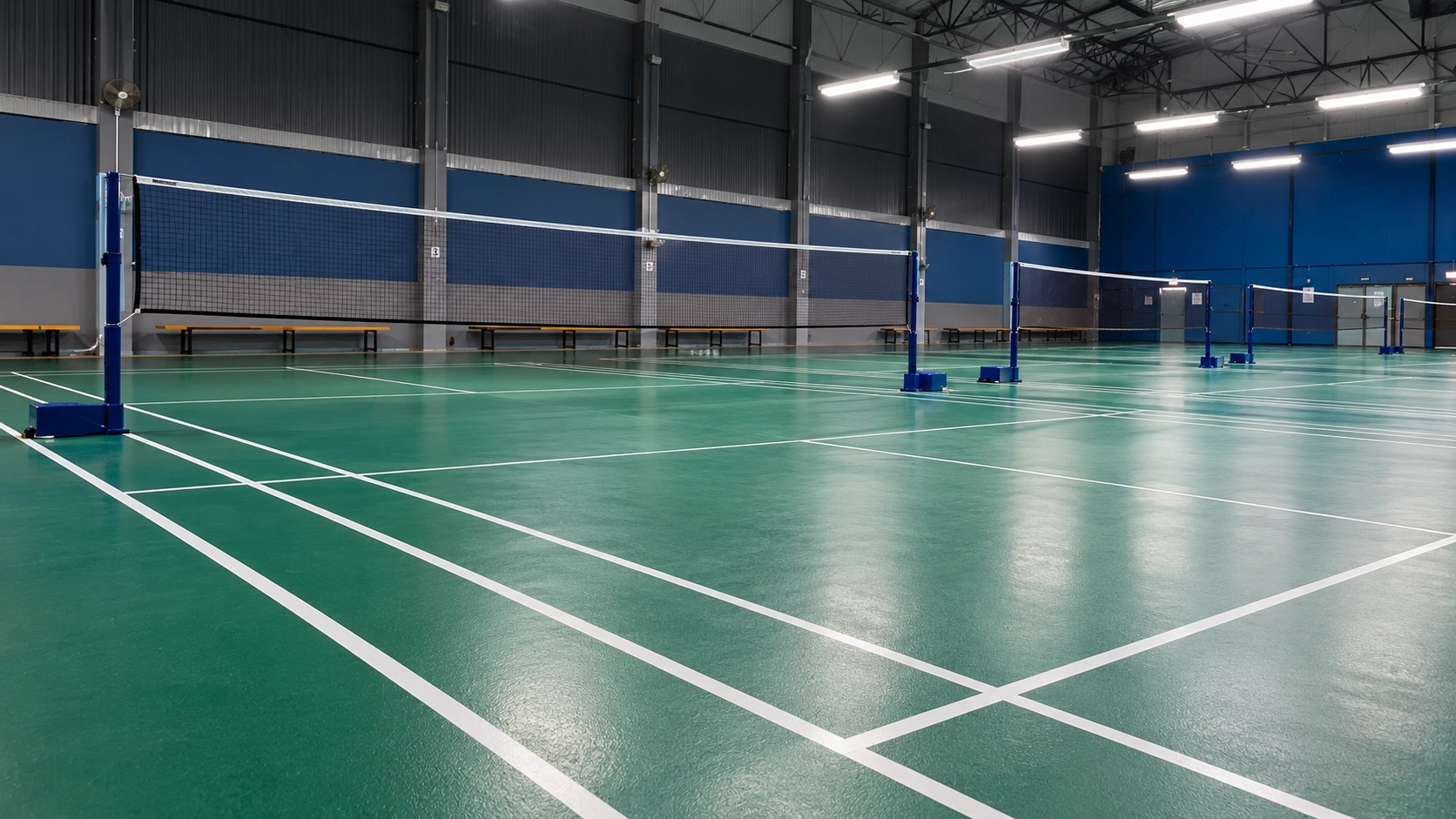
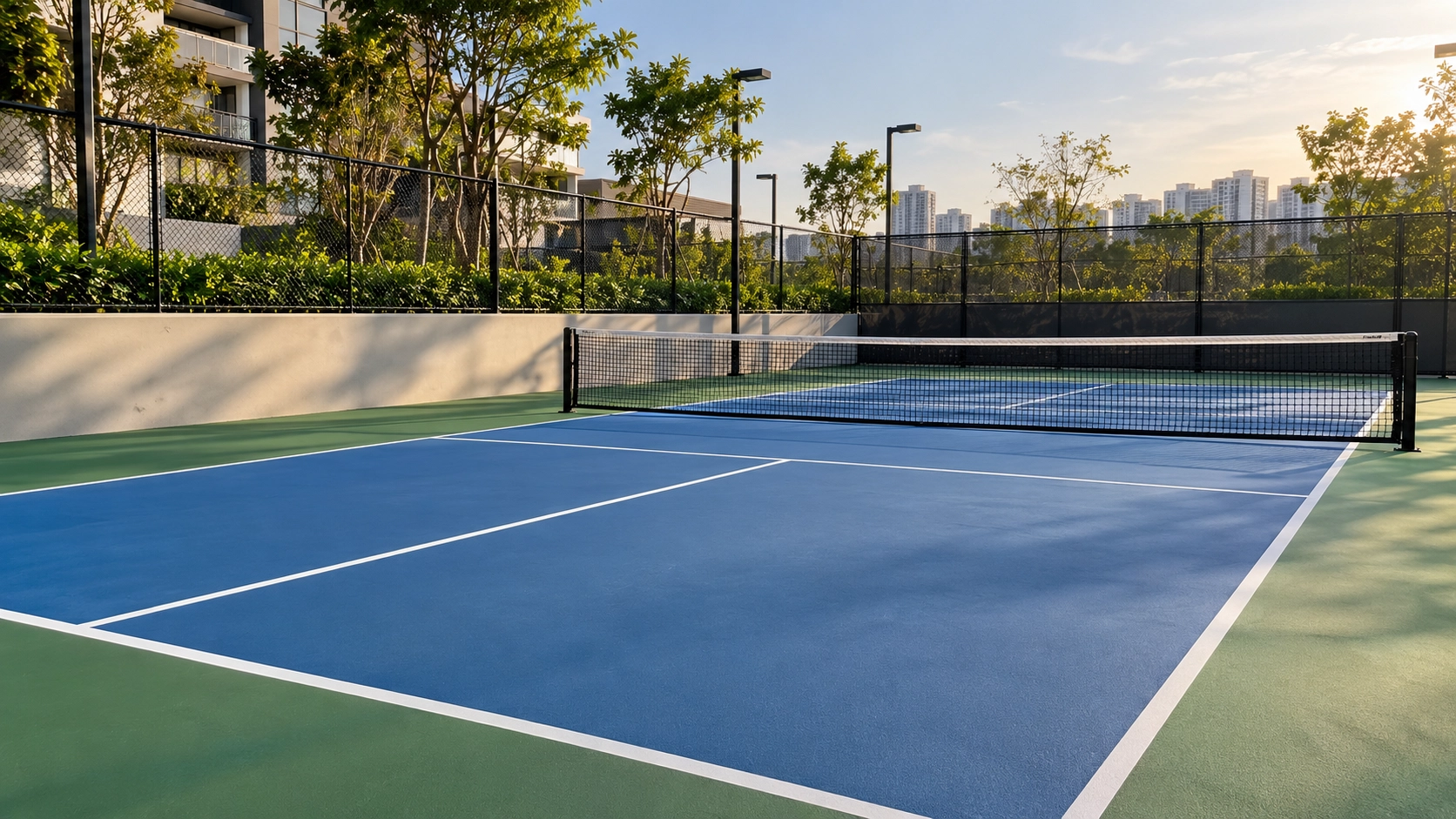
Pickleball, badminton, basketball and volleyball can all be played on the same sports vinyl surface. But each sport has specific performance requirements that pull in slightly different directions: ball response, traction level, shock absorption and surface texture all interact with the game in sport-specific ways.
A court that is optimised for badminton play at club level may not provide the ball bounce consistency that basketball requires. A surface with excellent shock absorption for basketball may feel slightly soft for the rapid lateral footwork of pickleball.
For a dedicated single-sport facility, specify for that sport’s requirements. For a multipurpose court, identify the primary sport and let that drive the specification, then confirm the secondary sports are adequately served by the same surface.
The Core Performance Requirements for Singapore Indoor Courts
Shock Absorption
All serious indoor court sports require some level of shock absorption in the court surface to protect players from repetitive impact stress. The minimum for most sports federation standards is 25 per cent shock absorption. Products meeting EN 14808 standard are tested to this benchmark.
For high-intensity facilities used daily by youth or competitive players, higher shock absorption provides better long-term player welfare. Our sports flooring range covers shock absorption values from 25 to 50 per cent depending on the product specification.
Ball Bounce Consistency
Every court sport depends on predictable ball behaviour. Players develop muscle memory based on the surface response. A court where the ball bounces differently in different zones undermines the technical aspect of the game and creates an unfair playing environment.
Consistent ball response is achieved through uniform surface construction across the entire court area. Seams within the playing boundary, variations in underlayment thickness and surface damage all create inconsistencies that players notice immediately.
Surface Traction
The court surface must provide enough grip for players to stop, change direction and push off explosively without slipping. It must also allow controlled sliding and footwork for sports that involve precise foot positioning.
Singapore’s humidity affects surface traction in indoor courts without climate control. A court surface that provides adequate traction at 65 per cent humidity may become more slippery at 80 per cent humidity. For indoor courts without consistent air-conditioning, specifying a surface texture rated for higher humidity conditions is appropriate.
Acoustic Performance
For courts in Singapore condominium buildings, community clubs and school halls, the acoustic impact on adjacent spaces is a real operational constraint. Footstep noise, ball impact noise and the general sound level of active play all transmit through the building structure.
Sports vinyl with acoustic underlayment reduces this transmission significantly compared to hard surfaces like tiles or bare concrete. In buildings where the court sits above or adjacent to occupied residential, classroom or office spaces, acoustic specification is as important as surface performance.
Sports Vinyl vs Other Surface Options
Sports vinyl is the dominant indoor court surface specification for Singapore’s commercial and institutional sports facilities and the product we install most. Here is how it compares to the alternatives:
Timber sprung floors offer outstanding aesthetics and excellent performance but require significant ongoing maintenance and are vulnerable to Singapore’s humidity without consistent climate control. Appropriate for premium facilities with whole-building air-conditioning and maintenance budgets to match.
Interlocking rubber tiles are appropriate for gym weight areas and outdoor play surfaces but are not suitable as primary indoor court surfaces for racket and ball sports. The tile format creates seams within the playing area and the surface texture is not optimised for court sports.
Polyurethane poured surfaces are used in some Singapore facilities. They provide a seamless surface similar to sports vinyl in performance terms but with different maintenance characteristics. Repairs are more complex and the surface cannot be easily replaced section by section.
Bare concrete with court marking is not appropriate for any serious indoor court sport. It provides no shock absorption and the hard surface accelerates joint stress on players.
Multi-Sport Court Layout and Marking
For Singapore facilities hosting multiple sports, the court marking layout needs careful planning before the floor is installed. Multiple sports sharing one surface means multiple sets of markings in different colours, all on the same floor.
Common Singapore multipurpose court combinations include: pickleball and badminton, basketball and badminton and basketball with volleyball. Each combination has specific line colour conventions that prevent visual confusion during play.
We design the marking layout before installation and confirm dimensions and colour allocation with the facility operator before any marking goes down. Once court markings are applied to a sports vinyl surface, repositioning them is not straightforward.
Project Planning for Singapore Sports Courts
Most sports court flooring projects in Singapore follow a standard sequence: site assessment, sport and performance specification, surface selection, installation and court marking. The full timeline from site assessment to court handover is typically 2 to 3 weeks for a standard single-court installation.
For school and government facility projects, we can provide specification documentation and test reports to support tender and procurement processes. For condominium and commercial facility projects, we work with the MCST or facility management team directly.
Contact our team to discuss your indoor court project. Free site assessments across Singapore.
Call +65 8299 7185. WCEGA Tower, 21 Bukit Batok Crescent #12-78, Singapore. Open 7 days.
Singapore’s Sport Singapore provides design guidelines for community sports facilities that are a useful reference point for operators planning new indoor court projects.