Collecting the keys to your first BTO flat is an event that comes with a list of decisions to make simultaneously. Flooring is usually the largest single area of that decision set by square footage and one of the most financially significant by total spend. It is also one that most first-time homeowners make without enough information.
This guide is written specifically for BTO flat owners who are making this decision for the first time. No jargon. No assumed knowledge. Just a clear picture of what you are working with and what you need to decide.
What You Are Starting With in a BTO Flat
A BTO flat is handed over with bare cement screed in the living room, dining area and bedrooms. The kitchen and bathrooms have basic tiles as original finishes from HDB. The service yard has a basic screed or tile base.
The screed in the dry areas of a new BTO flat is typically flat, clean and in good condition. You are not overlaying anything. You are starting fresh. This is the significant advantage of BTO over resale renovation: you have the widest possible choice of flooring materials without worrying about existing floor height, hollow tiles or adhesion problems from old floors.
What HDB’s Rules Mean for Your Flooring Decision
Two HDB rules matter specifically for BTO flooring:
First, the wet area restriction. For BTO flats, HDB requires that the original wet area floor finishes in bathrooms and toilets are retained for at least three years from key collection. You can tile over the existing bathroom tiles but you cannot remove them during this period. This applies to wet areas only. The living room, dining room and bedrooms have no such restriction and can be floored immediately.
Second, the 50mm cumulative height limit. The total raised floor height across all layers must not exceed 50mm from the original screed. For a BTO flat starting from bare screed, this means you have the full 50mm available. A 5mm to 6mm SPC plank with underlayment is well within this limit.
The full requirements are in HDB’s renovation guidelines. Read them or ask your contractor to walk you through what applies to your specific flat type before any works begin.
Room by Room: What to Install
Living Room and Dining Area
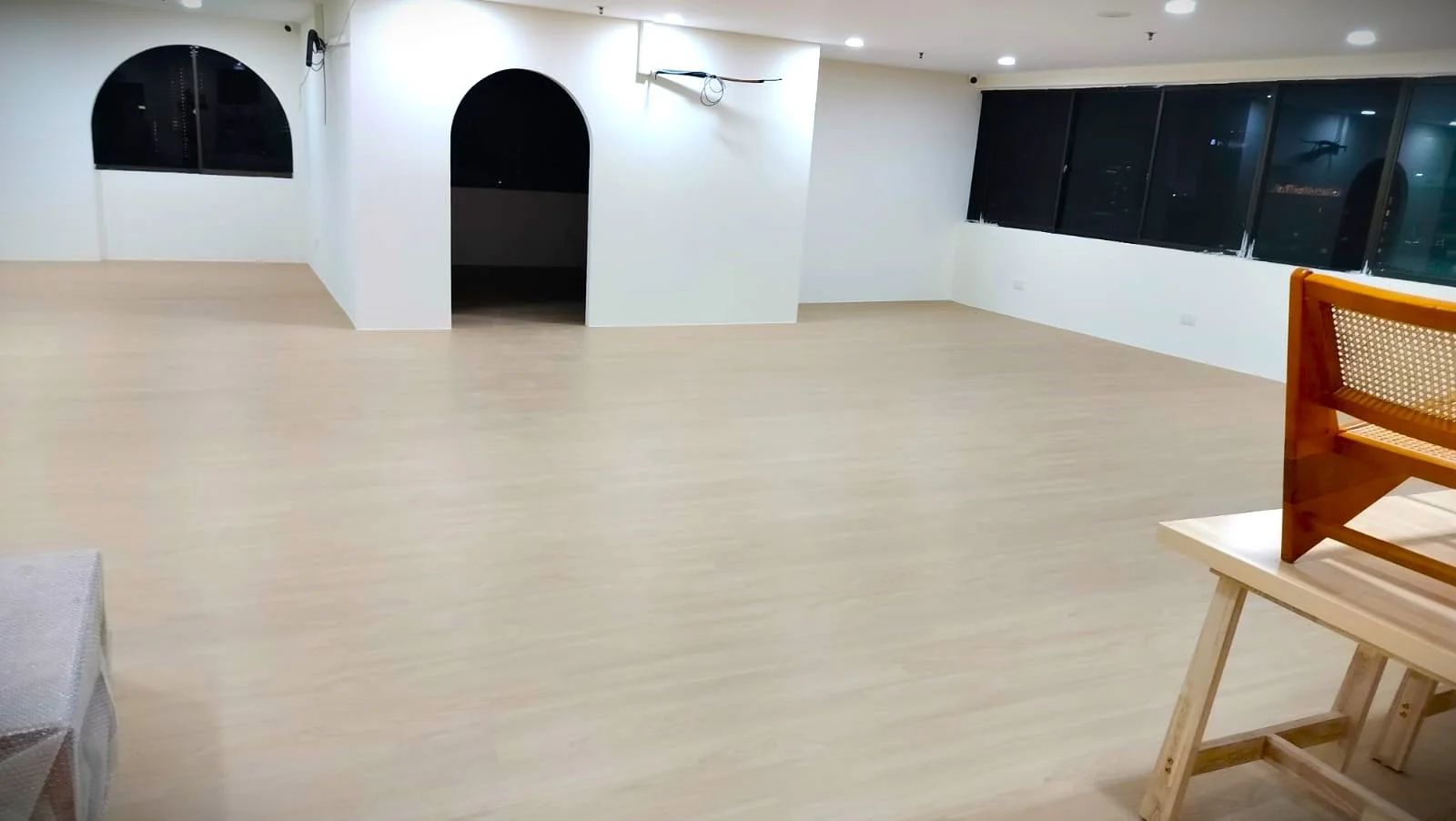
This is the most visible floor in your home and the one that creates the strongest impression of the whole flat’s aesthetic. Most BTO homeowners in Singapore choose one of two directions: SPC vinyl plank in a wood-look finish or large-format LVT stone tiles.
SPC vinyl plank in warm oak or neutral grey tones creates an open, contemporary living space and works with almost any furniture style. The click-lock installation is fast, clean and the floor is usable within hours of completion. The pre-attached acoustic underlayment reduces footstep noise to the unit below, which matters in any HDB upper-floor unit.
Read our SPC guide for detail on what to look for: wear layer thickness, acoustic backing type and surface texture options.
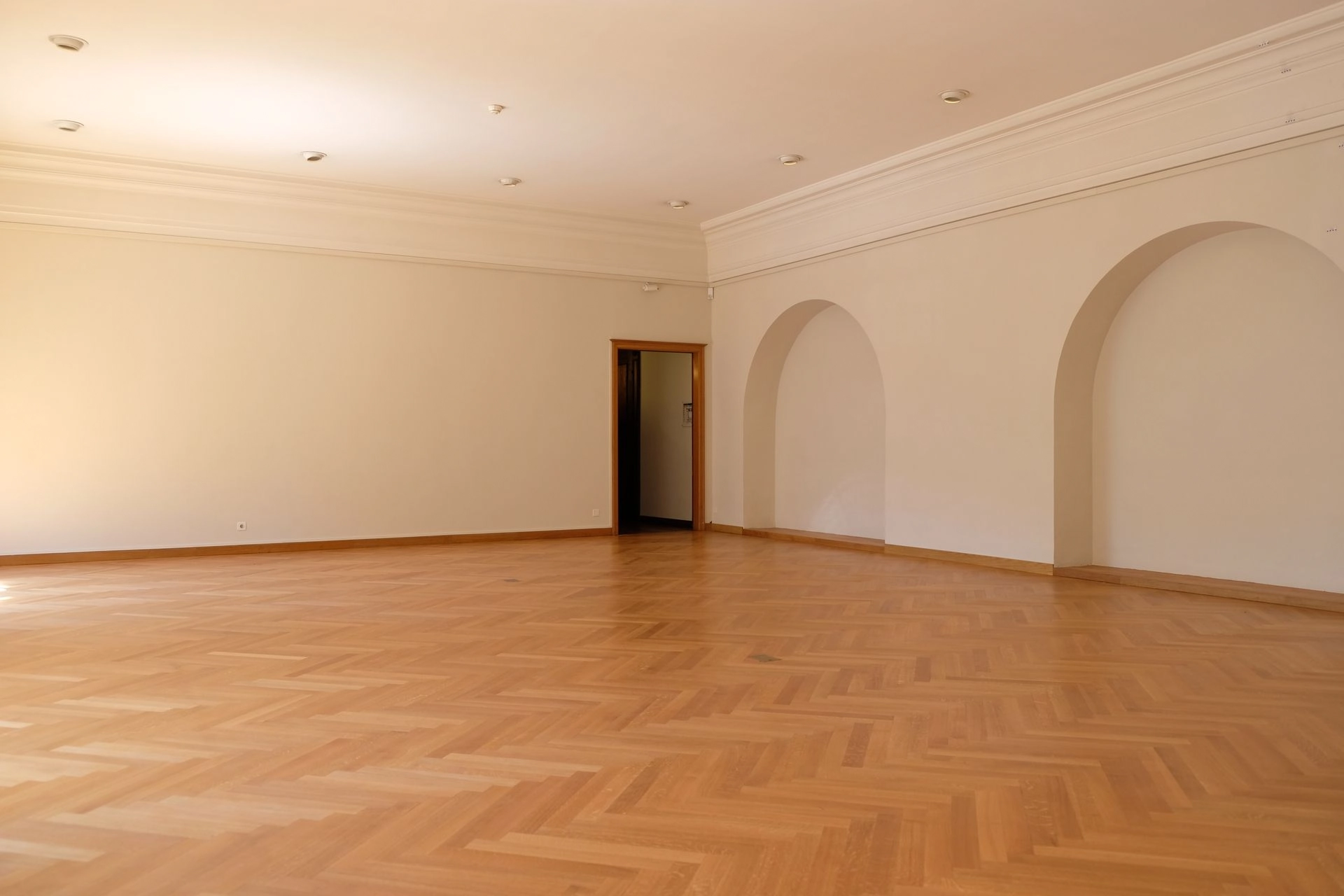
If you want something more visually distinctive in the living area, a herringbone SPC plank layout in a warm oak finish creates a more considered, premium look. The pattern adds visual interest to an open-plan BTO living and dining space and photographs well.
Bedrooms
The same SPC or LVT options work in bedrooms as in the living area. Coordinate the finish across the whole flat for a cohesive result. Attempting a different material in each bedroom produces a disconnected look that most people find less satisfying than a unified approach.
In the master bedroom specifically, consider acoustic performance as a priority alongside aesthetics. An upper-floor BTO master bedroom floor that transmits footstep noise clearly to the flat below at midnight is a quality-of-life issue. Specify SPC with IXPE acoustic backing rather than the base model.
For couples with different preferences, the master bedroom is often where the decision for a slightly softer, warmer underfoot feel becomes important. A thicker acoustic underlayment beneath a standard SPC plank achieves this without changing to a different material.
Kitchen
For your BTO kitchen, the same SPC vinyl that you use in the living area can be used here too, with one important condition: specify a surface with anti-slip texture. A smooth SPC surface in a kitchen that is regularly exposed to water and oil becomes slippery. Most SPC ranges include a textured surface option specifically for wet-adjacent applications.
Keep the same floor colour and format through the kitchen as the living and dining area if the spaces are open-plan or connected by sight lines. A visually unified floor makes a compact BTO flat feel significantly larger.
Bathrooms
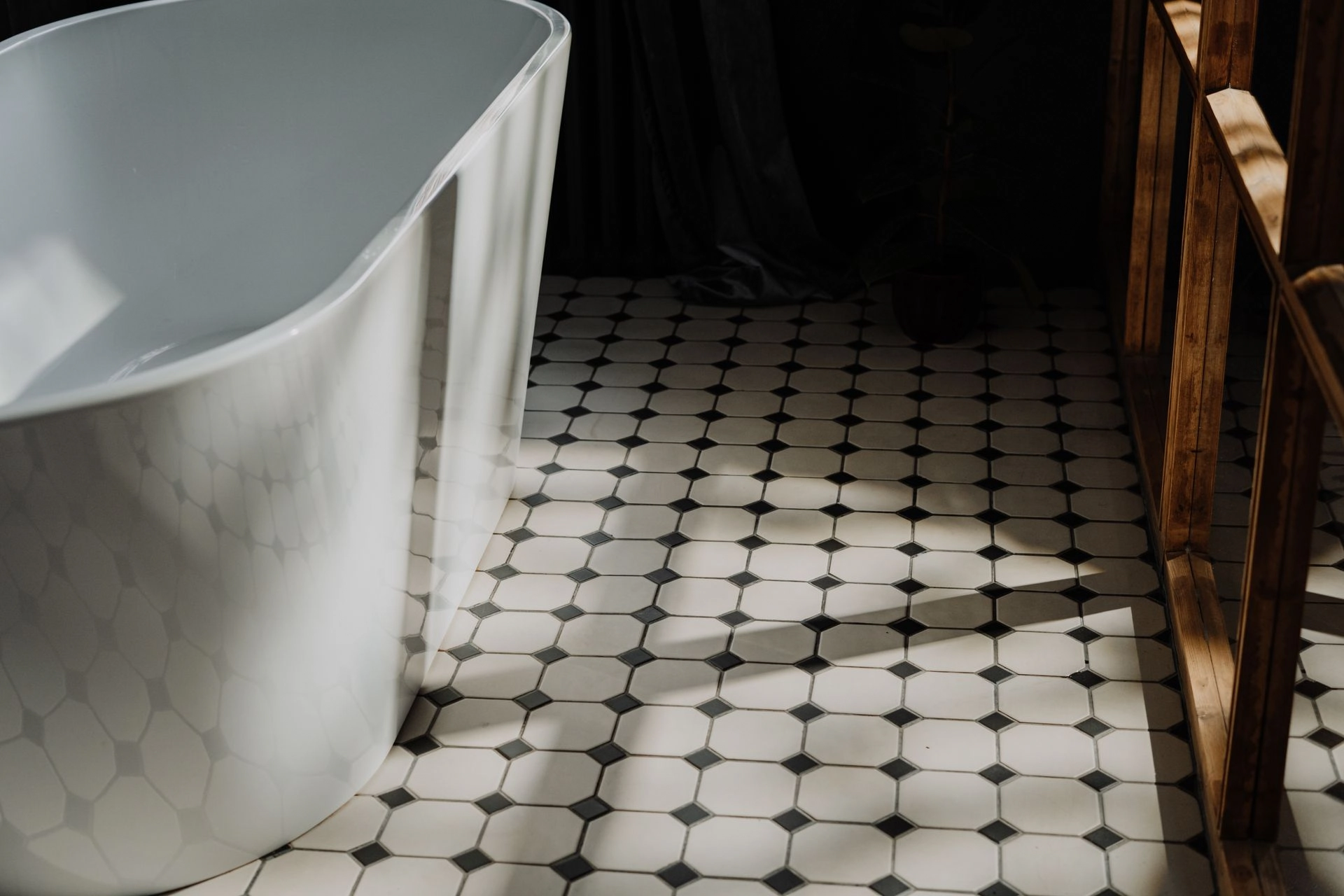
Remember HDB’s three-year restriction on removing original wet area finishes. For BTO bathrooms, you can tile over the existing HDB tiles but cannot remove them. If you want to change the bathroom floor appearance within the three-year restriction window, you are limited to overlay options.
For most first-time BTO homeowners, the practical decision is to leave the bathroom floors as-is during the first renovation and focus the budget on the dry areas. Revisit the bathrooms after the three-year restriction lifts if you want to make changes then.
Service Yard
Unless the service yard screed is very poor quality, leave it as-is and apply a waterproof screed sealer. The service yard is a functional space that sees washing machine drainage, mopping buckets and outdoor footwear. Premium flooring in the service yard is an unnecessary spend. If there is a real condition issue with the existing service yard floor, our cement floor polishing service can assess and treat it.
The Budget Question
For a 4-room BTO flat in Singapore with approximately 110 square metres of floor area, a mid-range SPC installation covering the living room, dining area and three bedrooms typically represents a significant but manageable renovation line item.
The variable that most affects both budget and long-term satisfaction is wear layer thickness. Do not buy the cheapest SPC product available. A 0.5mm wear layer costs more than a 0.3mm product but lasts significantly longer in a family home. Over a 10-year period, the difference in total cost between replacing cheap flooring twice and maintaining quality flooring once is substantial.
Get the Floor Right From the Start
Contact our team for a free consultation on your BTO flooring plan. We work with first-time homeowners regularly and can guide you through the decision clearly and without pressure.
Call +65 8299 7185. WCEGA Tower, 21 Bukit Batok Crescent #12-78, Singapore. Seven days a week.