The balcony is probably the most neglected space in Singapore apartment renovations. Homeowners spend weeks deliberating over living room tiles and bedroom timber but treat the balcony as an afterthought — usually ending up with either bare concrete or a quick coat of outdoor paint that starts peeling within two monsoon seasons.
Given that Singapore’s weather means you can theoretically use your balcony every day of the year, it deserves better thinking.
Here is what actually works for balcony flooring in Singapore’s conditions and what to avoid.
The Conditions You Are Working With
A Singapore balcony faces a specific combination of stresses that indoor flooring never has to deal with: intense UV radiation, frequent heavy rain, standing water during monsoon events, temperature swings between direct sun and cool nights, and in many properties, limited drainage that keeps the surface wet for extended periods after rain.
Any material you put on a Singapore balcony needs to handle all of these without warping, fading, rotting, becoming slippery when wet or requiring constant maintenance. This immediately rules out a number of popular choices.
What Works
Composite Decking — Our Standard Recommendation
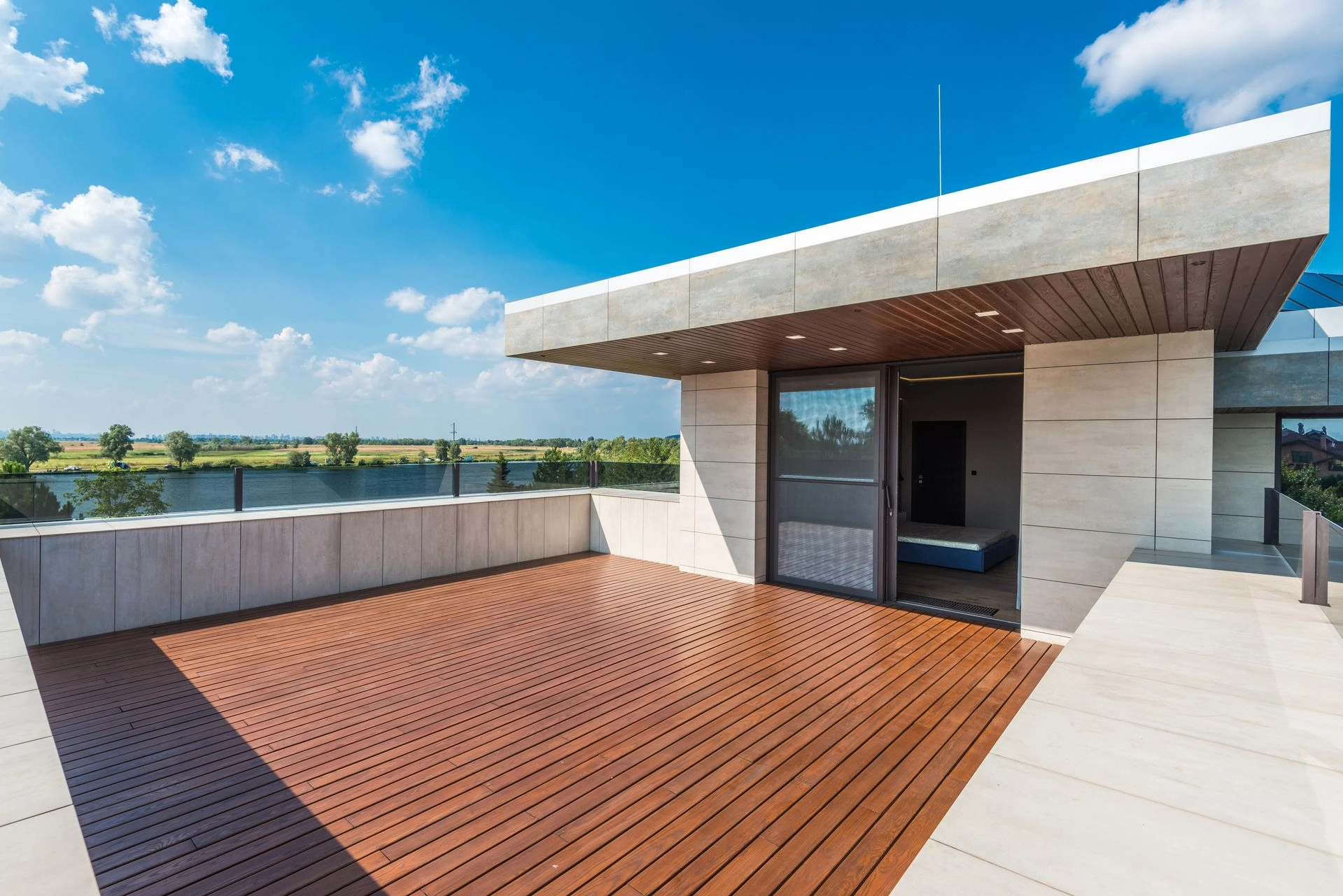
WPC composite decking is the most appropriate outdoor floor surface for Singapore balconies, terraces and pool surrounds. The material is engineered specifically for this environment: UV-stable surface compounds resist fading in Singapore’s equatorial sun, the WPC core repels moisture rather than absorbing it, and the surface remains splinter-free throughout its service life.
From a practical standpoint, composite decking installs on an aluminium or treated timber subframe above the existing balcony screed. This has two advantages. First, the raised deck sits above standing water — drainage happens beneath the boards during heavy rain. Second, no adhesive or modification to the existing waterproofing membrane is required, which matters for both HDB permit compliance and long-term waterproofing integrity.
For HDB balconies, check the HDB renovation guidelines on balcony works and load limits before proceeding. Lightweight composite boards are generally within HDB’s structural allowances, but the specific product weight and frame design should be confirmed.
Outdoor Porcelain Tiles
Large-format outdoor porcelain tiles — specifically rated for exterior use with a slip resistance rating appropriate for wet conditions — are a durable balcony surface in Singapore. The tile itself handles UV and moisture well. The grout, as always, requires periodic sealing and is the maintenance challenge over time.
For Singapore balconies where standing water is a concern, tiles need to be laid with a fall toward the drain. This is standard good practice but it requires proper planning before installation.
Outdoor Vinyl and SPC
Some SPC products are marketed as suitable for outdoor use. In Singapore’s conditions — particularly the UV intensity and temperature extremes of a west or south-facing balcony — most standard indoor SPC products degrade faster outdoors than their specifications suggest. If you are using SPC on a covered balcony that receives limited direct sun, it can work. For fully exposed balconies, composite decking is more appropriate.
What Does Not Work
Solid Timber Decking
Teak and merbau timber decking requires annual oiling and inspection in Singapore’s outdoor environment. Without consistent maintenance, the timber dries out, checks, develops splinters and eventually warps. It also becomes slippery when wet without proper anti-slip treatment. Most Singapore homeowners who install solid timber balcony decking end up replacing it within 7 to 10 years. Composite decking avoids all of these issues with no oiling required.
Standard Indoor SPC or LVT
Indoor vinyl flooring is not rated for outdoor UV exposure. The wear layer formulation is not designed to handle direct sunlight and will fade and degrade faster than the spec suggests. Do not use indoor products outdoors.
Outdoor Paint Over Concrete
This is Singapore’s most common balcony flooring mistake. Outdoor floor paint peels, flakes and stains within one to two years in Singapore’s conditions — particularly when the surface collects water or the paint is applied over a substrate with moisture migration. It creates maintenance burden and eventual eyesore. If the balcony is getting renovated, do it properly.
Pairing Balcony Floor With Wall Finishes
A composite deck balcony pairs well with WPC fluted wall panels on the adjacent wall surface. Both materials share the same weather-resistant composite construction, the visual language is cohesive and both can be sourced from Lexsure, which simplifies the specification and procurement process.
Want to Rethink Your Balcony?
Contact our team for a free balcony flooring assessment. We will look at your specific balcony configuration, drainage situation and layout and recommend the right surface and installation approach.
Call +65 8299 7185 or visit WCEGA Tower, 21 Bukit Batok Crescent #12-78, Singapore. Open 7 days.