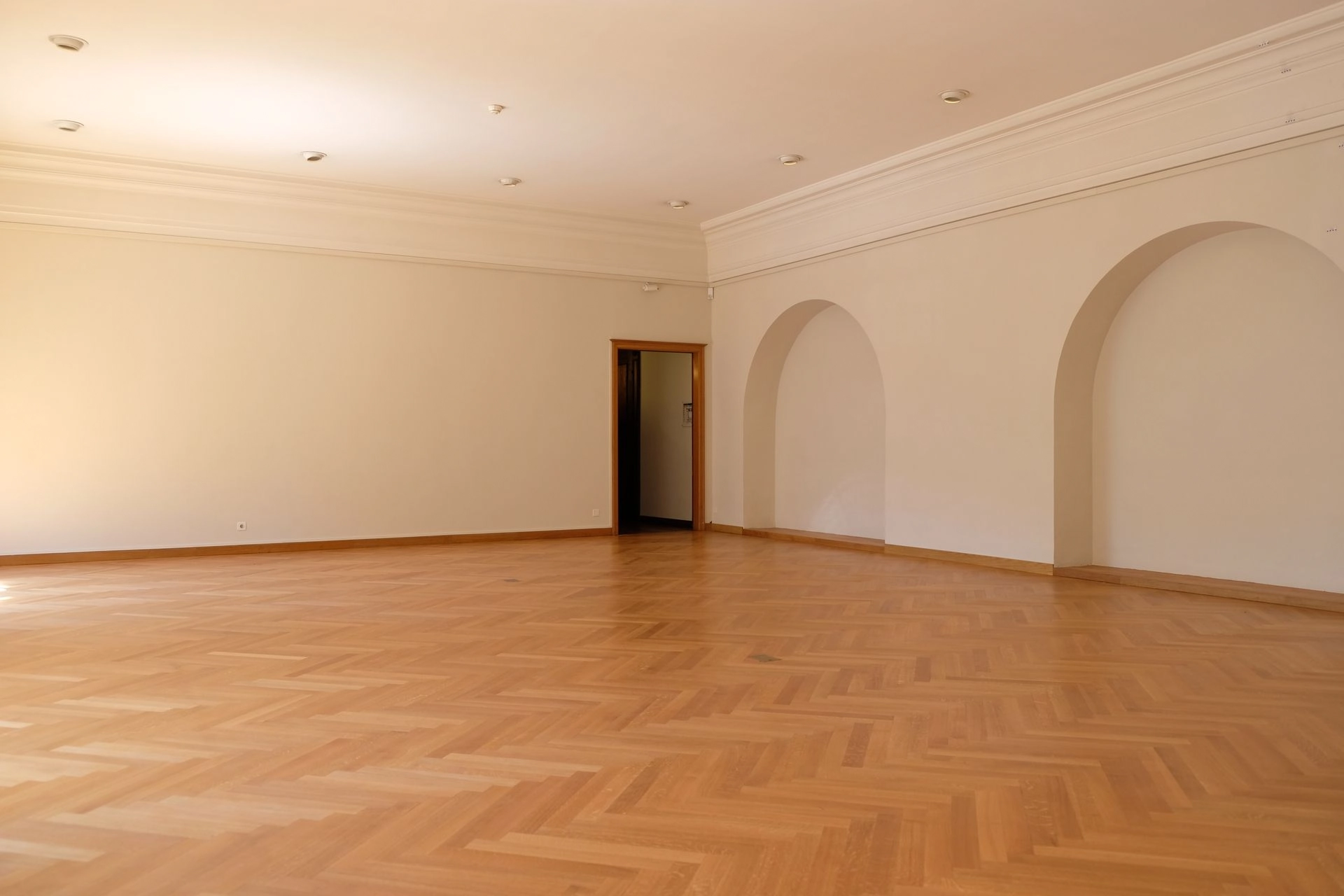
Walk into almost any Singapore landed home built before 1990 and there is a reasonable chance you will find parquet underfoot. Those small hardwood blocks — typically teak, merbau or red balau — laid in herringbone, brick or basket-weave patterns, have been a feature of Singapore residential architecture for generations.
They are also having a genuine revival. The pattern-led look of traditional parquet has come back into interior design conversation in a significant way. New homeowners in older properties are choosing to restore original parquet rather than cover it. And the engineered wood market now offers contemporary parquet products that bring the same visual language into modern homes without the maintenance demands of solid timber.
Here is what you need to know.
Solid Parquet vs Engineered Parquet: Not the Same Thing
The parquet in most older Singapore properties is solid hardwood — small individual blocks of real timber, typically 6mm to 12mm thick, laid with adhesive on a concrete or terrazzo subfloor. The surface has been sanded and lacquered multiple times over the decades, which is why many older Singapore parquet floors still look presentable despite their age.
Solid parquet absorbs and releases moisture as Singapore’s humidity changes. This is why you see gapping between blocks in dry air-conditioned periods and slight cupping in humid monsoon months. It is the nature of the material — not necessarily a sign of failure.
Engineered parquet takes the same visual result and builds it differently. A real hardwood veneer — 2mm to 4mm of actual timber — sits on a cross-bonded plywood or HDF core. This dramatically reduces moisture movement. Engineered parquet is more dimensionally stable than solid timber in Singapore’s conditions, which is why it is now the more commonly specified option for new installations.
The Restoration Question for Older Singapore Homes
If you have inherited original solid parquet in a resale property or landed home, the first decision is whether to restore it or cover it.
Our honest position: restore it if you can. A well-restored original teak or merbau parquet floor has a depth and character that no new product — engineered or otherwise — fully replicates. The wood has darkened and mellowed with age in a way that genuine antique timber achieves and new timber takes decades to approach.
Whether restoration is viable depends on two things: the condition of the blocks and how much timber is left for sanding.
Parquet blocks are finite. Each time the floor is sanded, material is removed. Most solid parquet blocks start at 6mm to 12mm of timber above the adhesive. If the floor has been sanded three or four times already, there may be only 2mm to 3mm of timber remaining — too thin for another full resanding without risk of breaking through to the adhesive below.
Our wooden floor polishing and restoration team assesses parquet thickness and condition before recommending whether full resanding, maintenance polishing or covering is the right approach. We will not recommend resanding a floor that cannot safely take it.
Where Engineered Parquet Makes Sense for New Installations
For new HDB renovations, condo fit-outs or landed home projects where you want the parquet look without the humidity management concerns of solid timber, engineered parquet is the answer.
It installs as a floating floor or glue-down, which means it can go over existing tiles in resale HDB flats — subject to HDB’s cumulative floor height limit. It handles Singapore’s humidity better than solid timber. And the range of patterns and timber species available today is genuinely extensive.
For bedrooms and living areas in climate-controlled environments, engineered parquet is a premium option. For kitchens, bathrooms and service yards — anywhere with significant moisture exposure — it is not appropriate. Those areas need a waterproof specification like SPC vinyl or homogeneous sheet vinyl.
The Herringbone and Chevron Revival
Most of the interest in parquet flooring currently coming through Singapore’s interior design community is pattern-driven. Herringbone and chevron layouts — where planks are laid at 45 or 90 degrees to create a zigzag visual movement — are more popular now than at any point in the past two decades.
Both patterns work well in Singapore’s HDB and condo living rooms, where a statement floor creates the impression of a more considered, premium interior without requiring structural changes or expensive furniture.
The difference between the two: herringbone blocks meet at right angles in a rectangular zigzag. Chevron blocks are cut at an angle so the ends meet in a pointed zigzag. Chevron is slightly more complex to install and visually more dramatic. For a statement living room floor in a 4-room HDB, herringbone in a warm oak engineered wood is hard to beat.
Our LVT collection includes herringbone plank options that achieve this look in a waterproof vinyl format — a practical choice for households with young children or pets where the maintenance demands of engineered wood are a concern.
Maintaining Parquet Flooring in Singapore
Solid parquet requires more active maintenance than vinyl or engineered wood. In Singapore’s conditions specifically:
Keep indoor humidity between 55 and 65 per cent using air-conditioning and dehumidifiers where necessary. This is the single most impactful thing you can do for the longevity of solid parquet.
Sweep daily to remove grit and sand — these are abrasive to lacquered timber surfaces.
Wipe liquid spills immediately. Do not allow water to sit on the surface or enter the gaps between blocks.
Use only pH-neutral timber floor cleaners. Never use steam mops on parquet.
Schedule professional maintenance polishing with our floor polishing team every 12 to 18 months to maintain the lacquer surface and prevent deeper damage.
Talk to Us About Your Parquet
Whether you are restoring original parquet in a landed property, choosing engineered parquet for a new renovation or deciding whether to cover an old floor with SPC, our team can give you a straight recommendation.
Book a free site assessment or call +65 8299 7185. WCEGA Tower, 21 Bukit Batok Crescent #12-78, Singapore. Open 7 days.