
Wooden flooring polishing Singapore.
Professional sanding, lacquering and shine restoration for solid timber, parquet and engineered wood floors in Singapore homes and commercial spaces. From a lacquer refresh that takes a day to a full sand-back that recovers decades of wear — in-house team, workmanship guaranteed.
▎Service at a glance
Service
Wooden Floor Polishing & Lacquering
Coverage
Island-wide, Singapore
Sectors
Residential · Commercial · Hospitality
Service
levels
Lacquer refresh OR Full sand-back & re-lacquer
Duration
4–8 hrs work + lacquer cure time
Finish
options
Matte · Satin · Gloss
Frequency
Refresh: 12–18 months · Full: 5–7 years
Guarantee
14-day workmanship guarantee
▎01 / Why polish wooden floors
Recovering the timber beneath the wear.
Singapore’s tropical humidity causes timber floors to expand, contract and develop surface checking over time. Regular polishing and re-lacquering reverses this — and prevents the kind of deep damage that requires full floor replacement.
Restores grain and natural warmth
Sanding strips the dulled, scratched lacquer to reveal the clean timber grain beneath. Fresh lacquer then amplifies the wood’s natural colour depth and warmth — noticeably richer than the worn surface above.
Removes scratches and surface damage
Belt and orbital sanding removes surface scratches, pet claw marks, furniture drag lines and lacquer checking caused by Singapore’s humidity cycles — restoring a smooth, even surface ready for fresh lacquer.
Extends floor lifespan significantly
Regular re-lacquering every 12–18 months prevents the surface damage from penetrating into the timber itself — the difference between a floor that lasts 30 years and one that needs replacing after 10.
Humidity and moisture protection
Fresh lacquer seals the timber surface against Singapore’s humid air — significantly slowing moisture exchange between the wood and atmosphere, reducing the seasonal expansion and contraction that causes joints to open.
▎02 / Which service level do you need?
Refresh or full sand-back?
Wooden floor polishing comes in two distinct service levels. The right choice depends on the current condition of your floor — our team assesses this during the free site visit and recommends honestly.
▎Service Level 01
Lacquer Refresh & Polish
Every 12–18 months · 4–6 hours · Less disruptive
Light mechanical buffing of the existing lacquer surface, followed by application of 1–2 fresh lacquer coats. No sanding to bare timber. The most common service — suitable when the floor still has a reasonably smooth surface but has lost its sheen and shows minor surface marks.
- Light buffing removes surface dulling
- 1–2 fresh lacquer coats applied
- No sanding to bare timber — less dust
- Suitable for floors with minor surface wear
- Residents can typically return same evening
- Matte, satin or gloss finish available
▸ Book if: dull sheen, minor marks, no deep scratches
▎Service Level 02
Full Sand-Back & Re-Lacquer
Every 5–7 years · 1–2 days · More disruptive
Complete removal of existing lacquer by belt and orbital sanding to bare timber, followed by crack filling, fine sanding, and 2–3 fresh lacquer coats. Required when the floor has deep scratches, severe lacquer checking, significant staining or has not been serviced in many years.
- Belt sanding strips to bare timber grain
- Orbital fine sanding for smooth surface
- Wood filler repairs deep gouges and cracks
- 2–3 full lacquer coats applied
- Residents must vacate during work and fume clearance
- Achieves like-new appearance on most floors
▸ Book if: deep scratches, heavy staining, years of neglect
▎03 / Lacquer options
Water-based or oil-based lacquer?
The lacquer type determines drying time, fume levels, finished colour tone and the disruption to your household. Our team recommends based on your timber type, existing finish and schedule.
▎Option 01 — Most recommended
Water-Based Lacquer
Fast-drying, low-VOC lacquer that cures clear without yellowing. The preferred specification for most Singapore residential and commercial wooden floor polishing — especially suited to lighter-coloured timber and modern interior styles. Residents can typically return the same day.
Drying time
2–3 hrs per coat
Fume level
Low (water-based)
Colour effect
Dries clear, no yellowing
Finish options
Matte · Satin · Gloss
▸ Best for: light timber, modern homes, condos, offices
▎Option 02
Oil-Based Lacquer
Traditional solvent-based lacquer with a longer cure cycle. Produces a slightly warmer amber tint that enhances the character of dark timber species such as teak and merbau. Requires longer ventilation time — residents typically need to vacate overnight. Used where the warmer tone is specifically desired.
Drying time
8–12 hrs per coat
Fume level
High — vacate property
Colour effect
Warm amber tint
Finish options
Satin · Gloss
▸ Best for: teak, merbau, dark timber, traditional parquet
▎04 / Wood species we treat
Every timber type responds differently.
Different wood species have different grain structures, hardness levels and porosity — all of which affect the sanding approach, filler type and lacquer adhesion. Our team adjusts the process for each species.
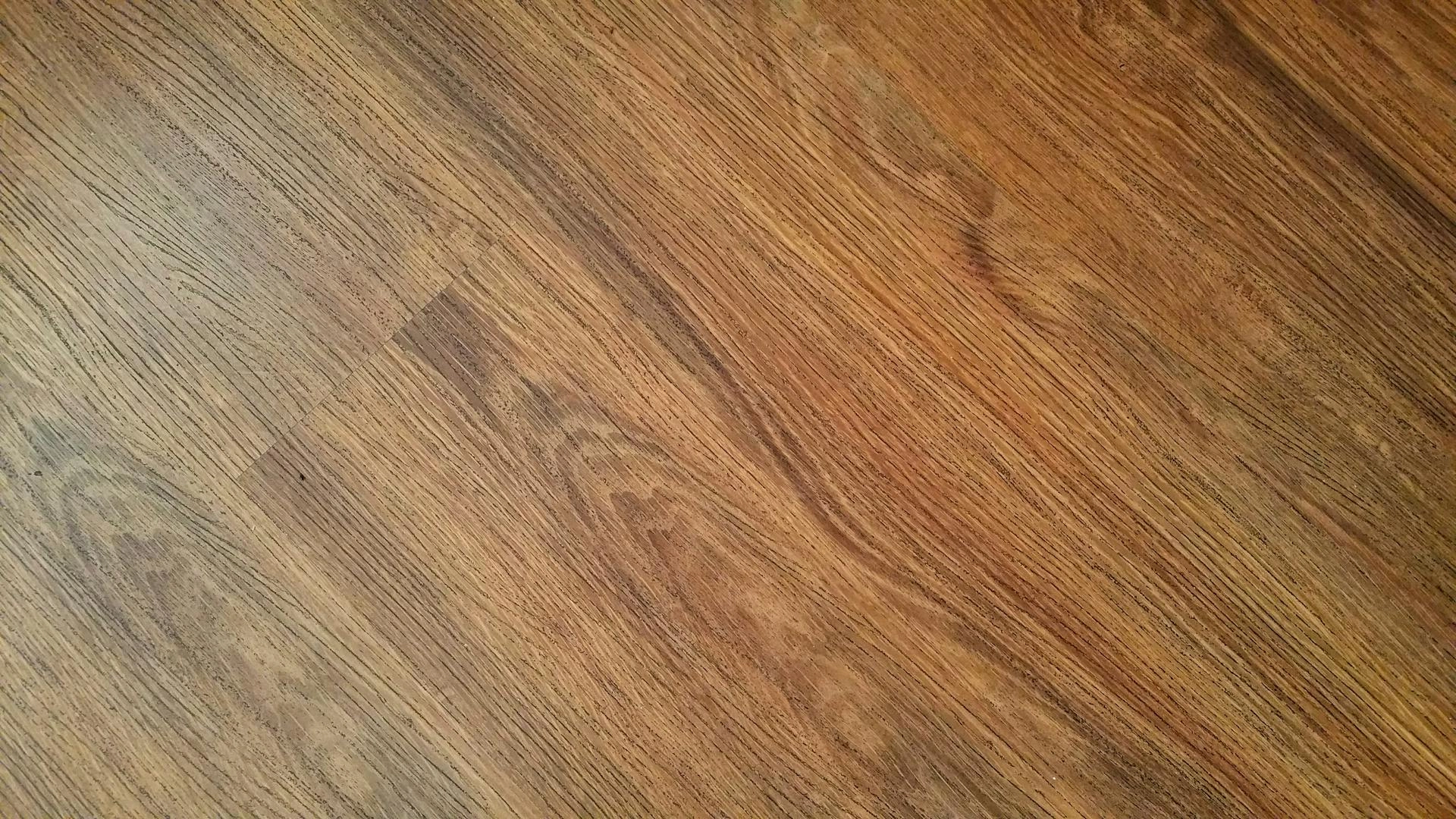
Teak
High natural oil content — sanding releases oils that require neutralising with solvent wipe before lacquer can adhere properly. One of the most common species in older Singapore landed homes and HDB parquet. Responds very well to oil-based lacquer for warm amber enhancement.
▸ Extra prep: oil neutralising before lacquer
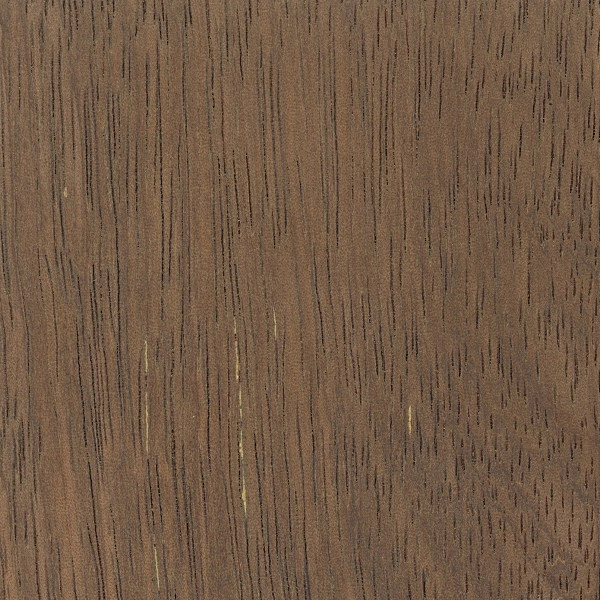
Merbau
High tannin content bleeds reddish-brown when wet — grain wetting from water-based products must be controlled. Dense, hard timber that takes longer to sand but results in a beautiful deep grain. Common in Singapore landed property floors from the 1980s–2000s.
▸ Extra prep: tannin bleed management

Pine
Soft timber — more susceptible to scratching between services but also easier to sand and refinish. Lighter colour that responds well to water-based lacquer. Common in condominiums and newer installations. Can show sanding patterns if too coarse a grit is used — fine finishing critical.
▸ Fine-grit finishing essential to avoid sanding marks

Oak
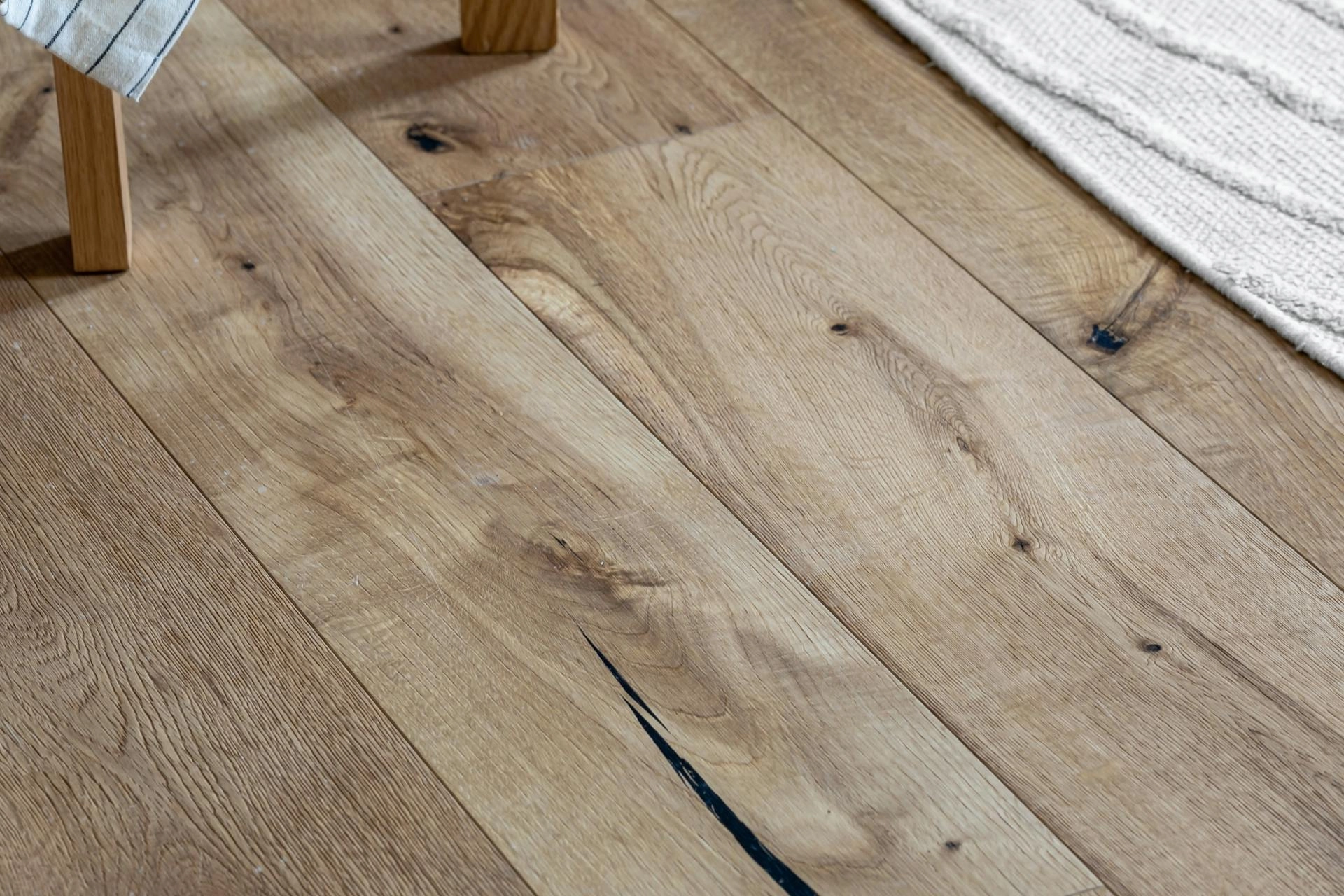
Open grain structure allows excellent lacquer penetration and adhesion. Sands evenly. Available in red and white variants — both respond well to water-based lacquer. The most forgiving timber for polishing. Common in imported European-style flooring products.
▸ Standard process — most forgiving species
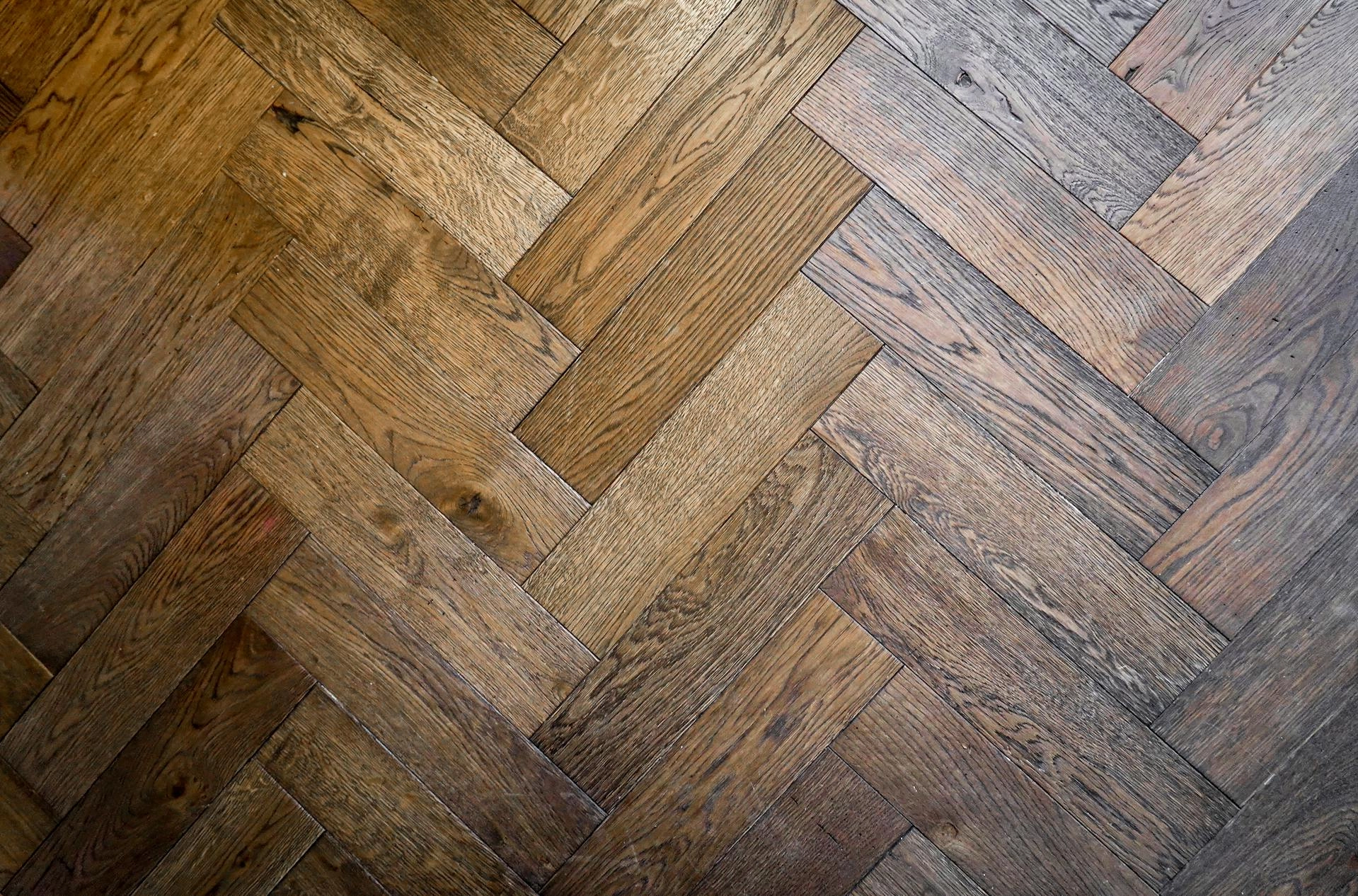
Herringbone Parquet
The diagonal block pattern requires cross-grain sanding — more time-consuming than straight-plank floors. Edge sanding at block boundaries is critical. When done correctly, parquet restoration is one of the most dramatic transformations in floor polishing. Found across older Singapore HDB and private residential.
▸ Cross-grain sanding · Edge detail required
Engineered Timber
Can be sanded only if the wear layer is thick enough (typically 3mm or above). Our team measures the wear layer thickness during the free assessment. Thin-veneer engineered floors receive lacquer refresh only. Over-sanding through the wear layer into the plywood base is irreversible.
▸ Wear layer check required before booking
Important: Residents should vacate during wooden floor polishing
Belt sanding produces significant fine timber dust, and lacquer application produces solvent fumes — even with dust-extraction equipment and water-based products. We strongly recommend that all residents, pets and sensitive individuals vacate the property for the duration of work and until the property has been ventilated. Our team schedules work to minimise total disruption and will confirm return timing precisely before commencing.
▎05 / Our process
Five-step wooden floor polishing process.
Every Lexsure wooden floor polishing visit follows the same structured five-step process. Steps 1–4 apply to both service levels — the depth of sanding in step 2 distinguishes a refresh from a full sand-back.
01
Prep & Protection
Skirting and door frames masked. Dust-extraction machine set up. Floor assessed for loose boards, protruding nails, deep gouges or areas requiring filler before sanding commences.
02
Sanding
Lacquer refresh: light mechanical buffing of existing surface. Full sand-back: coarse belt sanding to strip lacquer to bare timber, then progressive orbital sanding through fine grits for a smooth surface. Edge sander used for perimeter.
03
Filling & Fine Prep
Wood filler applied to gouges, cracks and open joints. Dried filler sanded flush. Final fine-grit pass for a perfectly smooth surface. Oil neutralising or tannin treatment where required by species.
04
Lacquer Application
First lacquer coat applied and allowed to cure. Light de-nib sanding between coats. Second and third coats applied to build full protective film depth. Finish level confirmed before first coat.
05
Inspection & Handover
Full floor inspection for even sheen, sanding marks, runs or missed areas. Maintenance card issued. Return timing confirmed. 14-day workmanship guarantee confirmed in writing.
▎06 / FAQ
Wooden floor polishing questions, answered.
Common questions Singapore homeowners and property managers ask before booking. For a specific assessment, WhatsApp our team — we can advise from a photo of your floor.
How often should wooden floors be polished in Singapore?
Lacquer refresh polishing every 12 to 18 months for regularly used rooms. Full sand-back and re-lacquering every 5 to 7 years for solid timber and parquet. Singapore’s humidity accelerates surface checking and lacquer cracking compared to temperate climates — regular refresh polishing is more important here than most manufacturer guides suggest.
Can scratches be completely removed from timber floors?
Minor surface scratches within the lacquer layer are removed completely during sanding and disappear after re-lacquering. Moderate scratches penetrating into the timber are sanded out but may show slight grain variation in raking light. Deep gouges are filled with matching wood filler — significantly less visible after polishing, but a careful inspection may still detect the repair. Our team will assess and advise honestly during the free site visit.
How long does wooden floor polishing take?
Sanding and lacquer application for an average HDB living and dining area (40–60 m²) takes 4 to 8 hours. Lacquer then requires curing — light foot traffic after 4 to 6 hours, furniture not until 24 to 48 hours. For water-based lacquer, fumes dissipate within a few hours of application. For oil-based lacquer, ventilate for 12 to 24 hours. Our team confirms the full timeline at the assessment stage.
Do residents need to vacate during wooden floor polishing?
Yes — we strongly recommend all residents, pets and sensitive individuals vacate the property during work and for several hours afterwards. Belt sanding produces fine timber dust even with extraction machines, and lacquer application produces solvent or water-based fumes. This is the most disruptive of the three floor polishing services. We typically schedule work so residents can return by evening for water-based lacquer, or the following morning for oil-based.
What is the difference between water-based and oil-based lacquer?
Can engineered timber floors be sanded and polished?
Engineered timber can be sanded only if the wear layer is thick enough — typically 3mm or above allows one or two sanding cycles. Thin-veneer engineered floors (under 2mm) should receive lacquer refresh only. Our team measures the wear layer thickness during the free assessment and advises whether full sanding or refresh is appropriate. Sanding through the wear layer into the plywood base is irreversible.
What finishes are available for wooden floor polishing?
Matte (low-sheen, natural look, hides marks well — popular for contemporary homes), satin (mid-sheen, the most specified finish for Singapore homes and offices) and gloss (high-shine traditional finish, popular for parquet restoration and formal spaces). All three provide equivalent protection — the difference is visual only. We can apply the finish to a sample board for review before committing to the full floor.
Do you offer a workmanship guarantee?
Yes — all Lexsure wooden floor polishing services carry a 14-day workmanship guarantee. If you notice peeling lacquer, uneven sheen, visible sanding marks or any defect in the result within 14 days of completion, we will return and rectify at no charge. Guarantee terms are confirmed in writing on the quotation issued before work commences.
Book your free timber floor assessment.
Send us a photo of your floor and we’ll tell you which service level is right — refresh or full sand-back. Written quote within one working day, scheduling to suit your household.
Other floor care services
▎Floor Polishing
Marble Waxing
▎Floor Polishing
Cement Floor Polishing
▎Deep cleaning