
Cement Floor Polishing Singapore.
Professional diamond grinding and sealing of concrete and cement screed floors — eliminating dust, smoothing surface defects and delivering a modern matte or gloss finish for Singapore homes and commercial spaces. In-house team, workmanship guaranteed.
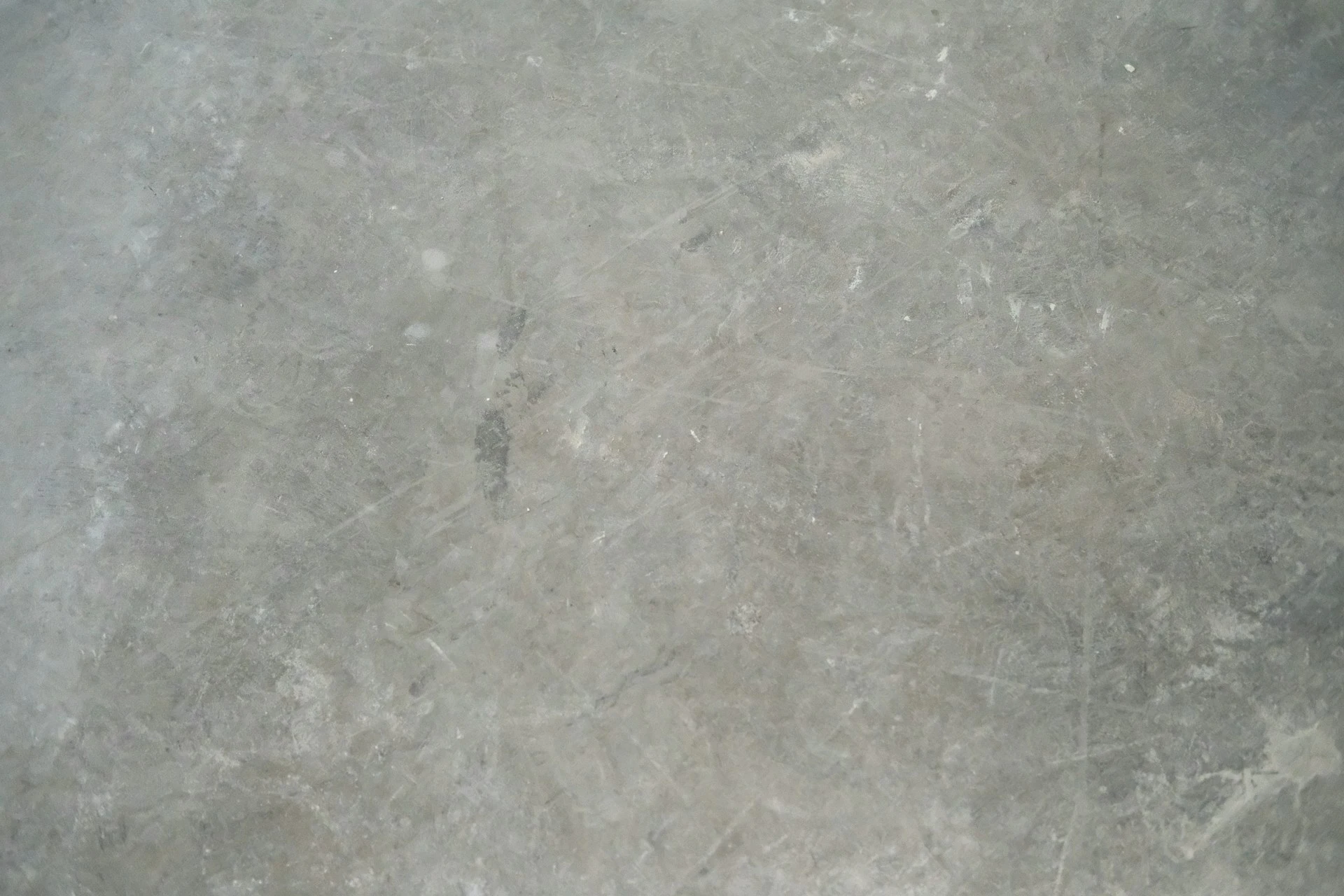
▎Service at a glance
Service
Cement & Concrete Floor Polishing
Coverage
Island-wide, Singapore
Sectors
Residential · Commercial · F&B · Industrial
Duration
4–8 hrs (avg. area) · 1–3 days total
Finish
options
Matte · Satin · High gloss · Exposed aggregate
Cure time
4–8 hrs sealer cure before light traffic
Frequency
Every 12–24 months recommended
Guarantee
14-day workmanship guarantee
▎01 / Why polish cement floors
From dusty screed to sealed surface.
Raw cement and concrete is porous, fragile and constantly sheds fine dust under foot traffic. Polishing and sealing permanently solves this — and transforms a building material into a finished floor worth specifying.
Eliminates concrete dust
Unsealed cement continuously sheds fine concrete dust under foot traffic — coating furniture, settling in air conditioning filters and degrading air quality. Sealing ends this permanently. The single most common reason Singapore homeowners book cement polishing.
Modern aesthetic finish
Polished concrete delivers the clean, minimalist industrial-loft look increasingly specified in Singapore residential renovations, F&B interiors and retail fit-outs. Available in matte, satin or high gloss — the same floor, different visual weight.
Stain and spill resistance
Topical sealer closes the concrete’s surface porosity — preventing oil, cooking grease, chemical spills and cleaning agents from penetrating and permanently staining the floor. Critical for F&B and industrial environments.
Increased surface hardness
Diamond grinding compacts and hardens the cement surface. Applied densifier chemically reacts with the concrete to create a harder, denser wearing surface — more abrasion-resistant than raw screed under heavy commercial foot traffic and rolling loads.
▎02 / Choose your finish
Four finish options for polished cement.
Cement floor polishing isn’t one finish — it’s a spectrum. The right choice depends on your interior style, the room’s lighting conditions and how much you want the floor to reflect its surroundings.

Matte
Low-sheen sealed surface — natural concrete texture with minimal reflectivity. Hides everyday marks and scuffs between cleans. The most forgiving finish for family homes and high-footfall commercial areas.
▸ Best for: Homes, loft apartments, industrial retail
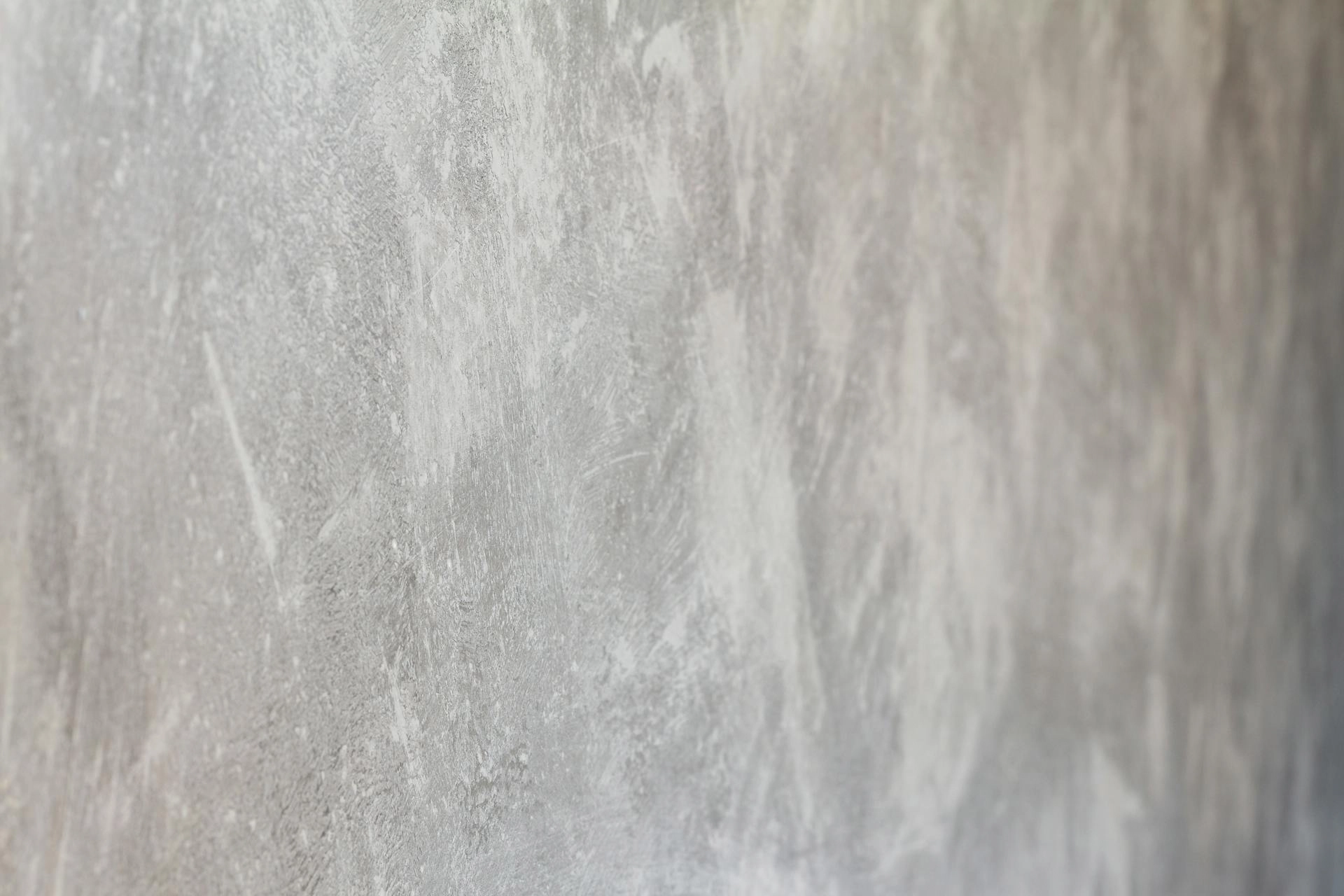
Satin
Mid-sheen finish that catches light without mirroring. The most specified finish for Singapore offices, showrooms and modern condos — premium feel without the maintenance demands of high gloss.
▸ Best for: Offices, condos, showrooms
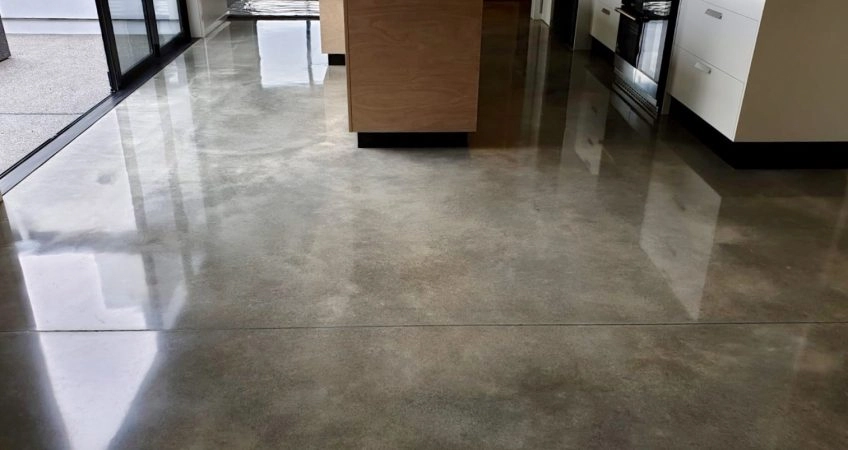
High Gloss
Mirror-like polished surface that maximises light reflection. Striking in large open-plan spaces with good lighting. Requires more frequent maintenance — marks and footprints show readily on the glossy surface.
▸ Best for: Lobby areas, retail feature floors
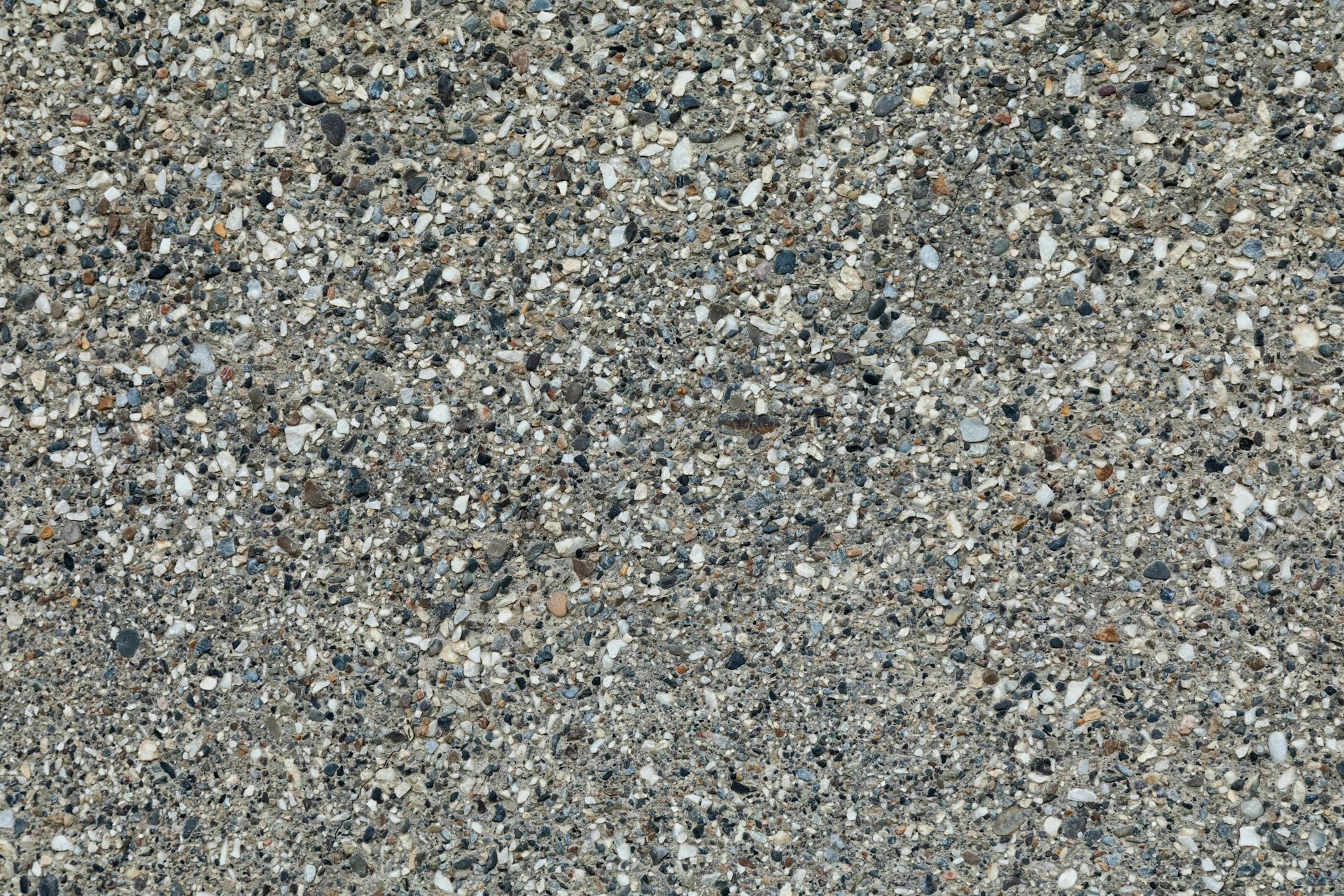
Exposed Aggregate
Deep grinding reveals the aggregate (stone chips) within the concrete mix — creating a terrazzo-like appearance with natural variation. Each floor is unique. Popular for F&B, boutique retail and bespoke residential.
▸ Best for: F&B, boutique interiors, feature areas
▎03 / Which concrete type do you have?
Four concrete types, different approaches.
Not all concrete floors are the same. The starting condition and composition of your floor determines the depth of grinding required, which densifier is most effective and what the finished result will look like.
01
Raw Cement Screed
The most common substrate in Singapore HDB and condo units — a smooth trowelled screed poured over structural concrete. Typically 4–6cm thick. Takes polish well and can achieve all four finish levels.
▸ All finish options available
02
Structural Concrete
The base slab itself — typically exposed in industrial, commercial and open-concept spaces where the screed has been removed or was never applied. Contains aggregate; exposed aggregate finish is most natural here.
▸ Exposed aggregate recommended
03
Microcement
A thin-coat cement overlay (2–3mm) applied over existing floors. Popular for renovations over tiles. More delicate surface — requires lighter grinding technique and careful densifier selection to avoid burn-through.
▸ Specialist assessment required
04
Previously Sealed / Coated
Concrete floors with existing epoxy, paint or sealer coatings must have those coatings stripped or ground out before polishing can achieve consistent results. Our team assesses this during the free site visit.
▸ Coating removal may be required
▎04 / Our process
Five-step cement polishing process.
Every Lexsure cement floor polishing job follows the same structured five-step process. The depth of grinding in step two varies by floor condition; the sealing in step four varies by finish option. Everything else is consistent.
01
Surface Assessment & Prep
Floor assessed for cracks, contamination and moisture levels. Cracks and pits filled with epoxy or cement repair compound. Existing coatings identified and stripped where necessary.
▸ 30–90 min
02
Diamond Grinding
Progressive diamond grinding — coarse pads first to level the surface and remove defects, then progressively finer grits to achieve the target smoothness level for the chosen finish.
▸ 2–4 hrs
03
Densifier Application
Penetrating densifier applied and worked into the surface. Chemically reacts with the concrete to harden and densify the wearing layer — increasing surface strength and reducing porosity before sealing.
▸ 45–60 min
04
Sealer Application
Topical sealer applied in two coats to deliver the chosen finish — matte, satin or gloss. Anti-slip additive incorporated where required. Sealer allowed to cure fully between coats.
▸ 2–4 hrs incl. cure
05
Final Inspection & Handover
Full floor inspection for even finish, consistent sheen and sealer adhesion. Traffic and maintenance instructions confirmed. 14-day guarantee and maintenance schedule issued at handover.
▸ 20–30 min
▎05 / FAQ
Cement polishing questions, answered.
Common questions Singapore homeowners, contractors and facility managers ask before booking cement floor polishing. For a specific assessment, WhatsApp our team directly.
How long does cement floor polishing last?
Properly polished and sealed cement flooring lasts 3 to 5 years before re-polishing is needed, depending on traffic and maintenance. The topical sealer should be re-applied annually in high-traffic commercial areas. Lightly used residential floors can go significantly longer. Our team advises on the right maintenance interval for your specific use during the free assessment.
Is polished cement flooring slippery?
High-gloss polished cement can have lower slip resistance when wet. Lexsure addresses this during the sealing stage — anti-slip additives are incorporated into the sealer for kitchens, F&B spaces and any area exposed to water. For dry office and residential environments, standard polished cement provides acceptable slip resistance. We advise on the right slip-rating treatment for your specific space during the site assessment.
How long does the cement floor polishing process take?
Can cement polishing remove cracks and surface defects?
What is the difference between matte and gloss cement floor finish?
Can I polish cement floors that have existing tiles or coatings?
In most cases, existing tiles or thick coatings must be removed before cement polishing can be performed effectively. Some thin paint or adhesive residues can be ground out as part of the preparation step. Our team will assess your floor’s existing condition during the free site visit and advise whether removal is needed and what that involves.
Do you service commercial cement and warehouse floors?
Do you offer a workmanship guarantee on cement polishing?
Yes — all Lexsure cement floor polishing services carry a 14-day workmanship guarantee. If you notice uneven finish, delaminating sealer or any defect in the result within 14 days of completion, we will return and rectify at no charge. Guarantee terms are confirmed in writing on the quotation issued before work commences.
Book your free cement floor assessment.
Free consultation and written quote — typically same working day. Our team will assess your marble type and condition and recommend the right service and frequency.